0
0

PESHAWAR, Sept 17: The NWFP government has submitted a revised PC-1 of the Khyber Institute of Child Health and Children’s Hospital for the next meeting of the Provincial Development Working Party (PDWP).
The PC-1 was revised after the finance department objected to the cost to be incurred on civil work. The chief minister directed the additional chief secretary to reduce the cost of the hospital and present it at the PDWP’s meeting.
Sources said that a PC-1 worth Rs150 million had been prepared to meet the renovation cost of the building where the government had already approved construction of the Khyber Institute of Child Health and Children’s Hospital.
They said that the cost had been reduced to Rs140 million and added that the funds would be spent on renovation of a nearby road, cost of consultancy and purchase of furniture, etc.
The Japanese government had approved a $20 million grant for the institute in May this year.
Sources said that the government was expediting the project to be able to receive the Japanese grant.
“In case of an inordinate delay, the government could lose the grant,” they said, adding that recently the Japanese ambassador had sent a letter to his government to get the grant at the earliest.
“The Japanese government had approved in May three grant-in-aid requests of 16 projects proposed by Pakistan. Japan has accorded priority to the children’s institute,” they said.
Sources said that the province had a total of 1,000 beds for its 11 million children.
Except for the NWFP all other provinces have child health institutions where they are provided specialised diagnostic and treatment facilities. The provincial government has already allocated a building vacated by a French NGO to the Khyber Institute of Child Health (KICH) in Hayatabad Township.
The Japanese ambassador to Pakistan recently met NWFP Chief Minister Akram Khan Durrani and discussed the modalities of the project.
The chief minister pledged to renovate and refurbish the building, besides providing 20 kanals of land in the Hayatabad Township on which a children’s hospital would be constructed.
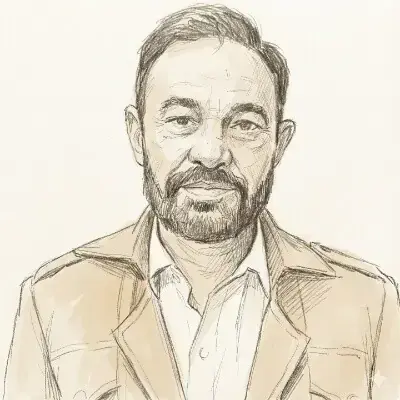
Project Director Prof Dr Abdul Hameed told Dawn that the need for a child health institute and children’s hospital had long been felt because the children had to be rushed to other cities for specialised treatment.
The head of the child health department at the Khyber Teaching Hospital, Dr Hameed said the KICH would be built over a period of three years in three stages and an added that it would play a supervisory role to integrate child health facilities in the entire province.
He said there were no specialist doctors for specific problems of the children.
The KICH would have facilities such as neurology, neurosurgery, psychiatry and paediatric surgery departments. Facilities required for diagnosis and treatment of kidney, blood and other diseases would also be put in place.
“The KICH will also cater to the research side of child health. It will compile data about the prevalence of particular diseases and epidemics and devise strategies to cope with the problems,” he added.
He said the institute would act as a “brain” to pool all resources in paediatric care facilities. It would offer primary, secondary and tertiary-care facilities simultaneously.
Dr Hameed added: “At the moment, we lack data regarding various ailments among children. The institute will enable us to compile data about diseases and create a vision for the policy-makers to devise strategies.”
At least 110 children out of every 1,000 under the age of five die each year, whereas 90 out of every 1,000 below the age of one are unable to celebrate their first birthday.