



 0
0

Mediocrity can be fatal
THINKING big is a cliché these days, bandied about by intellectual midgets who possess neither the skills nor the brainpower to deliver a quality product. They wouldn’t recognise a paradigm shift if it were offered on a plate with chutney on the side, yet use the term freely while thinking out of the box. But the saving grace is that these clowns in nylon ties are harmless for the most part.
Far more dangerous are the people whose decisions and actions have a direct impact on public welfare. Here, mediocrity can be fatal.
It is too early to apportion blame but it goes without saying that the collapse of the Shershah bridge on the Northern Bypass, inaugurated less than a month ago, is simply inexcusable. Wake-up calls don’t come any louder and it is time to rethink how we are going about ‘developing’ Karachi.
Never mind the fact that the city was fine just the way it was before the rapacious development lobby, like termites with a taste for the finer things in life, began eating away at its soul.
The pace is frenetic, for some reason, and the scale truly mind-boggling. Of course there is nothing wrong per se in thinking big, in ‘mega’ terms. But with mega projects should come mega responsibility, mega competence, mega commitment and mega supervision, transparency and accountability. Honesty of purpose must be a given, not flotsam in a sea of graft. A master plan is of the essence, with goals and time frames clearly spelled out, as is clockwork coordination between relevant agencies.
None of this is in evidence in the concrete jungle. For this reason alone, a case can be made for thinking small until such time our skill sets and ethics match our aspirations. Otherwise, mega disaster awaits. Bite off what can be chewed. Collect garbage as a matter of course, build roads that don’t disintegrate when it rains, set up a drainage system that works, revive the local railway network. But lay off elevated expressways, at least for the time being.
Not that the elevated expressway proposed for Karachi is needed now or in the hereafter. It will serve no purpose whatsoever other than adding millions (dollars, not rupees) to the bank balances of a select few. Given that existing roads will serve as the entry and egress points, all it will do is get the commuter faster from one traffic jam to the next.
Adding insult, it will disfigure the city beyond recognition and make life a living hell for all those who will shortly be seeing cars whizzing past their fourth-floor windows. Imagine also the traffic chaos on Sharea Faisal, the city’s busiest artery, during the three years or so it will take to build the expressway. Think it’s bad now? Just wait and see.
Trees, always the first casualty in this ceaseless war against all that is good in the world, have already been chopped in aid of this mega folly. As was the case with the Northern Bypass, no bids were invited for the project. Just parcelled out to a contractor of choice. Easy come.
Distasteful as it is, that’s not really the point here. People have been robbing this country blind for as long as anyone can remember, so there is nothing earth-shattering, really, about the elevated expressway or Sugarland City which could devour the coastline from Sandspit to Cape Monze or the rape of Bundal and Buddo islands. But minting money through dubious means is one thing, playing with lives quite another.
Our construction standards are not the highest in the world. Contractors charge for one thing and deliver cheap substitutes, often with the blessing of those doling out public money. Karachi, moreover, sits on or near a major seismic fault line and four minor faults. Tremors are not as rare as they used to be and the chances of major seismic activity can never be ruled out. Will the expressway be able to withstand an earthquake? It will, after all, be raised on stilts for its entire length.
The Shershah bridge simply collapsed where it stood, without any known trigger, killing at least ten. The span that fell to earth was 120 metres long, as opposed to the 24 km elevated expressway. True, statistics can be misleading and made to suit a particular thesis. Still, going by length alone, the expressway is 200 times more likely than the Shershah bridge to come tumbling down — right on top of Sharea Faisal.
Now is the time for all good men and women to come to the aid of the party. In the absence of checks and balances of even the most cursory nature, this madness must be allowed to proceed no further. As Robert Hunter wrote and Jerry Garcia sang, “I won’t slave for beggar’s pay, likewise gold and jewels/ But I would slave to learn the way to sink your ship of fools.”
Enough said, for now.
imalik@dawn.com
COMMENT: Cricket development finally becomes a priority with PCB
For the first time in the annals of the Pakistan Cricket Board, someone has finally broached the idea of investing into development of the game. Full marks to Dr Nasim Ashraf for sincerely taking up the issue and implementing it!
In the past, all the money was spent either on the players or on tours, but never for cricket development. The result: shameful debacles in the last two World Cups.
This season, however, things are looking to change for the better. Thankfully, change for the sake of change is not the policy the PCB is adopting this time. They are totally geared up for betterment in the first class structure for which they have asked the representatives of the Regional Cricket Associations and the departments to give their respective inputs.
The PCB is of the view that this new cricketing set up will open the doors for a fresh breed of players to enter the first class arena. Already, there are incentives for younger players. They have been offered a much enhanced match fee and the introduction of salary system at the regional levels can be a real boon for the cricketers.
Four-ways Cricket Development
This proposal will definitely help in improving the overall structure of Pakistan Cricket, although no overnight impact should be expected. In my opinion, it will require at least three years for this system to really pay off.
To give some details of this system here, the PCB has endeavoured to put in place a ‘grass roots’ setup which will be headed by former Test cricketer Haroon Rasheed. His team comprises Tauseef Ahmed, Ehtashamuddin, Azmat Rana and Farrukh Zaman.
With the coordination of the advisory committee of ‘grass roots’ headed by Javed Zaman with members Brig.Salahuddin, Alamgir Ahmed, Jalil Khan, it will dig out raw talent at the district, the school and the club level. They will initially groom the players at all levels and later, after short-listing the best ones, will recommend the players for participation at the regional levels for further development of their game. Finally, they will go through the long-term training program at the National Cricket Academy (NCA).
The Regional Academies, which are working under umbrella of the NCA, have been assigned the work to polish the Under-15 and Under-19 players at the regional level and also look after the senior teams of the regions.
This year, the role of the regional academies and working set-ups has been broadened enough and the freedom of decision-making and programming has also been provided which will help the head coaches and their support team to work with some sense of responsibility and take decisions to improve the players. It will also help the coaches in their self grooming as well.
Four ‘Centres of Excellence’ have been planned in Karachi, Multan, Faisalabad and Peshawar and the work on these projects have already commenced. These centres will work independently, within their jurisdiction. However, they will be seeking guidance from the NCA. Besides, the development of about one hundred cricket grounds all over Pakistan has also planned.
As and when these ‘Centres of Excellence’ start working, a full fledged development of players will start at the regional level. This big systematical change will for sure raise the standard of cricket in the country.
That said, the people in charge of cricket must realise the importance of the first step here. And the first step is honest and fair selection of teams. The selectors appointed should understand the selection process and must have the ability to judge the talented players through their cricketing knowledge and from the time spent on the grounds.
While I would once again say that the idea of cricket development is a very good one, there remain a few problems. The biggest problem is the availability of competent people for the job. I mean, right people for the right job can really speed up the results.
Unfortunately, the PCB does not have enough people, particularly the coaches, to run the Regional Cricket Development Program in letter and spirit. The fact is that the poor administration of the previous boards hampered the coaches development program. And I feel quite justified in blaming former Test opener Rameez Raja for this handicap. He was the man who aborted all efforts of coaches education which derailed Pakistan cricket coaching program for at least five years. But as we all know, accountability has never been a favoured process in the PCB.
The other factors that need to be looked into urgently are the lack of coordination among the various departments of PCB, the non implementation or delay in policy decisions and, of course, the complete absence of long-term programmes.
Also, a new team of people with fresh ideas and positive outlook is imperative for such revamping plans to take off. It is high time that we developed new people for different jobs, specially those who have a passion for cricket and are not merely job seekers.
In short, the PCB must realise that in order to bring a real change in Pakistan cricket, a lot of things need to change. And to end on an optimistic note here, the process has begun.
Qurratulain crosses the river of fire
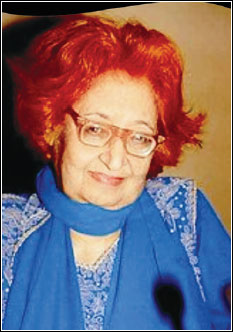 It was a bit of a surprise that the name of Abdullah Hussain did not come up even once during over two hundred minutes of reference addresses in memory of Qurratulain Hyder last Tuesday at the Academy of Letters though when his Udas Naslain was published in 1963 it was hailed by her detractors as a counterpoise to Aag ka Darya. It seemed then that the appearance of Hussain’s novel was being awaited to devalue Ms Hyder’s magnum opus. It was a morbid controversy that early ideologists indulged in for a long time. But much water has since flowed down the serpentine Leh carrying away in its sluggish stream many muckraking debates of our time. There is no comparison indeed between the two nor any similarity except what Mohammad Ali Siddiqui has called the common melancholy of Partition that they share. For the rest there are stark differences of expanse, style, diction, view point, approach and mood.
To the speakers at the reference the outstanding feature of her writing was her concern with man pitted against inexorable time. Her story is about the defeat of ideals and man’s retreat from his cherished goals to romantic solace in nostalgia and chagrin. Hameed Shahid in his pointed survey of her work expanded on the temporal awareness and described her writing’s evolution from nostalgic romanticism, that is so often mentioned, to a style that ultimately liberates Urdu fiction from its ‘clammy sentimentality’ and lends to its narrative techniques a measure of sedate objectivity. Her work influenced Urdu literature intrinsically and elevated it to a higher plane.
Shabnam Shakeel had no hesitation in calling her South Asia’s greatest fiction writer. We Urdu wallas tend to be a little unaware of other literatures of the subcontinent. Bangla has a long and rich tradition preceding even Tagore who introduced new trends in poetry and prose much before N.M.Rashed and Miraji appeared on the Urdu scene. We really don’t know much about what has been written in Gujarati, Tamil and Telugu, the other major languages of South Asia. But certainly if there are giants of her calibre in these languages she is one of them. The deep consciousness of decay that informs her writings which Shabnam made special mention of is another feature of great writings that one finds significantly missing in contemporary award-winning books that seem to focus more on form than substance. Mohammad Mansha Yaad in his short review of her work made a passing reference to books that are aimed at winning this or that award. The worth of such books as literature can at best be questionable. Then there are best sellers and best-seller lists and a book’s life in weeks on these ‘Binaca geet malas’ of literature. God! Between writers, literary agents, publishers, and critics what a trade literature has become.
The tints of a decaying Muslim culture that colour the canvas of her stories which Shabnam enumerated among outstanding features of her work found elaborate extrapolation in comments by Fateh Mohammad Malik. He retraced her search for cultural roots back to the battle of Kerbala where the rot of the core values began and he spoke of the deep sentiment her work is imbued with for this decadence of the Muslim people. Though she had left Pakistan she continued to feel for its people as much as she felt for the Muslims of India. That natural sympathy apart I believe the professor was not giving her predilection a communal colour, as Tahira Abdullah sitting next to me apprehended. Deeply rooted in her own social milieu Qurratulain is still a multicultural person in her making. What she misses from her surrounding is that liberal ambience whose loss is not her loss alone. It is the loss of an entire generation that is mercifully now fading out from the scene.
Mansha Yaad related the depth of her observation and the acuity of her social comment to her vast study and scholarship. She taught Urdu fiction to think as Iqbal did to Urdu poetry. The last half of this statement may not find favour with lovers of Ghalib though. However Asif Farrukhi put it more strongly when he said she is to Urdu prose what Iqbal is to Urdu poetry. But it was rather tantalising and hypothetical to suggest on his part that the language which would present a critique of her work was yet to be.
Iftikhar Arif who among the speakers of the day had been closest to her in a personal way beside Farrukhi, dwelled with affection on the attributes of her character. She was quick to take offence and equally quickly forgave the offender; touchy and sensitive, pert and saucy her innate innocence and simplicity of heart could only be contrasted with her vast learning and sophistication of intellect. She was a brave person who lived her life on her own terms and made no compromise to taint her sense of dignity. About her work of fiction he said she drew most of her characters from among people she knew which gives them their authentic ring.
Intezar Hussain briefly touched on the history of Urdu novel and short fiction mentioning the developments as the genre passed through the deft pens of writers like Prem Chand Ruswa, Hassan Askari, Krishan Chandra, Mumtaz Shirin. But when Qurratulain appears Urdu novel at least had fallen on bad days. At her young age it was she who gave it revival and respect bringing it to the twentieth century despite stiff opposition from the progressive writers who questioned her romanticising the decadent elite of her class. But she stood her ground. Intezar Hussain said it was time to evaluate her contribution and influence on the writers of her time.
Already there appears to be a consensus on her being a trend setter. She gave a new direction to Urdu fiction and raised its level and stature comparable to the best in any language. If I remember correctly she had once compared her work to Thomas Mann’s. All of us tend to be carried away and are a lot easy going with superlatives. If I could be permitted one I would submit that international awards which are given in recognition of life time work are the poorer for not having her name among their recipients. She will live as Farrukhi said as long as there are readers of Urdu language and so will her influence continue as a legacy. A tentative discourse on a pre and post-Qurratulain era in Urdu fiction is a tempting proposition. But it is not yet time for that as her 60 year writing career has just ended and even though a kind of post era had already begun with her maiden venture.
| © DAWN Group of Newspapers, 2007 |



























