



 0
0

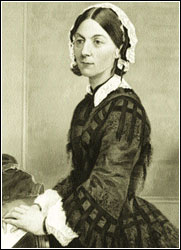 LONDON: She is known to generations of children as the saintly, iron-willed “Lady with the Lamp” who battled to improve the conditions of wounded British soldiers and founded modern nursing, but a strikingly different picture of Florence Nightingale has emerged from the unpublished letters of one of her bitterest enemies.
“Miss Nightingale shows an ambitious struggling after power inimical to the true interests of the medical department,” Sir John Hall, the chief British army medical officer in the Crimea, wrote to his superior in London.
When she went over his head to order supplies from his stores, observers, Sir John wrote, were astounded at the “petticoat imperium! in the medical imperio!”
When Nightingale arrived in Scutari in November 1854 with 38 women volunteers, sent by her close friend, the war secretary, Sydney Herbert, she was about to carve out her place in history and destroy Sir John’s. Her determination to reform the army hospitals in which thousands of wounded and ill soldiers were treated in closely packed beds by overworked doctors and male medical orderlies, and untrained women whom she dismissed as drunken and slatternly, brought her into instant collision with Sir John — and she also became a media star in the first British war reported in detail by the press.
“It was absolutely as night follows day that her upper-class Victorian female morality would clash head on with his traditional closed male army world,” said Richard Aspin, head of the archive and manuscripts at the Wellcome Trust in London, which recently bought Sir John’s letters. “She simply ignored his authority. She would no more have dreamed of consulting him about her nurses than she would have sought the opinion of a husband, if she ever had one, about hiring a parlour maid.”
Sir John’s letters denounced her as a publicity seeking meddler. Her ambitions, which launched the modern career of nursing, “if not resisted”, he wrote, “will, with the influence she has at present at home, throw us completely into the shade in future, as we are at present overlooked in all that is good and beneficial regarding our hospital arrangements, which are ascribed utterly to her presiding genius by great part of the press and her own itinerant eulogistic orators”.
He accused her of squandering resources by sacking good nurses and orderlies and trying to take over control of others — “but in that she was disappointed, for they declined to serve under her orders”.
It might be some consolation to poor Sir John that the scruffy marbled notebook containing his transcripts of the letters he considered most important cost the Wellcome Trust GBP4,000, while Nightingale’s letters were bought for only GBP200. One letter from Nightingale, advising on how to find a reliable medical officer for a post in Egypt, warns against employing ex-army doctors: “The fact is, nearly all the half-pay list are blackguards”.
Henry Wellcome, who founded the trust, shared the general reverence for the Lady with the Lamp. Hers was the only woman’s name he included in the frieze of his library, and he bought the scuffed mocassins she wore at Scutari — now on view in the new museum galleries which opened in London this summer. The collection also owns, but has lent to the British Library, the only known recording of Nightingale’s voice, on a wax cylinder.
Hall battled on, writing in February 1856: “The army is in splendid health, only seven deaths in a week and one of them a fit of apoplexy from drunkeness.”
However, his view of history’s treatment of Nightingale and himself was prophetic. He wrote sadly: “We shall to the end of time be made the victims of public odium in the way we were last winter ... the poor suffering sick soldier is a fine theme to ride off on.”—Dawn/The Guardian News Service




























