0
0

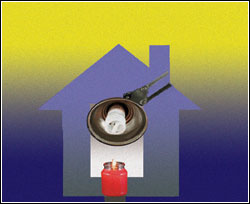 The nation lacks a serious commitment for achieving the goal of energy efficiency. The first step is to have a sensible target. The present target, included in the Medium Development Goals ( MDGs), to produce GDP at constant factor cost of Rs28,000 per ton of oil equivalent by 2015 has already been achieved, in fact surpassed many times over, by rebasing the GDP from 1980-81 to 1999-2000!
Fixation of a target should mean that it is an integral part of the national five-year and annual plans, not just a stand-alone target for the specially produced MDG report. The public sector project approval mechanisms at the federal and provincial levels should include energy efficiency in the appraisal criteria.
Similarly, the guidelines given in the budget call letters of the finance ministry/departments need to reflect a serious commitment with energy efficiency. It is important for the Planning Commission and finance ministry, the two key players here, to be aware and make those seeking funding aware, of the true economic cost of energy and the subsidies involved. Once awareness has been raised to a certain level, consideration should be given to mandatory targets.
A National Energy Conservation Policy already exists. What is required is to undertake a set of actions to implement it. Many actions will require legal cover. A priority action, therefore, is to enact an energy efficiency law.
Quality standards applied to industrial products, a domain of the ministry of industries, do not include energy efficiency standards. A fan, for instance, may be sold and bought as a quality product for its looks and output of air, but the quality is suspect if the cable used in the fan wastes energy. Experience of some 60 countries shows that these standards, prescribing minimum thresholds and banning anything below, push the market towards energy efficiency. In Thailand and many other countries, labeling is used to categorise products to enable the consumer to exercise an informed choice. Products may satisfy the minimum standards, but the consumer might want more. These labels thus pull the market in the direction of energy efficiency.
Building sector, commercial as well as residential, also requires energy efficiency standards. It is not enough to install heating, cooling and lighting equipment that conform to energy efficiency standards, the systems in place and the building design make their own contribution to the wastage of energy. The formulation of a buildings code to maxmise energy efficiency is another important step. In the UK, it has been estimated that it will be cheaper for the government to provide a one time grant for energy-efficient house improvements than the annual subsidy provided to alleviate fuel poverty. The initiative in this case lies with the ministry of housing and works.
Ministry of finance has to coordinate with ministry of commerce to review the duty structure on imports of energy saving equipment to see if it promotes or inhibits the use of this equipment. In their deliberations, they should also involve ministry of industries has to encourage private sector to enter local manufacture of the equipment.
Energy saving has not happened itself anywhere in the world. Even the actions suggested so far, crucial though they are, will not yield the desired results all by themselves. They have to be accompanied by an elaborate and sustained media campaign, in particular, on TV, internet and perhaps mobile phones. It has to be a complete and effective communications strategy involving information, education and outreach. Industry has to be informed what an energy audit is and its benefits. Large industries should be thinking of appointing separate, trained energy efficiency managers. Their training needs have also to be catered for. Appropriate messages should be inserted in the school curricula. Best practice has to be disseminated and technology transferred through demonstration.
It is true that investment in energy saving costs only a fraction of the eventual benefits, but mobilizing even this fraction requires patient work in a developing country like Pakistan. While the major role has to be played by the private sector, the market alone cannot bring forth the full benefits of energy efficiency. Actually the market in this area has to be created with public support and initial public investment is required so that private sector can leverage it to mobilize domestic and external funding. In public sector, the country allocates less than Rs25 million in development as well as non-development money on energy efficiency in an year and even that is not fully utilised.
The main obstacle is organisational and institutional. The various ministries mentioned so far are only indirectly concerned with energy efficiency. Although it is a subject allotted to ministry of environment under the rules of business, there are many other players directly concerned with energy efficiency. These include powerful ministries and autonomous bodies such as ministry of water and power, ministry of petroleum and natural resources, Wapda, Nepra and Ogra.. The present energy crisis is an evidence of their lack of cooperation with each other. They don’t even consider working with the ministry of environment, the smallest and the weakest player in the game.
Pakistan was ahead of many countries to have set up an energy conservation organisation, ENERCON, in the mid-eighties under the wings of the Planning Commission. It was the result of the foresight of Mahbub ul Haq who then was Deputy Chairman. However, the organisation has had an unfortunate history due to internal bickering resulting mainly from the disregard of merit by bad leadership. Its leadership frustrated the usually decent Mr Hamid Nasir Chatha, planning minister at the time, so much that he showed the entire organization the door. Ever since the ENERCON has been looking for a home, landing finally with the ministry of environment formally as an attached department, but in reality the treatment it gets is that of a detached department. The deterioration is total. It now consists of only four demoralised professionals and 44 members of the staff! The turnover of managing directors ( MDs) is rapid, and the posting is generally considered as a punishment. Pending appointment of a regular MD by the establishment division, the ministry has handed it over to a retired brigadier.
Linked to ENERCON is an Energy Conservation Fund (ECF) with a seed money of $3 million contributed by the UNDP. Although set up in 2003, not a cent has been spent on its mandate, which was to let private sector access this money to invest in energy efficient equipment and also to promote the creation energy service companies. The ECF has its own board, but it has remained dysfunctional because environment ministers want to run it their way and the UNDP exercises veto power on spending and recruitment. Whether it has something to do with the rigidity of the UNDP rules or the ambitions of some former ENERCON staff now working in the UNDP is not clear. What is clear is that most MDs give up between the two.
What is to be done? Only one basic thing. The government should recognise that the ENERCON has to function as a statutory regulatory body and, like other regulatory bodies, attached to the cabinet division. Its law should be drafted and enacted in right earnest. The rest will follow. It will have a senior private or public sector person as its head, professional and technical members and other properly paid engineers/economists. Its funding could come from some earmarking of revenues from energy taxation, as it will work to enhance energy supply in the most cost-effective manner. As for the Energy Conservation Fund, the money should be returned to the UNDP with thanks and the Fund should be re-established with government’s own money and as an entity distinct from ENERCON, with a dynamic private sector head allowed to work to create a functioning market for energy efficiency. Having set up the Competitiveness Support Fund, the government has the know-how to do it.
There is also need for long term investment in training and research. Many universities abroad have set up Centres of Excellence in Energy Efficiency. The Higher Education Commission (HEC) has funded a number of such centres in important fields. Energy efficiency is another area to push the frontiers of a knowledge economy.
Dr Tahir is Mahbub ul Haq Professor of Economics at GC University, Lahore. Email: perveztahir@yahoo.com.