



 0
0

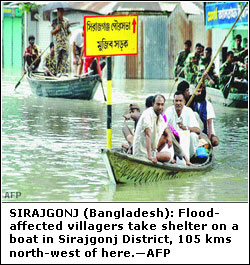 DHAKA, Aug 3: More than 200 people have died in monsoon flooding in South Asia in the last 10 days while more than 10 million remained marooned in their villages or homeless on Friday, with many having no access to health care.
The threat of water-borne diseases is rising, with many villages cut off for days. Some people have been bitten by snakes flooded out of their pits, others crushed under the rubble of their houses, and many drowned by rising flood waters.
The United Nations Children's Fund (Unicef) said the floods were causing “havoc” and “chaos” in the region, with around 20 million affected and could be the worst in living memory in some areas.
“The sheer size and scale of flooding and massive numbers of people affected poses an unprecedented challenge to the delivery of desperately needed humanitarian assistance by governments, and the aid community at large,” Unicef said in a statement.
The challenge was acute in India’s impoverished eastern state of Bihar where a number of pregnant women in flooded areas gave birth to stillborn babies, as flooding led to the collapse of the rural medical infrastructure in many areas.
“There is little one can do as nearly half of the 315 health centres in remote districts have been swamped,” said Baidyanath Singh, a senior health official.
Residents said they were facing a shortage of medicines, as well as food, and were turning to quacks in Bihar, where around eight million are affected, many of them homeless.
In India's northeastern state of Assam, where nearly three million are displaced or marooned — more than 10 per cent of the oil-and-tea-rich state's population — officials were warning of outbreaks of diarrhoea and malaria.
Thousands were living on highways and river embankments and on patches of dry land, surrounded by huge expanses of muddy flood water. Military helicopters and boats tried to bring food, drinking water and medicines to them.
WATER EVERYWHERE: In the country's most populous state, Uttar Pradesh, hundreds of thousands were displaced or stranded in villages in its eastern districts.
In western India, flights and trains were delayed by monsoon rains in the teeming financial hub of Mumbai, forcing thousands to walk knee-deep in water.
Far away across the subcontinent in Bangladesh, 11 people died in flood-related incidents overnight as new areas were flooded — including low-lying areas of the capital, Dhaka.In Manikganj town, north of the capital, people in knee-deep water were shifting household items into boats.
“The situation is getting worse every hour,” said local journalist Biplob Chakravarty.
Authorities said more than 300,000 hectares of crops, mainly paddy — the country's staple diet — had been affected and more than 2,500 km of roads damaged, along with tens of thousands of homes.
UNICEF said hundreds of cases of diarrhoea had been reported. Thousands of schools were shut due to floods.
ENVIRONMENTAL FALLOUT: Near India's eastern city of Kolkata, a court-appointed panel said on Friday that state-run oil firms whose compounds were flooded had pumped out industrial waste and oil along with water, causing waterlogging on roads and in several neighbourhoods in Budge Budge town.
A large pond near the oil storage facilities was polluted with oil and slush, the panel said. Some residents of the town of 100,000 people were angry.
“Many of us are suffering from skin ailments after bathing in the pond,” said local resident Asish Das.
The oil firms also polluted the Hooghly river while pumping out flood waters along with industrial waste, the panel said.
Every year, monsoon rains and floods kill hundreds in South Asia and cause widespread disruption, but the annual rainfall season is vital for agriculture and the region's overall economy.
In Nepal, thousands remained homeless due to flooding and landslides over the past few weeks, and the U.N.'s World Food Programme has appealed for food to feed 60,000 Nepalis.—Reuters




























