



 0
0

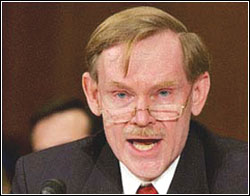 On July 1, 2007 Robert Zoellick, the former vice-chairman of Goldman Sachs, took over as the president of the World Bank at a relatively young age of fifty- three.
This office was not supposed to become available for another three years. Premature and involuntary departure of Paul Wolfowitz caused the vacancy when he was forced out due to a pay and promotion scandal relating to his girlfriend. The manner of his going was not smooth. It was indeed a traumatic experience for the world’s premier development agency.
A senior bank’s official aptly describes it as a crisis at the bank which “has damaged its credibility and hampered our work”. In the wake of this crisis three major challenges have emerged. The first one relates to the issue of governance, the second pertains to the competence of the new president and the third is about the need for healing wounds caused in the course of events leading to the departure of Wolfowitz.
The bank, it is felt, will never be the same again. The Financial Times rightly commented: “Indeed, it must not be the same again”. It added that the most important lesson which should be learnt from the incident was that: “foisting a boss on the bank who has the backing of just one person, even if the latter is the most powerful in the world, does not give him enough legitimacy to run the institution effectively”.
A serious flaw in the governance of the international financial institutions stemmed from the understanding reached among architects of the Bretton Wood System at the end of the Second World War that the head of the International Monetary Fund (IMF) would be a European and that of the World Bank an American. The executive boards of both these organisations – vested with legal competence to appoint heads of these institutions – have in reality no substantive role to play. The boards’ functions are confined to formal election of the managing director of IMF and the president of the World Bank on basis of nominations received from the European governments and the United States.
The world’s leading international development experts and representative of non-governmental organisations in a recent open letter have stated that the bank’s crisis demonstrated the need for reform of the selection process. According to them, “outdated convention should be abandoned and replaced with selection procedures that reflect two key principles: transparency of process and competence of prospective leadership without regard to national origin.”
The Australian treasurer echoes this view by advocating that the next head of the bank should be chosen on the basis of an open transparent process based on merit and open to candidates from any country, not just the United States. One sincerely hopes that the method of the selection of the president World Bank and the MD of the IMF will change sooner than later.
As to the competence of Zoellick, President Bush while approving his candidature for this assignment cited his broad international experience, culminating in positions such as the United States Trade Representative (USTR) and the Deputy Secretary of State. It is in the public knowledge that Zoellick wanted this job on the retirement of James Wolfensohn two years ago.
He had impeccable credentials as one of Bush’s ablest lieutenants, having rich international experience. It was a great surprise when Paul Wolfowitz despite being controversial (due to his role in Iraq War as Deputy Secretary of Defence) was preferred to him. On Zoellick’s recent appointment, The London Economist rightly captioned its story “Right, second time”.
Zoellick has distinguished himself in fields of economics, trade, diplomacy, finance and politics. He has a proven track-- both as a strategist and tactician. He was very successful as a trade negotiator. In 2001 at the WTO Ministerial Conference at Doha (Qatar) he played a very positive role in finalisation of Doha Declaration, characterised as a turning point in the history of the WTO. Despite being tough, one reason of his effectiveness, was an ability to appreciate other side’s goals and constrains. \
The executive board of the Bank during an “informal” meeting with Zoellick discussed various issues related to strategic direction, leadership, corporate governance, multilateral environment and independence of the bank.
The board highlighted key challenges for Zoellick including the need to successfully conclude fundraising round i.e. IDA replenishment, amounting to nearly $30 billion for the bank’s concessional lending window, develop a long-term strategy for the bank and address its corporate governance.
One of the most important and urgent tasks for him would be to heal internal divisions in the bank and restore its credibility. The new president’s success (in the first instance) will depend on his ability to regain trust, rebuild credibility and “mend frayed relations inside the institution and with its member countries”.
Zoellick recognised that the institution had “passed through a difficult time,” and there were, “frustrations, anxieties and tensions about the past that could inhibit the future”. He implored the bank’s staff and member governments “to put yesterday’s discord behind us and to focus on the future together”.
He will be well advised to mark a point of departure from Wolfowitz’s management style of running the administration through a close circle of like minded aides, whom he imported from outside the bank. Zoellick has also tried to address concerns about his own hard-driving management approach by declaring “it will be my aim to work closely with and learn from the institution’s dedicated and talented staff.”
He has also acknowledged that a bank president must forge coalitions among stakeholders. “One can have the best strategy and ideas in the world but unless one can operationalise it, it is not a strategy.
One sincerely hopes that Robert Zoellick succeeds in restoring the earlier pre-eminence and image of the World Bank and imparts a sense of direction to it. It would be worth reminding him that the pivotal role of the bank is and should remain fighting poverty with passion and professionalism.






























