



 0
0

Raring to read: a case for Karachi libraries
AN extensive three-storey building on University Road in Gulshan-i-Iqbal’s Block 10 makes a mockery of those who ought to help promote education in the city. Originally built as a library for women, its status has changed with the change in city administration.
On June 10, 2006, the current city council, in a session presided over by Naib Nazim Nasreen Jalil, passed a resolution to roll back the library project, which was approved by the earlier city council headed by the then naib nazim Tariq Hassan. Since the library was meant exclusively for women, the incumbent council may have thought it an obscurantist notion; or the building’s status may have been changed to deprive the earlier city government of credit it deserved. Whatever the case, the new council announced that the library would be replaced by a hospital, which, they argued, was more urgently needed. However, those who opposed the change in the project’s status pointed out that the locality has many other locations where hospitals can be built, and alleged that the decision was prompted by malice against the earlier city government, not a commitment to health care needs. Regardless of these arguments, the unique project of a women’s library has now been abandoned.
The land on which the building stands was allotted for a library years ago by the Muttahida Qaumi Movement’s Dr Farooq Sattar, when he was the mayor of Karachi. It remained undeveloped for the next few years, until women councillors volunteered to establish a library and agreed to contribute funds from their own budgetary allocations. The city government headed by Niamatullah Khan allocated Rs40 million in its 2005-06 budget for development before the construction of the library building.
However, the Haq Parast members of the current city council chose to ignore the benefits of the library project.
Indeed, the city desperately needs hospitals. However, future generations – would-be doctors, engineers and other professionals – need libraries and reading rooms as well. These should not only be equipped with the latest reading material, but should also have all the latest facilities which will lure young people in and keep them interested. Increasingly, digital libraries are conquering the territories held by traditional libraries.
Public libraries usually do not generate funds and are supported by the government or private institutions. By contrast, hospitals and educational institutions have unfortunately become the most lucrative businesses in the private sector.
The younger generation now has a lot of distractions, including incessant television viewing, cell phones and the Internet which keep the youth away from books. It is time that young people were weaned off such time-killing hobbies, which is a challenge that libraries must meet. They will have to work hard to stay in the business and be equipped with the most modern of facilities.
On paper, there are quite a number of libraries in Karachi: 62 libraries in the city’s 18 towns. There are 18 libraries in Lyari alone, the highest number in any one town, while Landhi comes second with 12 libraries. Gulshan-i-Iqbal shares the honour of having one library with Baldia and Shah Faisal towns. However, Site, Keamari, Gadap and Bin Qasim towns have no libraries at all.
Meanwhile, other notable libraries dotted across the city include the historic Ghulam Hussain Khaliq Dinna Hall Library on M.A. Jinnah Road, Frere Hall Library on Abdullah Haroon Road, Ghalib Library in Nazimabad, Liaquat National Memorial Library on Stadium Road, the Pakistan Institute of International Affairs’ Library, Dr Mahmood Hussain Library in Karachi University, the National Bank of Pakistan’s head-office library and the National Museum Library.
But how many of these are in use? How many no longer receive funding, or lack reading material? Perhaps quite a few of these libraries have little to attract a reasonable number of visitors.
The city’s libraries need to be promoted, and even a women’s library should have been encouraged in the interests of education. As a young woman who graduated from Karachi University pointed out, “Pakistan is not a Western country; if girls would read at such a place, they should not be deprived of that facility.” Another young woman commented that “regardless of enlightened moderation, the majority of women would like to visit a library where women are the administrators.”
The fact is that libraries are needed in Karachi, and if the current government objects to a women’s library, what is to stop it from setting up a grand library that is not gender segregated? After all, it has billions of rupees at its disposal, of which a large chunk lapses every year without being utilised at all. Just last year, Rs12 billion of the government of Sindh lapsed, while in the year before that, Rs51 billion were lost for the same reason.
So where lies the hitch in setting up modern, digital libraries?
Life on the left
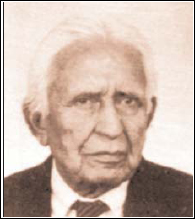 AS a Lahore daily published the news of the death of C.R. Aslam, there was no mention of its first publisher. The paper was then published as a weekly. Its declaration was in the name of Aslam and it was he and Hameed Nizami who had launched it from Beadon Road. Both of them were old class fellows and had matriculated from the Government High School, Sangla Hill.
Born in 1909 in village Kot Nizam Din, Chaudhry Riaz Aslam was the son of a small landholder who could not afford to send his third son for college education in Lahore. C.R. preferred to help his father, Muhammad Aulia, in farming and continued his studies privately. First he did Munshi Fazil in Persian and then cleared FA and BA in English. After his elder brothers had completed their education, C.R. was supported by his father and joined the University Law College. He earned a degree in law in 1936 but could not get a proper job. It was then that he collaborated with Hameed Nizami to bring out a weekly, ‘Nawa-i-Waqt’.
After the start of the Second World War in 1939, C.R. joined Controller of Military Account’s office and served at Lahore, Karachi, Mathra, Calcutta and Palampur now in Himachal Pradesh where he came in contact with a communist leader, Hazara Singh. As an inspired leftist, C.R. resigned from service and came to Lahore to do masters in economics – so that he could understand Marxist theories of economics. Ajay Ghosh was then staying in Lahore and C.R. became his confidant. Sardar Shaukat Ali led him to the Communist Party’s office on 114 McLeod Road where he met Dada Ferozuddin Mansoor, who was from C.R’s Sheikhupura district. Shaukat Ali and C.R. became active in All-India Students Federation and also became members of the Communist Party. C.R. was elected the president of the Punjab branch of the Federation and raised the Democratic Students Federation, a student wing of the party.
By 1948, C.R. was very active in railway workers’ trade union and was elected the secretary of the North-Western-Railways Workers Trade Union of which Mirza Muhammad Ibrahim was the president and Faiz Ahmad Faiz was the vice-president. C.R., Mirza Ibrahim, Sobho Gianchandani, Jamaluddin Bukhari, Eric Cyprian and Muhammad Husain Ata were the delegates nominated for the Second Congress of the All-India Communist Party at Calcutta in 1948. Mirza Ibrahim was arrested for serving a strike notice to the Railways and C.R. was busy in organising the strike. Consequently, none of the two could attend the Congress which decided to establish a wing each of the party in East and West Pakistan. Sajjad Zaheer was made the secretary-general of the Communist Party in West Pakistan supported by a committee that included Syed Sibt-i-Hasan, Afzal Khan, Mirza Ashfaq, Mirza Ibrahim, Muhammad Husain Ata, Sobho Gianchandani, Jamaluddin Bukhari and C.R. as its members.
C. R. Aslam was for the first time arrested in April, 1948. He was detained in Lahore Central Jail and later shifted to Mianwali Jail. The so-called Rawalpindi Conspiracy Case in the 1950s brought hardships and difficulties to the leftists and C.R. was no exception. He also worked for Mirza Ibrahim’s election for the Punjab Assembly in 1951 and almost won the election but for the ‘jhurloo’, a word coined to describe poll rigging. This was the first ever election in the newly established Pakistan, which was rigged on a massive scale, under the instructions of prime minister Nawabzada Liaqat Ali Khan. In July, 1954, the Communist Party was banned and on July 24 the same year, C.R. was arrested along with Dada Ferozuddin Mansoor, Mirza Ibrahim, Lal Khan, Sibt-i-Hasan, Hasan Abidi, Hameed Akhtar, Rauf Malik and Abdul Ghani.
C.R. joined the Awami League, but left it to form the National Party later on named National Awami Party. He was elected its provincial chief and was arrested after the imposition of the first martial law in October 1958. The NAP was revived and ultimately bifurcated into two. C.R. was in the Bhashani Group which was considered to be pro-China. After the separation of East Pakistan, the Pakistan Socialist Party was formed which he led for many decades. C.R. Aslam struggled to empower the poor throughout his life. He died with his boots on.
| © DAWN Group of Newspapers, 2007 |



























