



 0
0

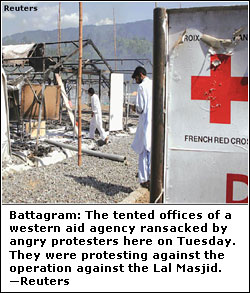 ISLAMABAD, July 10: The bloody end to the Lal Masjid saga has once again brought the madressah reforms to the forefront raising queries whether the government would be able to achieve its objective of bringing them at par with the regular school system of the country.
The Lal Masjid-run Jamia Hafsa and Jamia Fareedia may well be among a handful of seminaries directly involved in promoting the armed militancy and violence. The government has a serious challenge ahead to determine that how many of them could be brought on board.
When the education ministry conducted its National Education Census last year, there were 13,000 madressahs running in every nook and corner of the country with over 1.5 million students enrolled with them.
According to the NEC, Punjab takes lead with 5,459 seminaries followed by the NWFP, 2,843; Sindh, 1,935; Federally Administrated Northern Areas (FANA), 1,193; Balochistan, 769; Azad Jammu and Kashmir, 586; Federally Administrated Tribal Areas (FATA), 135, and Islamabad Capital Territory (ICT) with 77 madressahs.
The madressahs covered in the NEC have affiliation with three different boards called Wafaq, which controls 28 per cent of the total seminaries in the country; Tanzeem 22 per cent; and Rabta 7 per cent and other small organisations look after 8 per cent, whereas the rest of the 35 per cent are run independently without any affiliation.
Wafaqul Madaris control madressahs run under the Deobandi school of thought, Tanzeemul Madaris has madressahs of the Barelvi sect affiliated with it and Rabta, a madressah board managed by the Jamaat-i-Islami.
The government’s earlier initiative to reform madressahs to bring them at par with the regular school system of the country had failed. However, with the Lal Masjid episode being in the headlines worldwide during the last eight days, the government has to take some concrete decision in days to come.
Presently, the government had put madressah reforms on hold until a revised PC I had been accepted by all quarters concerned.
During the last five years, the madressah boards had refused to come on board with the government, expressing their reservations that in the name of reforms they would eventually be taken over by the government.



























