0
0

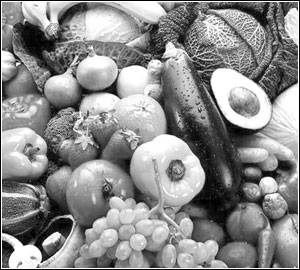 Most people depend on vegetables for their kitchen and culinary requirements, while fruits are mainly consumed by the middle and upper-middle income groups. If the price is affordable, the vast majority would consume such items.
In the wake of increasing demand for fruits and vegetables, keeping in view food safety and food security objectives in mind, the pricing system of fruits and vegetable has to be checked at length. A few bottlenecks in the pricing system of fruits and vegetables have been found, which are:
The marketing system is informal, quality differences are visual, transport facilities are inadequate, market information at the producer level is virtually non-existent and the pricing mechanism is unsatisfactory.
There is a great potential to improve both the operational and pricing efficiency of the current marketing system. Efforts directed towards providing road services and maintenance, transport facilities, input supplies, consumer subsidies, market information, and marketing research, are likely to benefit the producers as well as the consumers if the marketing and pricing efficiency is improved.
Looking at the present pricing system of fruits and vegetables, it is clear that it involves complexities and convolutions. For example, for a comparable produce of similar quality, there are different official prices even within a district as all market committees within a district (usually more than three) are responsible to announce prices of fruits and vegetables which are auctioned within the notified area of a particular market committee.
Usually an item will be quite differently priced even within two adjoining Tehsils mainly because of the fact that two different market committees are involved in the price mechanism which generally is based on the auction price for a particular day. Surprisingly, this price will never prevail for the next day as different number of buyers (usually shopkeepers and vendors and not the ultimate consumers) and sellers will participate in the auctioning process next day and the price will vary from the previous one.
This system has another drawback even on the basis of timings of the auctioning process during a particular day. Generally, in the beginning of the process of auction, there are more buyers and fewer sellers which results in higher auction prices while later as auctioning progresses, the number of latter increases gradually resulting in competition. Ultimately the auction price is lowered. But the problem starts from here in the sense that the vendor or shopkeeper who has purchased the produce at higher prices is not prepared to sell it at the price notified by the market committee, which usually represents the prices on lower side. This results in rows between consumers and sellers due to inconsistency of the rates prevailing in the market and official lists.
Not all sort of items are produced everywhere rather they are transported from various parts of the country to the places where they are deficient. It involves transportation and handling costs over and above the cost of production. The supplier will be encouraged if its produce fetch good price, but under the prevailing pricing system, it is very difficult as it does never account for the transportation and handling expenditures of the suppliers, rather it only accounts for the auctioning price which usually fluctuates by the number of sellers and buyers. Thus, on a particular day, a seller may be better off and the other day the consumer and vice versa, which is against the principle of welfare economics.
The present system also involves more efficiency loss due to the fact that first the produce has to be transported to the fruit and vegetable markets for the establishment of a price and then back to the remote areas like the villages and rural areas (mostly producing sites) which causes the price hike for the consumers of the actually producing areas of the produce.
An informal study of two fruit and vegetable markets in the central Punjab revealed some thought-provoking results. Various market intermediaries and other stakeholders involved in marketing and purchase of these items, including consumers, were interviewed to evaluate the strengths and weaknesses of the pricing mechanism of fruits and vegetables. About 40 per cent household consumers were of the view that present system of pricing is not acceptable as prices of same produce may fluctuate even at the premises of the fruit and vegetable market during a particular day and they are charged differently.
However, about 20 per cent consumers were of the view that the present system of pricing may work efficiently with minor changes. In case of commission agents (arhties), their response was mixed one as about 20 per cent of them were of the view that pricing system was not working to the level of satisfaction and may be changed which should consider the costs of production, transportation and handling of the produce till its auctioning. About 35 per cent of the commission agents had the view that the present system may perform efficiently if some minor changes are introduced such as an established benchmark price for auctioning to cater to the needs of the producers and consumers in a befitting manner.
The crux of the discussion is that the present pricing system has to do something with efficiency whereby it is acceptable both to the producers and consumers. In this regard, a pre-estimated cost of production along with transportation, processing and handling cost for various items of fruits and vegetables may serve as a benchmark price for their auctioning.
To achieve this end, a short-term estimation process with the collaboration of market committees, local authorities and agriculture department may be quite helpful. This benchmark price should serve as support price for a particular period which may range from one month to a whole crop season.
Similarly, through encouraging the collection and speedy publication of market news and intelligence in particular area, publishing periodic reports on supplies and prices of the main agricultural products, and studying and reporting on general trends of supplies, prices, and demand; major bottlenecks of the present pricing and marketing system may be revoked quite efficiently and successfully.
The policy options to address issues related to production and marketing include protection and development of already existing institutions that can provide a sense of continuity and stability of prices of these primary agricultural products. An increasing availability of price information on agricultural and food products is essential for the market to efficiently perform the price discovery function.
A policy of collecting, processing and disseminating information about quantity and price of traded goods must become a priority. Market price can then perform its allocated function and allow rational decision-making by producers and consumers. A recently introduced practice of publishing agricultural commodity prices in daily newspapers and bulletins is a step in the right direction. Establishment of market situation teams by the government may also serve to shrink inefficiencies in the field of marketing and pricing.
The teams should prepare and distribute evaluation of the current market situations. The unfolding dynamic process of transition is under way while the dismantling of old economic institutions has not yet been completed. The development of system of gathering, processing and disseminating information has to be accelerated to improve informed decision-making, shorten the transition period and limit economic chaos.
To wrap up, there is a vast field to be covered, ranging from the elimination of uneconomic methods of marketing to the planning of production, distribution, and consumption and to undertake, investigations into the character of the fruit and vegetable markets, character of the consumers, the factors affecting supply and demand, and the means which might be adopted to stimulate the production and demand both generally and in regard to particular commodities.