0
0

PESHAWAR, July 5: The Japanese government has approved a $20 million grant for the establishment of the Khyber Institute of Child Health and Children’s Hospital, according to credible sources.
“The Japanese government had received (proposals for) 16 projects from Pakistan for consideration of grant-in-aid. Only three were approved with the child institute at the top,” said officials, adding that the Japanese government would soon release the funds.
The concept paper for the project had been approved by the Economic Affairs Division last year which was forwarded to the Japan International Cooperation Agency (Jica). The agency submitted the document to Tokyo for final approval, they said.
The NWFP has at present only 1,000 beds for a population of 11 million children, which means that there is only one bed for 10,000 children. The government, being signatory to about 20 international conventions relating to child rights, is yet to cater to the needs of children in the country.
Except for the NWFP, all the provinces have child health institutions where they are provided specialised diagnostic and treatment facilities. The provincial government has already allocated a building vacated by a French NGO to the Khyber Institute of Child Health (KICH) in Hayatabad Township.
The Japanese ambassador to Pakistan recently met NWFP Chief Minister Akram Khan Durrani and discussed the modalities of the project.
The chief minister pledged an amount of Rs150 million for renovation and refurbishment of the building, besides provision of 20 kanals of land in the Hayatabad Township on which a children’s hospital would be constructed.
The land is owned by the Sarhad Development Authority (SDA) and will be bought by the government.
The government of Japan seems extremely enthusiastic about the project. A Jica team visited the plot and the building pledged by the government several times.
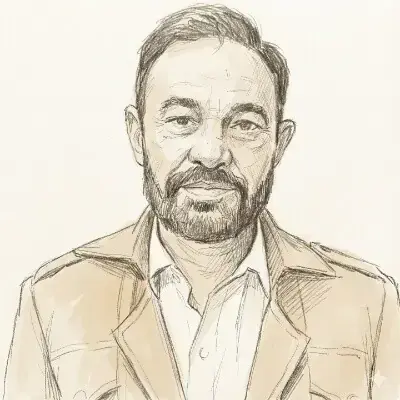
Prof Dr Abdul Hameed, focal-person for the project, said: “The need for such an institute has long been felt because the children have to be rushed to other cities for specialised treatment.”
The head of the child health department at the Khyber Teaching Hospital, Dr Hameed said the KICH would be built over a period of three years in three stages and would play a supervisory role to integrate child-health facilities in the entire province.
He said there were no specialist doctors for specific problems of the children. The KICH would have facilities such as neurology, neurosurgery, psychiatry and paediatric surgery departments. Facilities required for diagnosis and treatment of kidney, blood and other diseases would also be put in place.
“The KICH will also cater to the research side of child health. It will compile data about the prevalence of particular diseases and epidemics and devise strategies to cope with the problems,” he added.
He said the institute would act as a “brain” to pool all resources in paediatric care facilities. It would offer primary, secondary and tertiary-care facilities simultaneously.
Dr Hameed added: “At the moment, we lack data regarding various ailments among children. The institute will enable us to compile data about diseases and create a vision for the policy-makers to devise strategies.”
At least 110 children out of every 1,000 under the age of five die each year, whereas 90 out of every 1,000 below the age of one are unable to celebrate their first anniversary. In contrast, only six children out of every 1,000 die in Sri Lanka due to the prevalence of integrated paediatric health-care facilities there.