0
0

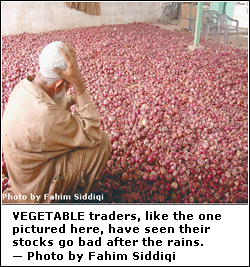 KARACHI, June 29: The city’s New Sabzimandi is a classic example of the Sindh government’s neglect. The 100-acre marketplace was enough of a trial with heaps of garbage, rotting produce and filth on the so-called roads. But after the recent rains, the scale of the assault on the senses is mind-boggling.
Infrastructural problems and the recurrent post-rain scenario have plagued the mandi since its inception six years ago. But the market’s administration refuses to take note of the unhygienic conditions persisting in the place that earns Pakistan millions of dollars in foreign exchange through the export of fruit and vegetables.
The president of the Falahi Anjuman Wholesale Vegetable Market on the Super Highway, Haji Shahjehan, said that no part of the Rs3-3.5 million earned annually by the Market Committee through markets fees and vehicle entry charges were invested in infrastructure, and it was unclear where these funds were being spent.
Meanwhile, the situation on the ground is such that dealers and customers don long boots to wade through dirty passageways that are barely one foot wide. Drivers of transport vehicles have also become immune to dangerous potholes and puddles that pockmark the so-called roads of the market, particularly after a spell of rain.
The Sabzimandi has no proper sewerage or drainage system and to add to the vendors’ miseries, the recent storms have uprooted the wooden and tin sheds of many shops.
The eye of the storm
The recent rains have badly affected the Sabzimandi’s supply, reducing the number of arriving trucks from an average of 800-1,000 every day to 300-400.
According to Haji Shahjehan, “Sabzi Mandi traders have suffered a loss of Rs180-200 million since Saturday’s storm since daily sales have dropped drastically and produce has perished because of delayed arrival or poor storage conditions at the mandi.” He said that in the past few days, the wholesale market had been visited by only 30 per cent of the usual number of customers from the city, though the figure was abysmally low on the Monday following the storm when it dropped to 10 per cent. “They cannot enter the mandi which looks like a marshland and stinks,” he lamented.
The senior vice-president of the Falahi Anjuman, Haji Alimuddin, told Dawn that the prices of highly perishable items such as tomatoes had doubled and commodities that were selling at Rs6-7 per kg ahead of rains were now priced at Rs30 per kg. He added that in his view, daily sales had fallen by 80 per cent in the past few days because retailers chose not to buy the pricier produce. However, he said, the prices of ginger and garlic remained unchanged at Rs 25-30 per kg in the mandi as these were imported items.
Pricehike
Sabzi Mandi vendors have nearly doubled their prices after the recent storms caused a 50 per cent decline in the arrival of trucks from upcountry Pakistan. Many roads from Balochistan and other parts of the country remain flooded and high vegetable prices are likely to persist as long as the supplies remain low.
Retail markets
The price of tomatoes is very high at Rs80 per kg, despite having fallen slightly from Monday’s price of Rs100 per kg.
Onions and potatoes have risen by one rupee to Thursday’s price of Rs14 per kg — though they were priced at Rs12 per kg before the June 23 storm.
While wholesalers at the Sabzi Mandi say that the rates for ginger and garlic have not risen, retailers are employing the general rise in prices to their advantage and are quoting Rs50-60 per kg. These were priced at Rs40 ahead of the storm.
Okra (bhindi) is being sold at Rs40 per kg as compared to Rs 20-25 per kg before the storm. Similarly, white gourd (loki) has risen from Rs15-16 to Rs30 per kg. Bitter gourd (karela) has risen from Rs16-20 per kg to Rs35-40, while ridge gourd (torai) is now Rs30-35 per kg as compared to the earlier rate of Rs16-20.
According to a vendor, some vegetable, including peas, are not available at all since the wholesale prices have risen so high that they cannot be retailed at a profit.
On the pretext of reduced deliveries of upcountry fruit at the Sabzi Mandi, retailers are charging Rs40-50 per kilogramme of Chaunsa and Sindhri mangos, though the wholesale prices are Rs20-25 per kilogramme.
Wholesale market
The price of tomatoes remains Rs1,200 per 15-18 kg crate depending on quality. Before the rains, the rate was Rs100-150 per crate because of improved supplies from Balochistan.
Onions from Balochistan and the NWFP have climbed from Rs6-7 per kg to Rs9-10, while cold-storage potatoes arriving from the Punjab have gone from Rs7-8 per kg to Rs10-12.