0
0

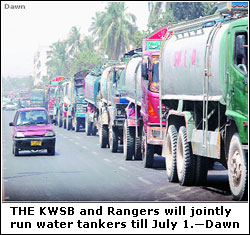 KARACHI, June 18: The Karachi Water and Sewerage Board, which was to take over the nine Rangers-manned hydrants in the city on Monday, has decided to operate them jointly with the Rangers until July 1.
It will start deputing its staff at the hydrants on Tuesday. The decision is apparently aimed at ensuring that the KWSB staff does not face problems in handling the affairs of the hydrants and the water distribution system through tankers once the Rangers are relieved of this responsibility.
The Rangers had been given control of the KWSB hydrants in 1999 when the city was experiencing a water crisis and the Hub dam, supplying 100 million gallon per day to the city, had dried up.
Meanwhile, City Nazim Syed Mustafa Kamal, who is also chairman of the KWSB, presided over a meeting of the Board’s executives and appreciated the Rangers’ performance in operating the hydrants’ efficiently for eight years.
The meeting was attended by DCO Javed Hanif, Managing Director of the KWSB Ghulam Arif, Brig Taqdees of the Rangers and other senior officials.
The nazim said that the Board would pursue the existing distribution system until all towns could take over and operate their respective hydrants.
He said that each town would ultimately be responsible for ensuring a smooth water supply to the deficient localities falling within its jurisdiction until the arrangements for piped water were made.
He said that the hydrants being taken over by the KWSB would finally be given in control of the towns in which they existed.
“A phase-wise closure of hydrants has been decided and the present leadership of the city has already started work on supplying drinking water to every locality through pipelines.
In this regard, the city government has accorded top priority to ensuring clean drinking water to citizens and rectifying the city’s sewerage system.”
KWSB MD Ghulam Arif told the meeting that the system devised by the Rangers would be pursued for one month. All zonal engineers had been made in-charge of their respective hydrants while executive engineers would oversee the hydrants’ operation.
Initially, 120 personnel have been deputed at the hydrants but 50 more persons are to be deputed.