0
0

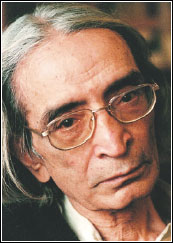 KARACHI: Two years before he passed away on June 11, 2004, Zamir Niazi, whose services to the print media in Pakistan remain unequalled even three years after his death, visited the Dawn office to formally present his collection of books on mass communication and the media.
Today the library boasts a Zamir Niazi corner with 281 books on mass communication — many of them rare and now out of print — and a large number of journals and press clippings. That was Zamir Sahib’s way of repaying the debt he felt he owed the paper where he began his career in journalism in 1954.
Today when the media is under tremendous pressure from the Musharraf government, I often think of Zamir Sahib and miss his telephone calls which he frequently made to me on the dot of 8.30 in the morning to catch up on the events in the media world, comment on my work and enlighten me with his insightful views on various issues of concern to journalists. This proved to be a learning experience, for how else does one learn journalism? His mission was to interact with journalists on a regular basis to spread his message. He constantly emphasised the need for the press to uphold its dignity and decorum while struggling for its right to be free.
Zamir Niazi’s championed the cause of press freedom not by being in the forefront of rallies of fiery slogan-chanting demonstrators. His role went deeper. He did what no other journalist in Pakistan has done so far. He chronicled the turbulent history of the press in three volumes — The Press in Chains, The Press under Siege and The Web of Censorship — that are now a definitive source material on the media in Pakistan. Zamir Sahib’s research shed light on how, when, why and by whom the freedom of expression was muzzled in Pakistan.
By exposing the wrongdoings of various elements — in doing which he put himself at great personal risk — Zamir Sahib built a strong case for unchaining the press.
Born in 1932 in Mumbai, Zamir Niazi studied liberal arts before joining journalism. He worked with Dawn from 1954 till 1965 and then with Business Recorder from 1965 till 1989. After retirement he became busier — this time it was his pursuit of knowledge and scholarship that kept him engaged in research which focused on the media. As a result three more books followed. Zameen ka Noha was compiled after the India-Pakistan nuclear explosions of May 1998.
What distinguished Zamir Niazi from many other colleagues in the media was his courage. He did not hesitate to speak out the truth and that was his forte and what won him the respect of old and young.
The Zamir Niazi memorial lecture has been organised by Qalam-o-Fun Barai Amn in the Jinnah Medical College auditorium on Shaheed-i-Millat Road at 6pm on Monday. Dr Tariq Rahman will speak on `Press and our freedoms’.