0
0

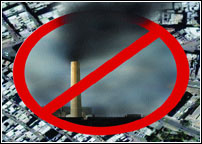 KARACHI June 4: Environmental concerns have forced the closure of many incineration facilities across the world and a global alliance has been formed against waste incineration.
Particularly in developing countries, the technology is criticised on the grounds that incineration facilities, particularly those dealing with clinical waste, lack standardised safety procedures and the capacity to control hazardous emissions such as mercury, lead and dioxins. Such substances, released when clinical waste is incinerated, are associated with a range of serious health problems.
Unfortunately, the seriousness of the issue is barely recognised in Pakistan. Few systems are in place for the systematic and safe disposal of municipal or clinical waste and where facilities for the incineration of clinical waste exist, they are used without regard to public safety.
It is estimated that 30 incinerators are currently in use across the country, mostly in hospitals located in populated areas. Experts say that these incinerators are generally obsolete and unprofessionally operated. Furthermore, hospitals do not have the equipment to monitor or control air pollution.
According to Ziaul Islam, director Environmental Impact Assessment/Monitoring of the Environmental Protection Agency (EPA), the EPA cannot monitor emissions because the relevant equipment is prohibitively expensive.” However, he pointed out that few of the incinerators in the country are actually being used, since the maintenance costs are very high. According to Mr Islam, a greater issue is the use of chlorinated plastics in hospitals, which are key sources of dioxin emissions.
“Few hospitals in Pakistan actually operate costly incinerators, and it is highly unlikely that those that do have equipment to control air pollution since it would further increase costs,” said Dr Altaf Ahmed, president of the Infectious Diseases Society of Pakistan. He believes that there are bigger threats to public health such as the mixing of hospital and municipal waste.
According to Dr Ahmed, Pakistan produces 250,000 tons of clinical waste per year, of which 10-15 per cent is infectious. A large proportion of this is dumped into municipal waste, which humans are exposed to. “When that infectious waste joins the non-infectious material,” said Dr Ahmed, “the entire lot becomes contaminated.”
In Dr Ahmed’s view, this problem can be countered by setting up infection control departments in all medical facilities and training staff to manage waste matter at source. “Once infectious waste is separated, only a small quantity will need to be incinerated and meanwhile, municipal waste will be rendered free of contaminated material,” he said.
This view is shared by Hammad Naqi Khan, director of the Environmental Protection Unit, World Wildlife Fund-Pakistan (WWF-P). “The inappropriate use of incinerators poses a serious risk to public health,” he said. “Some of the hospitals claiming to use incinerators are actually using furnaces.”
According to Mr Khan, the financial and environmental concerns involved can be addressed through the set-up of a centralised incineration facility which conforms to standard regulations on emissions.
As Dr Ahmed pointed out, alternatives to incineration are available but extensive research needs to be conducted to identify cost-effective options. “Institutions such as the Pakistan Council of Scientific and Industrial Research should investigate non-burning technologies while the Ministry of Health must ensure the implementation of hospital waste regulations and emissions guidelines,” he said. “Furthermore, the import of obsolete technology should be checked,” he warned, “since when the prices of incinerators fall in the West, they will be dumped in poor countries such as ours.”
Indeed, many obsolete incinerators have been closed down in the US. The US Environment Protection Agency estimates that a further 50 to 80 per cent of the incinerators currently in operation may be terminated because of the high cost of compliance with medical waste incinerator (MWI) standards. Potential alternative technologies include thermal treatment, steam sterilisation and other chemical and mechanical systems.