



 0
0

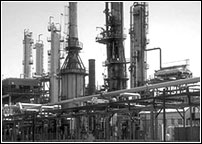 The industrial chemical industry is passing through difficult times. According to the recent reports, at least six production units have closed down, while the rest are beset with problems.
Ironically, this has happened at a time when the Japan International Cooperation Agency (JICA) has recommended to the government to strengthen the industry and to promote more investment in this sector. A JICA study recommends that the sector should be allowed tax benefits, low-interest loans, good infrastructure and other investment-friendly incentives.
In recent years, the industry has suffered regression (negative growth). There was an outflow of foreign direct investment (FDI) from the sector, recorded at (-)$39 million for July 2005-April 2006,whereas the country attracted a net overall FDI inflow of $2.2 billion FDI in the same period.
Nonetheless, the situation has not alarmed the policymakers as the investment policy continues to place this sector at the lowest priority in spite of huge opportunities for expansion.
Unfortunately, the investment--foreign as well as domestic--, is only lured into traditional industries like textile, automobiles and light engineering, as highlighted in the Pakistan Investor's Guide 2007 released by the Board of Investment
Globally, chemical industry is recognised as the "mother of industries" since it is important for industrial development and self-reliance, as a major raw material provider. Chemicals are used practically for in all manufacturing processes. For this reason growth of industrial chemical sector worldwide is considered directly proportional to the growth of overall manufacturing sector. But somehow it is not so in Pakistan. During July 2005-March 2006, the overall manufacturing sector registered a growth of 8.6 per cent. In comparison, there was negative growth of industrial chemical sector.
The chemical industry is narrow-based and concentrated in a few segments only. There are about 20 companies listed on the Karachi Stock Exchange.
While some segments of chemical industry have received due attention, others remain neglected. In spite of increased demand over the years, no attention has been paid by the government to improve policy environment for its growth.
The industry's major operators are the sole multi-national company namely ICI Pakistan, which has a major share of the domestic market, and two joint ventures with the European firms; Dynea Pakistan and Wah Nobel Chemicals. There are a number of units producing industrial chemicals in the SME and non-formal sector; however these do not generally possess the latest technology and modern skills.
Chemical industry primarily comprises blending and formulation mostly based on imports of basic and intermediate chemicals, whereas production facilities for basic chemicals are in effect very limited in the formal sector. Sodium carbonate, commonly known as soda ash, which is among the top 10 inorganic chemicals produced in the world, and sodium hydroxide, commercially termed as caustic soda, are the main outputs of the industry that are essential raw materials for various industries. There has been major expansion in this segment in last few years to meet the total domestic demand.
During the last 10 years (1996-97 to 2005-06) production of soda ash increased from 247,000 to 297,300 tons in 2004-05, registering a nominal growth of 20 per cent, and to 238,500 tons during first nine months of 2005-06. Also, its production suffered negative growth for three years during this period. Likewise, caustic soda production increased from 118,200 tons in 1996-97 to 206,700 in 2004-05 and 161,200 tons in 2005-06 (July-March),but demonstrated negative growth for a year during this period.
The local industry produces a diversified range of chemicals such as polyol or poly oxytetramethylene glycol (used by downstream polyurethane industry), heat treatment chemicals, sodium bicarbonate (used in textile and leather industries), pure terephthalic acid or PTA (used in polyester industry), urea resin and melamine resin (used in particle-board, chip-board and lamination industry), moulding compounds like formaldehyde and amino-plast resins (used in electrical accessories and dinner set production), guar gum and guar meal, gelatin, sulphuric acid, hydrochloric acid, acetic acid, stearic acid, glycerin, dyeing chemicals, hydrated lime, paraffin wax, calcium chloride and others.
Other petrochemical intermediate products manufactured locally are PVC (polyvinyl chloride), synthetic fibers, aromatics (benzene, toluene and xylene), carbon black, phthalic anhydride, maliec anhydride, formic acid, acetic acid etc. Engro Asahi Polymer & Chemical (private) Ltd are the only PVC manufacturers.
Statistics about production and sales of various chemicals are not available category-wise. It however has been observed that production of sulphuric acid, another major raw material for various industries, remained stagnant during last 15 years. Its production by the local industry was recorded 93,500 tons in 1990-91, 92,300 in 2004-05 and 72,000 tons during first nine months of 2005-06, registering negative growth for six years. Production of chlorine gas in 2005-06 (July-March) was 14,100 compared to 9,400 tons recorded during the whole 1996-97 year. Production of alkaloid chemicals is almost negligible after the closure of Sind Alkalies Ltd.
Logically, domestic market for industrial chemicals is growing rapidly but the country continues to depend heavily on imports to meet its domestic demand. Import of chemicals in 1997-98 amounted to Rs52 billion that tripled, in volume and value, rising to Rs160 billion or $2.5 billion in 2004-05. During July 2005-March 2006 import of chemicals amounted to Rs156 billion. Import of chemicals related products constitute 20 percent of total import bill. China is the major supplier of industrial chemicals at present. Among the western sources, the USA exported chemicals to Pakistan valued at $98 million followed by Australia at $59 million in 2004.
The huge imports of industrial chemicals show the importance and need for developing local industry. This sector lacks diversified production of basic chemicals, whereas a few can be produced using indigenous minerals. Currently, detergent active agents valued at Rs2 billion are being imported and thus there is a potential for setting up production facility for raw material for the detergent industry, like dodecyl benzene and tri-decyl benzene sulfonate. Likewise, the annual methanol imports of 50,000 tons worth over Rs600 million can be substituted by indigenous production based on natural gas.
The long list of chemicals required for various applications justifies additional investment in the sector in a big way.
It is indeed imperative for the government to support the industrial chemical industry on a priority basis.





























