



 0
0

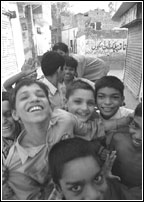 Pakistan’s economy faces four challenges today- stagnant real investment, rising inflation, growing poverty and increased concentration of wealth.
It is not known if managers of the economy, committed to provide fiscal and other incentives to the private sector for stepping up real investment have analysed their own data of overall real investment which declined from 15.8 in 2001-2002 to 14.4 per cent of the GDP in 2005-06. Simultaneously, the private sector investment dropped from 11.5 to 10.5 per cent of the GDP.
This drop was witnessed in spite of a stream of fiscal and other concessions made for inducing private investment in all sectors of the economy including abolition of wealth tax. Will the budget 2007-08 continue the same policy or make a bold departure by taxing the rich for reducing poverty?
The second formidable challenge is an inflationary trend – a spurt in prices of both food and non-food items with consumer price index (CPI) (on an annual average: June to June basis) moving sharply from 3.5 in 2001-02 to 7.9 per cent in 2005-06. The inflation rate has moved close to nine per cent by March, 2007 attributable to both monetary and fiscal factors.
As regards the monetary factors, real interest rates were kept at negative level during 2001-02 – 2004-05 so as to induce private investment. As the private investment did not pick up, the government being keen on maintaining growth momentum, shifted its policy to encouraging consumption. The policy allowed the banks to extend credit to consumers for the purchase of durable and semi-durable goods, so much so that a full-fledged campaign was launched by the bankers to persuade consumers to borrow even for holiday trips abroad.
This demand generation was fully supported by the fiscal policy in the budgets by reducing rates of corporate taxes on corporate bodies, producing durables and semi-durable consumer goods and on banks and financial institutions for sustained consumer banking which has touched the level of 15 per cent in overall bank advances and is a source of threat to the banking system.
It has been said quite often that the cheap bank credit made available to the private investors found its way to the speculative trade in land, real estate and stock exchanges. Another fall-out was that through the borrowed money. speculators also cornered the market for both food and non-food items and made windfall profits by fleecing consumers.
• As for raging unemployment and poverty, the official statistics reveal that unemployment rate which was six per cent in 2000-01 and moved to 8.3 in 2003-04 stood at nearly 7.7 per cent in 2005-06. Poverty as measured by caloric-based method (head counts), stood at 34.5 per cent in 2000-01 and according to the Economic Survey 2005-06, it declined to 23.9 per cent in 2004-05. These numbers are in dispute as these have not been released by the Federal Bureau of Statistics which is the legal body under the Rules of Business.
The poverty-line is based on Rs878.64 per adult per month which is far lower than internationally accepted poverty line of dollar one per day which comes to nearly Rs1800 per month. It is obvious that the “national poverty line” has been pitched at a lower level for obtaining better results.
It is, therefore, safe to assume that the poverty level is much higher. However, the same estimates do admit that Gini Co-efficient ----- a measure of inequality ------ has deteriorated from 0.2752 in 2000-01 to 0.2976 in 2004-05. This means that the relative fruits of growth accrued more to the rich than the poor.
• Serious fault lines in our present economic structure are being highlighted so as to dilate upon some measures that can be taken in the budget 2007-08 to rectify the current challenges These measures are predicated on the assumption that the government is prepared to make a bold policy shift from pro-rich to pro-poor.
It must be recognised by the budget-makers that their inducement effort has not worked for stepping up real investment in the private sector. The public sector sidelined over past decade from production, infrastructure and social sectors should, therefore, be selectively re-inducted in the economy. The government has meekly realised during last two years that public sector investment is inevitable for raising the investment level.
As such, the Public Sector Development Programme (PSDP) which shrank to the level of 2.2 per cent of the GDP in 2000-01 as compared to a peak level of 7.8 per cent of the GDP in 1991-92, was raised to the level of about 5.4 per cent of the projected GDP in 2006-07. This underscores the necessity to substantially raise the PSDP size, particularly in water, energy, roads, agricultural research and extension in the coming budget.
The second and most important measure for arresting inflation and cost of living may be to discourage consumption expenditure and encourage household savings. The State Bank should put a ceiling on advances by banks for consumption goods. At the same time, prudential regulations should be introduced for payment of returns to depositors by banks in relation to the lending rates charged by them so as to encourage savings.
This step should be reinforced by fiscal measure of a higher rate of taxation of those banks which violate the prudential regulations. At the same time, profit rates on the National Saving Schemes should be enhanced for mobilising household savings for public investment.
As an anti-inflationary measure, budget-makers should treat “capital gains” made in the land and estate transactions and trading of shares on stock exchanges as an income under sub-sec (1) of Sec 11 of Income Tax Ordinance 2001. Exemption or a low rate of capital value tax can hardly be substituted with income tax on such income. At the same time, “speculation business” should be treated as distinct from business income as provided under Section 19 of the IT Ordinance and be brought under the income tax net, especially for those who indulge in this business by cornering markets of food items.
The prime minister has announced on May Day that the government would raise minimum wages, salaries and pensions of workers and government employees in the next budget. This measure, if taken, is likely to further fuel inflation and make the cost of production of our goods uncompetitive in a competitive world. What is required is to take measures for a reduction in the prices of wage-goods.
This can be achieved by imposing regulatory duties on export of food items such as wheat, wheat flour, lentils, vegetables and other items of common-man’s use. Kerosene oil falls in this category which should be exempted from all taxes entering into price-fixation formula such as import duty, sales tax, excise duty and petroleum levy.
• Payment of subsidies on essential goods discarded over-time under the IMF prescriptions should be re-introduced, especially in case of essential goods. This will help reduce the cost of these goods for the poor and indirectly help the industry by keeping the cost of production low.
As for unemployment and poverty fault-lines, the next budget must earmark funds for employment-based transfers, offering guaranteed employment to agricultural labour and small farmers on rural works programmes on the pattern of “Mahrashtra Employment Guarantee Scheme” in India. The programme may be started on a selective basis in the most backward districts as a pilot project and extended to other districts gradually in coming years.
• The “income-based transfers” to the poor are run from Zakat and Bait-ul-Mal Funds. These transfers have not contributed in rehabilitating them in any productive activity. The provincial governments also run such programmes through their social welfare departments. All these programmes should be brought under one ‘umbrella’ as their multiplicity results in duplication, waste and high administrative cost. Once placed under one coordinating agency, the focus of all programmes be directed to making the vulnerable population productive through “income-based transfer”.
• Pakistan has been pursuing the Social Assistance Programmes such as community development programmes, medical social schemes, vocational training centres, centres for handicapped etc. These social interventions are limited in coverage and are stand-alone interventions. For these interventions next year’s budget must not only allocate larger funds but bring them under one coordinating agency.
The real dilemma for the government will be how to make a drastic reversal in the policy of “pro-rich growth” to “pro-poor growth” in an unpredictable political climate prevailing in the country. However, budget-makers must realise that their policies pursued so far have contributed to accumulation of wealth in fewer hands, and massive poverty and obscene inequality. The next budget must address them in order to stem the tide of socio-political and economic upheaval.





























