0
0

ISLAMABAD, May 23: Pakistani exporters are getting highest ever cash incentives during the current regime in the form of low interest rates on short-term and long-term borrowing, besides cash subsidies, says an official report.
Despite these fiscal incentives and subsidies, exporters did not improve their competitiveness to produce quality products to compete with products manufactured in other countries. This study was part of the commerce ministry’s presentation to the prime minister on export strategy recently.
The report prepared by commerce ministry, a copy of which was made available to Dawn, indicated that the local products were low-value- added and of poor quality, thus fetching low prices in international market as compared with those coming from other countries like India, Bangladesh, Sri Lanka etc.
No competitor other than Pakistan provides cash subsidy with the exception of Bangladesh. The scope of the latter’s scheme is limited and linked to value addition. No other leading competitor of Pakistan like India, China and Sri Lanka provide any cash subsidy to their exporters.
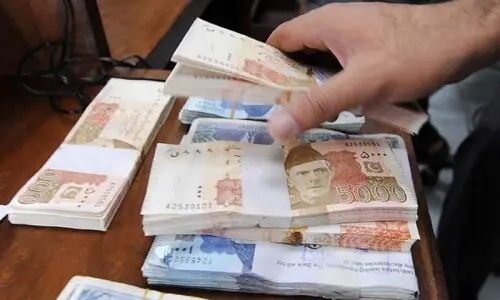
According to the report, Pakistan has paid out Rs12.46 billion as cash subsidy since April 2005 on export of textile garments, including bath robes under the six per cent Research and Development (R&D) subsidy. While in Bangladesh 5 per cent refund available on net value addition on the export of textiles.
Similarly, Pakistan also extends another Rs2.89 billion cash subsidy to exporters on export of dyed/printed fabrics just in eight months of the current fiscal year (July-March).
According to the report, Pakistan is the lone country amongst its competitors like Bangladesh, India, China and Sri Lank that also provides cash support on leather footwear export and freight subsidy on eligible items to specific destination.
The government paid Rs73.97 million as cash subsidy on leather footwear export since July 17, 2006 to March 17, 2007. From the year 2002-03 to 2004-05, an amount of Rs2.45 billion has been disbursed under freight subsidy.
Analysts said that the government should probe the payment of subsidies as it was not clear where the money had been invested by these exporters.
The cost of short-term financing for export is the lowest in Pakistan amongst its competitors both in nominal as well as real terms. The State Bank provides finance to banks at the rate of 7.5 per cent (6.5 per cent concessionary finance rate+ 1 per cent spread) subsidising to the extent of 2.34 per cent as against the commercial lending rate of 12.57-13.57 percent.
The concessionary finance rate in India is 9 per cent against commercial rate of 15 per cent, 6-7 per cent in Bangladesh against 11-14 per cent and up to 18 per cent in Sri Lanka both concessionary and commercial.
In Bangladesh, the concessionary finance rate of 7 per cent is provided only up to a certain percentage of net value of L/C. In the long-term financing the cost of export borrowing for Pakistani exporters are also lowest as compared to Bangladesh, Sri Lanka, India and China. The concessionary long-term financing of 7.5 per cent is available to all export-oriented projects as against the normal lending rate of 12-13 per cent.
While in India concessionary finance is available only to textile units whether export-oriented or not under technology upgradation funding scheme. Under the scheme India subsidises 5 per cent interest rate of normal lending rate, which is in the range of 9 to 15 per cent. In Bangladesh and Sri Lanka there is no concessionary financing for long -term borrowing. The report also identified other reasons for the low performance of exports like increased wastage of inputs adding to the cost, low productivity of labour, low return on capital, insignificant expenditure on research and development.
Besides, Pakistani export houses lack capacity to meet bulk orders, inability to meet requirements of consumers in terms of fashion and design and un-competitiveness in terms of adherence to the contracted quality and delivery schedule.