0
0

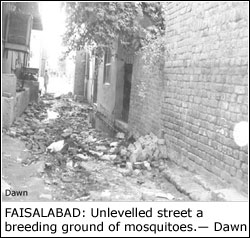 FAISALABAD, May 18: Unable to forget their dear ones a majority of who were cut down in their innocence and prime by gastroenteritis after consuming polluted tap-water in Ghulam Mohammadabad one year ago, the heirs and relatives have been awaiting the relief promised by the powers-that-be.
The remembrance of the incident rubs salt into the wounds of the affected families as they talk about the measures announced by the provincial and the district governments.
The Punjab government immediately after the outbreak of gastroenteritis had announced upgrade of the General Hospital, replacement of decades-old rusty waterpipes, compensation for 20 or so families of gastroenteritis and supply of potable water for the residents. One year on the situation is the same if not worse.
Gastroenteritis broke out in D-Block of Ghulam Mohammadabad when Wasa’s water supply to the colony was restored after a four-day suspension. As if water-supply suspension was a blessing in disguise for the residents, a large number of them — mostly children — complained of stomach ache and other problems after consuming ‘yellowish’ water and soon they made their way to the General Hospital, a health facility which had provided treatment to hundreds of gastroenteritis patients despite shortage of resources.
Owing to shortage of beds, patients were administrated drips and medical treatment under tents and trees and at a nearby state-run school that was declared an emergency centre. More than 20 people succumbed to the ailment. The aggravating situation ‘alarmed’ the Punjab government and Chief Minister Pervaiz Elahi visited the area 10 days after the death of the poor people. Governor Khalid Maqbool did not bother to see the victims despite being present in the city.
The CM announced Rs940 million for the removal of water-supply lines in the city and Rs700 million for the upgrade of the hospital to 250 beds. However, the hospital still has the single-bed emergency as it was when gastroenteritis broke out.
Among other ills is the rundown boundary wall which allows the hospital to be a passage for stray dogs. What if the patients face inconvenience, doctors too have their share of difficulties especially in treating those patients who visit the hospital from remote areas of the district.
Requesting anonymity, a doctor told Dawn that the last year’s tragedy had not shaken the government out of slumber.
 According to sources, bureaucratic hurdles had been an obstacle to the project which was still in the official files. Hardly a month ago the provincial government raised its reservations regarding the upgrade and it was only after 10 months did it seek details of the existing facilities at the hospital.
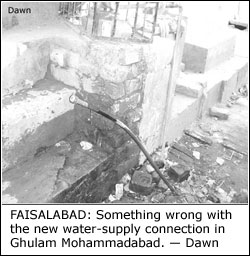
As for the replacement of rusty water-supply pipelines, Wasa only replaced the lines of D-Block to which a majority of the victims belonged. The residents still have serious reservations against Wasa which, they say, has failed to provide clean drinking water.
They said the Wasa authorities increased the water tariff soon after replacing the old pipelines and they installed meters on the taps of selected sites which put an additional financial burden on the consumers. The water quality, on the other hand, is still poor and was unfit for human consumption.
Stomach problems have once again gripped the area, but most of the people avoid visiting the state-run health facilities.
Sources said eight families of gastroenteritis victims — Nazir Ahmad, Ms Kiran, Muhammad Nawaz, Ms Shakeela Naz, Ms Mariam, Ms Samina Khalid, Muhammad Ibrahim and Faiz Muhammad — are yet to be compensated. They have been running from pillar to post to get the compensation, but to no avail. DCO Azam Suleman, on behalf of the Punjab government, had announced compensation of Rs100,000 for each family.
A district government officer said the cases of all persons had been forwarded to the government and the compensatory amount would be arranged soon.
City District Nazim Rana Zahid Tauseef had constituted a committee to probe the matter, however, no action was taken against the officials held responsible by the committee, sources said. The committee also blamed the then MD Wasa, Raas Masood, and recommended his immediate transfer but he did not conform to the recommendations, sources said, adding that most of the officers were still working in the department.