0
0

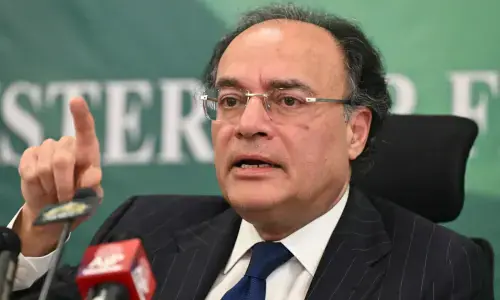
KARACHI, May 16: Mr. Shaukat Tarin, best known for his banking brilliance, was elected chairman of the Board of Karachi Stock Exchange on Wednesday. The meeting of the KSE board carried several other items on the agenda, but most directors either switched off their phones after the meeting, or were reluctant to talk. A refreshing exception was member director Haji Ghani Haji Usman, who responded in reply to queries that no decision had been taken in respect of reduction of scrips eligible for CFS financing and the timeframe for transition of trade from T+3 to T+2.
The election of Tarin in place of Mr. Zaffar A. Khan who had opted to resign and take up the job in the same capacity at PIA, was already in the air.
Mr. Tarin has also assumed additional responsibility as chairman of National Commodity Exchange Limited (NCEL), which started business late last week. In relation to the capital market, he also heads the SECP’s Committee on CFS MK-II.
While congratulatory messages were showered on the new chairman, a few market participants wondered if one man — a banker and not directly related to the capital market — was the best choice to be burdened with all those responsibilities?
But under the rules none of the five broker directors could be the chairman and it had to be one of the other four professional directors nominated by SECP to take up the post. So why not Tarin?
The two issues sitting heavily on investors’ mind were the conversions from T+3 to T+2 trading system and the possible cut in number of scrips eligible for CFS. Most market participants thought that the first would go to improve the brokers’ liquidity and would be healthy for the market. But many dreaded the latter.
In respect of settlement days, it was decided to study “international best trading practices”, before taking a plunge, said Haji Ghani.
But the rumours doing the rounds - that the board would decide to reduce CFS eligible securities from 71 to 51 - had set in a panic reaction during the second half of trading time on Wednesday, which saw the KSE-100 index fluctuate wildly by 338 points and settle at a loss of 112 points for the day. None of that, which was feared, really happened.
Two of the top brokers thought differently on the issue of reducing the number of scrips. One who brushed it aside as of no consequence said that in earlier meetings with the SECP, it had been agreed to reduce the number of CFS eligible scrips.
The apex regulator’s argument was to shed 20 scrips from the CFS, which were barely traded. And the broker saw logic in it in the sense that an unsuspecting investor may not be trapped by dabbling in those securities.
“In any case, almost 75 per cent of the CFS financing takes place in just 20 stocks,” he said and calculated that even if the scrips were shed, the impact over the Rs55 billion upper limit of CFS, would have been of no bigger sum than Rs5.5 billion.
The other broker contended that it was just for that reason that when no trading in those scrips took place, what was the regulator worried about? But most market participants and analysts, including those two major brokers, were unanimous in decrying the apex regulator’s habit of changing rules at whims.
SECP had asked KSE to explain the rationale and suggest proposals for setting criteria of scrips selected for funding under CFS. But a day earlier the internal review committee of the KSE was said to have rejected such suggestion.
“The board probably went along with the review committee’s decision,” said an ex-director of the bourse adding that since no decision could be reached at the meeting of the board on Wednesday, the matter was held in abeyance.
In case the market shifts its course to North on Thursday, weak holders, who sold off in panic on Wednesday, would end up losers. And who would be to blame? For the second time in two weeks, the KSE has been thrown into turmoil not because of something fundamentally going wrong with the market, but due to the irresponsible attitude to decision makers. The mention of a clause in the Constitution allowing imposition of emergency in the country, by Prime Minister Shaukat Aziz on May 6, may have done nothing more than create small ripples in the pond of politics, but it stirred a storm in the market, which saw a plunge of 432 points in index and loss of Rs125 billion in market capitalisation soon after the market opened following that statement.
The loss to investors on Wednesday, at least in part, has been attributed by many market pundits to the ‘fast-track’ and ‘quick change’ policies of the regulator. One such investor, who seemed to have lost money on Wednesday, was intensely critical of those who ran the show and without mincing words, he asked: “Who will regulate the regulator?”