The politics of exile
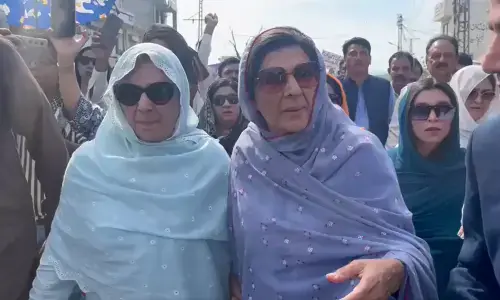
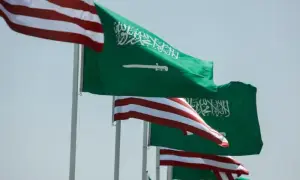
ONE should welcome the Bangladesh government’s decision – no less than a volte face – to lift the ban on the return of the Awami League leader, Hasina Wajed, to her country. On instructions from her government, she had been prevented on Sunday from boarding the aircraft in London en route to Dhaka. Similarly, one should also commend the concurrent move of the interim administration to withdraw the pressure on the BNP leader to leave the country. Khaleda Zia, whose sons have been charged with corruption, was being offered a “deal” that would have banished her to Saudi Arabia. Irrespective of what the charges against the two leaders are –many of them admittedly carry weight – it is time the military-backed regime in Bangladesh recognised the futility of resorting to the strategy of sending leaders considered persona non grata into exile. Political wisdom demands that such leaders are allowed to remain in the country and face the charges that may have been brought against them. Meanwhile, they should also have the freedom and opportunity to mobilise their followers to fight for democracy and a constitutional dispensation which has been seriously weakened in the wake of the political chaos that has gripped the country since November 2006.
It should be noted that Bangladesh is not the first country to have tried the strategy of political exile before it changed its mind. Pakistan’s military juntas have perfected the art of dispatching their perceived nemeses to distant lands without loss of time, Iskander Mirza being the first to be shown the door. Obviously, shrewd autocrats have learnt from the experience of their predecessors. The attempt to get a political leader out of the way by executing him – even when a trial is held -- has backfired by making a martyr of him. Thus the violent deaths of Z.A. Bhutto in Pakistan and Shaikh Mujibur Rahman and Ziaur Rahman in Bangladesh at the hands of their rivals strengthened the hands of the dead men’s political heirs and the parties they headed. Political exile has thus been found to be the convenient, though shortsighted, option. General Musharraf took the easy route and sent Nawaz Sharif to Saudi Arabia under a “deal” for ten years. Benazir Bhutto was already in self-imposed exile in Dubai and London when the army seized power in October 1999. She had left Pakistan when she was sentenced to imprisonment during the Sharif period. Thus, Musharraf was spared the trouble of conjuring up reasons for exiling her too. But seven years on, it is now clear to the general that he has not been able to turn them into non-entities in the country’s politics by keeping them away. Sooner or later their return will become inevitable and it will then be back to square one for him.
The fact of the matter is that exiling ‘unwanted’ or ‘troublesome’ leaders and denying them their right to participate in politics does not provide a panacea for an autocratic ruler when he is up against a popular upsurge for democracy. Not that the politicians, for their part, have played a consistently healthy role in strengthening the democratic process. But unlike the armed forces, politicians do not have the capacity to destroy the in-built corrective mechanism inherent in a democratic system. A government that exiles its own citizens for expedient reasons suffers a loss of credibility and responsible conduct and comes to be seen as one interested only in keeping itself in power.
No need for the Rangers
THE Sindh government’s request that the Pakistan Rangers be stationed permanently in Karachi defies logic. The Rangers were deployed in 1989 to help tackle violence sparked by rival student groups at the University of Karachi, and were called in again in 1992 during the army-led operation against the MQM. Even though the city has been relatively peaceful for many years now, some 12,000 Rangers are still based in Karachi, their stay subject to annual extensions requested by the provincial government. Now, when there is no justification for their presence in such large numbers, the Sindh government wants to formalise the Rangers’ role in law enforcement. This despite the fact that the Rangers had little impact even when they were needed and their presence now is more or less ceremonial. Where the paramilitary force has succeeded, however, is in occupying prime real estate and disrupting the smooth functioning of some educational institutions in Karachi. The Rangers’ headquarters is the historic Jinnah Courts building and they also remain ensconced in college hostels. The Landhi Medical Complex was occupied by the rangers for 11 years and the National Coaching Centre, the city’s premier athletics facility, for eight. Both were in a shambles when they were finally vacated in 2003 and 2001 respectively. Over time, the Rangers have also come to control a number of water hydrants and a big slice of the tanker business.
In return, the Sindh government is paying for the upkeep of the paramilitary force — more than Rs352 million in 2006-07 alone and well over a billion rupees since 2002-03. While these figures apply to the province as a whole, a crime-ridden city like Karachi would have no doubt benefited if even a portion of these funds had been allocated to the understaffed police. Perhaps even more important than money is the question of who is responsible for what in law enforcement. The presence of the Rangers is not only resented by the police, it allows for a sense of complacency and resulting dereliction of duty. For the rangers, prolonged deployment in a city with time hanging heavy on the hands can harm discipline. They must return to the borders.
The curse of honour killing
LEST anyone thinks that honour killing has decreased with the passage of certain laws, a case reported on Tuesday proves otherwise. A man is said to have axed his 15-year-old niece in the name of honour in a village 50 kilometres from Arrouti in Punjab last month. After confessing to the murder – such men do not think they have committed a crime – a case was registered against him on April 19. Sadly, the girl’s remains have not been recovered, making the tragedy doubly difficult for the family to overcome. They are not alone in their suffering as so many families have had their daughters killed in the name of honour by their own family members under the misguided sense of honour. Two honour killing cases were reported on April 22 from Sheikhapura and Toba Tek Singh in which some men killed their cousins because they chose their own husbands. How long is society going to stomach these barbaric acts that are almost always committed against women?
The government made some amendments in a law in 2004 on honour killings under which a person could be awarded the death sentence for it – but that has yet to be applied in any particular case. This bill wasn’t passed without much opposition and after a lot of watering down, but it does nonetheless exist. Yet it hasn’t acted as a deterrent to these crimes because it has not been strictly enforced. The punishment prescribed needs to be applied if there is to be a decline in honour killing. However, laws alone cannot bring about a change. Society needs to be made aware of primitive customs like honour killing, swara, vani etc NGOs have done good work so far but their message needs to be spread in the rural areas where these curses exist – and need to be eradicated.
Life & achievements of Abdullah Haroon
HAJI Abdullah Haroon, whom the nation remembers today on his death anniversary, was a business magnate, entrepreneur, organiser, philanthropist, founder of several educational, religious and social institutions, and a leader of outstanding merit.
Once he had established himself in business and attended to social causes calling for immediate attention, he was drawn to politics. In this case as well, his motive was the uplift of the poor, backward masses.
The cause led him to take up, for instance, the case of the separation of Sindh from the Bombay Presidency. At the Muslim League session at Aligarh (1925), he demanded a resolution on Sindh’s separation. At the Leaders’ Conference at Delhi (1926), he moved a resolution on the issue; from 1928 onwards, he argued against the financial solvency requirement for the separation of Sindh, as stipulated in the Nehru Report (1928). He served as secretary, Sindh Financial Inquiry Committee (1930-35); he was a member of the Sindh Administrative Committee (1953) and Sindh Delimitation Committee (1935); he also chaired the Reception Committee of the second session of the Sindh Azad Conference (1934), an organisation set up to counter the continuing propaganda and pressure against having Sindh as an autonomous province.
Of all Muslim leaders of Sindh, he was the foremost to make an impact on mainstream politics; (Bhurgri was, of course, in All-India politics before him, but he died rather prematurely, in 1924). Haroon’s debut in all-India politics came in 1917 when he joined the Congress. From 1918 onwards he was closely associated with the Khilafat movement. He was president of the Sindh provincial Khilafat Committee for five years (1919-24); he made his house available as a centre for pro-Khilafat activities, and for visiting all-India Khilafat leaders, including Maulana Mohammad Ali. He contributed generously to Khilafat coffers, and in recognition of his services, he was elected President of the All-India Central Khilafat Committee in 1928.
The 1920s also witnessed Haroon’s entry into electoral politics and all-India mainstream Muslim politics. In 1923 he contested and won a seat in the Bombay Legislative Council, in 1926 in the Indian Legislative Assembly, which he retained till his death in 1942. In 1920, he had been elected president of the provincial Muslim League, and from 1925 onwards he was active in All-India Muslim League.
Beginning with 1929, he was a prominent member of the All-India Muslim Conference which was set up as an umbrella organisation to counter the Nehru Report. He became its secretary, and later president, in 1935. All through these years he worked strenuously for the conference’s amalgamation with the All-India Muslim League, with a view to bringing about solidarity in Muslim ranks.
The most remarkable thing about Abdullah Haroon was that he had the vision and the imagination to see the problems of Sindhi Muslims in an all-India context and to establish linkages between the Sindhi component and the pan-Indian Muslim community. The only other Sindhi leader who shared this honour with him was Sheikh Abdul Majid who participated in the Kanpur mosque agitation (1913), and the Khilafat movement, inspired by the Kanpur carnage. Together, they took a leading part in the Manzilgah mosque agitation (1939), and launched Al-Wahid (1920) on the pattern of Abdul Kalam Azad’s Al-Hilal. Not only in the provincial context but also in the regional context, Abdullah Haroon’s impact on all-India politics was impressive.
Indeed, in the region now constituting Pakistan, Haroon’s contacts with all-India leaders and his involvement with all-India Muslim politics were only next to Mian Muhammad Shafi (d. 1931), who was involved in Muslim politics since the days of Sir Syed Ahmad Khan. Abdullah Haroon was the president of at least six all-India conferences and bodies: Central Khilafat Committee (1928), All India Tanzim Conference, Allahabad (1930); All-India Postal and RMS Union (1931); All India Memon Conference (1935); All-India Muslim Conference (1935), and All-India Seerat conference, Allahabad (1942).
His role in the Muslim League from 1937 onwards surpassed everything else he had done in his political career thus far. The following year, he organised the first Sindh provincial Muslim League Conference at Karachi, with himself as the chairman, reception committee. In 1939, he was elected president of the Sindh Muslim League, and also became chairman, All-India Muslim League (AIML) foreign sub-committee; in 1940 he was nominated as a member of the AIML working committee; in 1941 he presided over the Punjab Muslim students conference at Faisalabad. The same year he secured the Manzilgah Mosque in Sukkur on behalf of the Muslim League as its president.
The First provincial Muslim League conference in October 1938 represented his most important contribution in channelling the course of Muslim politics. Though a provincial moot, it was not only presided over by Jinnah, but was participated in by a galaxy of Muslim leaders, including the premiers of Bengal and Punjab, Nawabzada Liaquat Ali Khan, Bahadur Yar Jung, Maulana Shaukat Ali, Begum Mohammed Ali, the rajas of Mahmudabad and Pirpur, Maulana Jamal Mian of Farangi Mahal, Syed Ghulam Bhik Naraing, Maulana Abdul Hamid Badayuni and Mushtaq Ahmad Gurmani.
The topics discussed at the moot or the decisions taken were not confined to Sindh. Haroon’s welcome address set the tone for the conference: it was radical and commended an ideological goal. Unless adequate safeguards and protection for minorities were provided, declared Haroon, Muslims would have no alternative but “to seek their salvation in their own way in an independent federation of Muslim states.”
He drew a parallel with Czechoslovakia, which had been partitioned to provide safeguards to Sudetan Germans, and warned that the same might happen in India should the majority community persist in its “present course.” “We have nearly arrived at the parting of the ways and until and unless this problem is solved to the satisfaction of all, it will be impossible to save India from being divided into a Hindu India and a Muslim India, both placed under separate federation.”
No one had spoken from the League’s platform in such a strain before. By contrast, Jinnah, who spoke next, was characteristically mild and moderate. Yet he could not help get infected by Haroon’s tone and tenor. At two different places, he made somewhat vague references to the Sudetan German case and to the Congress trying to create “a serious situation which will break India vertically and horizontally”, warning the Congress to “mark, learn and inwardly digest” the lessons provided by Sudetan Germans. Fazlul Haq and Sir Sikander Hayat Khan, who followed Jinnah, also made fiery speeches.
In a more pronounced way was the main resolution at the conference cast in the Haroon’s mould. Though diluted in the subjects committee deliberations at the insistence of Jinnah who was not too keen to show his hand prematurely before Muslims were fully organised and public opinion galvanised behind the ideological goal, the resolution retained enough of its clout to become a trend-setter and to warrant attention.
It put forth a common position by Muslim leadership in the majority and minority provinces. The Lucknow (1937) League had lambasted the Congress for its totalitarianism, exclusion of Muslims from power, and for its blatant Hindu bias in its administration, educational, social, cultural and linguistic policies, in the Hindu majority provinces, but it was silent on the Congress’ machinations in the Muslim majority provinces. This the Sindh conference focused upon, along with the Congress’ conduct in the Hindu provinces.
The resolution charged that the Congress “has in open defiance of the democratic principles persistently endeavoured to render the power of Muslim majorities ineffective in the North Western Provinces, Bengal, Punjab and Sindh by trying to put in power or by supporting coalition ministries not enjoying the confidence of the majority of Muslim members and the Muslim masses of these provinces.”
This conjunction of interests of the Muslim majority and minority provinces represents a milestone in evolving a common goal for the entire community and towards enunciating the concept of a Muslim nationhood. The resolution argued the case of a separate Muslim nationhood, not only in terms of transient factors such as “the cast-ridden mentality and anti-Muslim policy of the majority community”, but, more important, in terms of durable factors such as “the acute differences of religion, language, script, culture, social laws and outlook on life of the two major communities and even of race in certain parts.”
Thus, the concept of a separate Muslim nationhood was spelled out not merely in political and immediate terms, but on an intellectual plane, spelling out the basics and bases of that nationhood. Equally significant, was the first time that Hindus and Muslims were officially pronounced by the Muslim League as two distinct nations.
The operative part of the resolution said, inter alia: This Conference considers it absolutely essential in the interests of an abiding peace of the vast Indian continent and in the interests of unhampered cultural development, the economic and social betterment, and political self-determination of the two nations known as Hindus and Muslims, to recommend to All-India Muslim League to review and revise the entire question of what should be the suitable constitution for India which will secure honourable and legitimate status due to them, and that this Conference recommends to the All-India Muslim League to devise a scheme of Constitution under which Muslims may attain full independence. (Italics added)
In the historical perspective, this resolution became the precursor of the Lahore Resolution of 1940.
According to R. Coupland, who studied the constitutional problem in India in early 1940s, Abdullah Haroon was “the only Muslim politician of any standing who had so far taken a public part in the constitutional discussion.” He was also clear in his mind as to the solution. Finally, the sub-committee which he headed prepared a comprehensive report which became the basis of the Lahore Resolution.
Thus advancing the cause of a Muslim homeland at a critical stage, Abdullah Haroon carved for himself a niche as one of the founding fathers of Pakistan, although he did not live along enough to see his dream materialise in 1947.
Losing Muslim support
IT has been a long and bloody spring in Iraq and Afghanistan, but on the battlefield of ideas, the news is even less encouraging. A survey released on Tuesday by WorldPublic-Opinion.org suggests that the struggle for Muslim hearts and minds may already be lost.
Overwhelming majorities of those surveyed in Egypt, Morocco, Pakistan and Indonesia say they believe that the US seeks to "weaken and divide the Islamic world" and to "achieve political and military domination to control Middle East resources." Most say they think that Al Qaeda defends the dignity of Muslims by standing up to the US, and most share the terrorist organisation's goal of evicting the US military from the Mideast.
More alarming is the support among citizens of allied countries for attacking US troops in Iraq. That includes 91 per cent of those polled in Egypt, 68 per cent in Morocco, 35 per cent in Pakistan and 19 per cent in Indonesia. Approval rates for attacks on US troops based in Afghanistan and the Persian Gulf states were almost as high. (The polling was conducted between December and February, with support from the University of Maryland.)
These numbers should be memorised by members of Congress and President Bush as they gird this week for the latest battle over Iraq war funding and timetables for troop withdrawal. One of the administration's key rationales for deploying troops longer than the Democratic Congress wishes is to prevent Iraq from becoming an Al Qaeda beachhead. To the extent that the U.S. presence in the Middle East increases support for Al Qaeda, as the poll suggests, will prolonging the American military mission be counterproductive to the broader struggle against radical Islamic fanaticism and terror?
— Los Angeles Times
| © DAWN Group of Newspapers, 2007 |