



 0
0

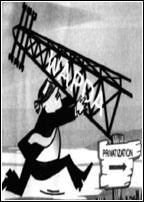 Traditionally, the business of electricity has been monopolistic. Its structure was vertically integrated i.e. generation, transmission and distribution were owned and operated by the government-owned or controlled utilities like Water and Power Development Authority (Wapda) and the Karachi Electric Supply Company (Kesc).
To induce market forces into this monopolistic business is subject to electric utility re- structuring, and the most important step in this regard is to clearly understand and articulate the country’s goals, which may include reduced cost and improved efficiency, attracting private capital, maximising public revenue from sale of government-owned assets and creating an environmentally sustainable sector.
In July 1999, the government approved “Wapda’s Strategic Plan.” This plan was envisaged to meet the following goals: Enhance capital formation outside government budget, improve efficiency of Pakistan’s power sector (PPS), rationalise prices while maintaining social and economic policy for tariff setting.
It also emphasised the electricity utility re-structuring and that utility and economy’s restructuring was an ongoing and evolving activity. A full and complete understanding of industry re-structuring will control and shape future course of action. There is wide range of possible electric utility re-structuring models. Four important, of the many possible options with reference to Pakistan are as follows: Monopoly Model, Purchasing Agency Model, Wholesale Competition Model and Full Retail Competition Model.
Monopolistic or Vertically integrated Model: In this model generation, transmission and distribution to consumer (retailing) are all in one company and there is no check on any one. The Water and Power Development Authority and the Karachi Electric Supply Company were vertically integrated utilities until the introduction of IPPs in 1991. The two utilities were engaged in inter-utility sales of energy through purchase agreements under government-control. These inter-utility sales agreements are protected in RGT&D Act 1997.
Purchasing Agency Model: This model allows a single buyer to purchase energy from competing electricity generator or independent power producers (IPPs). The buyer arranges for delivery over monopolistic transmission and distribution system and sells at an approved tariff to all consumers of Wapda. The KESC had separate tariff approved by the government. These days Nepra is the competent authority under RGT&D Act 1997 for the determination of tariff.
The KESC is a single buyer in its exclusive territory, acting as purchasing agency of energy from IPP’s and arranging for delivery over monopoly T&D network at approved tariff to all consumers.
Whole Sale Competition Model: This is a fully competitive model. All generation new and existing is competitive and generation received market price. The utility becomes a transmission and distribution (T&D) company. There would be no affiliation between the utility and generators. The utility in this model continues to be sole buyer of power and the sole retail seller. The utility is monopoly and is regulated. A central power purchase agency would purchase all power from generators and work out a rate based on generators costs.
Transmission cost would be added to the rate which would form a purchase rate for the DISCO. The DISCO would make payments proportional to their demand on the system. Restructured power wing of Wapda is very close to this model of whole sale competition. The newly converted separate entities of Wapda are: four generator companies (GENCOS), one transmission company (NTDC) and eight distribution companies (DISTCO).
These GENCOS together with IPP’s have been granted separate licence and separately approved tariff based on Nepra’s determination. Transmission licence was granted to the National Transmission and Dispatch Company (NTDC) in 2002. It has an obligation to serve without discrimination and provide open access (for the purpose of inter- connection) between generator and DISTCOS (NTDC may act as central power purchase agency). Eight DISTCOS were granted distribution license in 2000.
Full Retail Competition Model: In this model, the utility is no longer single buyer, the utility provides the transmission and distribution system. It has an obligation to connect but not an obligation to serve. Customer may buy generation services from the supplier of their choice directly. The regulator is required to maintain a fair and equitable marked structure for consumer to exercise their choice of supplier as admissible under section RGT & D Act 1997. Nepra has granted some eight SPP distribution licences to generating companies to serve bulk power consumers. Also section 23 allows exchange of power for one company to another. Typical exchange includes exchange of power between Wapda and Kesc. These models correspond to varying degree of choices for competition/market forces.
There are many problems and difficulties in transforming from one model to another, appropriate infrastructure inducing necessary control, metering and information technology to achieve a free market at reasonable cost. Privatised Kesc is opting for generating 750 MW on its own. As such the Kesc will be retaining its monopolistic and vertically integrated model. Wapda has decided to add 384 MW to its system through IPP’s. Although competition in generation is not yet achieved both Wapda and Kesc have been able to choose structural model of their choice.
As long as Pakistan will be running short of power, electric energy at reasonable cost will remain a dream. Re-structuring has only helped the government in generating revenue from sale of government-owned assets and capital formation outside government budget. What so far has been achieved from re-structuring is only re-structuring itself. Improvement in the efficiency of Pakistan Power Sector (PPS) is yet to be achieved.





























