0
0

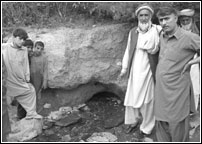 A nine-year ambitious uplift plan for the Federally Administered Tribal Area (Fata), estimated to cost $2.6billion, was unveiled at a donors conference held on April 12. Representatives of different agencies, UN bodies, humanitarian organisations and diplomats attended.
According to Arbab Muhammad Arif, Secretary Security (Fata), the idea behind the programme is the creation of a peaceful and equitable society in the tribal belt in order to curb militancy.
Fata wants the donors to share 50 per cent of the programme cost. An amount of $1.3 billion would be arranged by the federal government and will also come from the resources to be generated by Fata.
The programme will tackle problems in such areas as education, health, rural development, agriculture, livestock, housing, forest, irrigation and roads. Officials say plan will also be presented at the Pakistan Development Forum on April 27 at Islamabad.
Fata’s social and economic development has never been a priority for successive rulers in spite of these areas on Afghanistan border being of special interest to international and regional players.
However 9/11 has forced the government as well as donor agencies to earmark more resources for the social uplift of the tribal area. Since 2000-01, the Fata ADP has jumped from Rs1.2 billion to Rs10 billion in current fiscal year.
Fata covers a total area of 27,220 sq km with a population of 3.1 million living in seven agencies and six Frontier Regions. The government says it intends to bring the tribal area at par with rest of the country. However, so far no significant achievement has been witnessed towards this end. The Fata literacy ratio is hardly 17 per cent (against the nation’s 45 per cent) which include 29.51 per cent for males and just three per cent for females.
Indicators on health sector too depict a dismal picture, where for 2179 persons only one bed and for 6762 persons only one doctor is available. However, the security situation does not offer ideal environment for unhindered development. In most of the tribal agencies, skirmishes between militants and security forces and inter-tribal feuds are a routine affair. But the conflict may not go away easily if the tribal areas remain under-developed.
Apart from law and order, there has been an absence of coherent overall development plan –something that restricts the benefits of public investment to specific areas. The project selection criteria is at the core of the faulty development agenda.
Most of the projects whether part of Annual Development Programme (ADP) or any special initiative are not on the need basis and priorities of the communities.
Governance in tribal areas is altogether different from the settled parts of the country where Political Agents with the help of some Maliks (tribal elders) ensure government writ. These Maliks help the administration in maintaining its authority, while, in turn, the Political Agents award them with development projects. In addition to routine stipends, the Maliks are also awarded development projects and offer employments in these projects.
Most of such development projects ,soon after their completion, become useless because of absence of a proper monitoring mechanism. In most of the cases, buildings are abandoned or converted into Hujra[community centre] of the Maliks. Officials appointed in such projects do not attend to their duties but draw salaries regularly.
Lack of maintenance and repair of the public infrastructure is another issue that impacts on the development process in the tribal areas.
Sufficient funds are not allocated for routine maintenance and repair, which ultimately destroys the infrastructure of roads, irrigation and buildings in the tribal areas. Fata officials associated with development planning complain that during last 60 years, countless buildings have been built for housing schools, hospitals or vocational centres but these do not serve any public good.
Apart from new projects, the renewal of the existing infrastructure facilities should not be neglected. Lack of capacity of the implementing agencies is also a major constraint in Fata’s development.
At the Agency level, the government has set up planning and finance departments, but they do not function properly because of the absence of an effective financial management system.
Lack of coordination between various departments and the donor agencies also cause duplication of work and leads to financial wastage and administrative failures.
Similarly, the community participation approach needs to be introduced in Fata. In recent past, the government tried to undermine the role of Maliks in project selection and making the process more participative by involving the Agency Counsellors, majority of whom are selected by the Political Administration.
At the policy formulation level, the Counsellors are authorised to select and recommend the execution of development plans, but in reality no heed is paid to their recommendations.
The planners believe that without putting in place an institutionalised mechanism for project selection, designing and implementation, sustainable development in FATA would not be possible.