0
0

 Politics needs fair play to be robust and markets need level playing field to flourish. Political economy cannot be put on an even keel without maximum possible equality of opportunity for everyone.
Monopolies, cartels and oligopolies reflect market failure because they deny even playing field to all economic agents ,considered vital for making the market efficient and prosperous. The dominating presence of extra-constitutional forces in politics represents a failure of governance. It is a deviation from the Constitution that provides for rights and responsibilities, authority and resources and the fruits of economic development to be much more widely shared.
For solid reasons, there is lowest ever tolerance for a military-led political dispensation and a growing concern over lack of respect for the rule of law. This coincides with rising demand for promulgation of competitive law to check unfair trade practices. An effective implementation of competition law will depend on the enforcement of the rule of law in general.
The good news is that things are moving in the right direction, though the changes may or may not come as fast as one may like to see. On the political front, a process of national reconciliation , if successful before or after elections, is likely to lead to a much wider sharing of political power. In response to widespread criticism against cartelisation in some major industries, the archaic monopoly law is being updated by what is now labelled as a competition policy, law and by the proposed autonomous competition commission, awaiting approval of the federal cabinet.
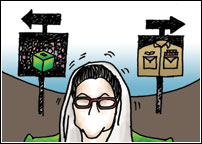
Whatever the nature of contacts between PPPP chairperson and President Musharraf — formal or informal — whether these lead to a deal, accord or secret understanding between the two sides or “dheel” by the government is not so clear , the much-needed and long delayed process of reconciliation — of some sort — is moving in the right direction. It may ultimately help create level playing field for all political players.
While the nature of understanding, if any, reached so far is not known , the “dheel;” appears to be coming one after the other either by choice, compulsion or by “ compromise.” The release of Asif Zardari was followed by closure of National Accountability Bureau probing alleged malpractices against Benzair and her husband Once out of Saudi Arabia, Nawaz Sharif is politically active. The recent TV interviews of the two leaders indicate which way the wind is blowing. The prime minister says the government is in contact with all political parties. Nawaz denies even informal contacts. Benazir says she wants an accord with President Mushrarraf. The street power unleashed by the judicial crisis is creating a political environment needed for free and fair elections.
The ruling PML chief Choudhry Shuajat wants dialogue with PPP on the question of setting up of a caretaker government and an independent election commission for free and fair elections.
While he asserts the President’s uniform is not negotiable , he says “There could be discussions on how to strengthen democracy and democratic institutions”. PML (Q), he adds, could share power with PPPP after elections.
For the government and the PPPP to bridge differences on the President’s uniform or Mushsrraf’s election by the existing assemblies is quite a difficult task. Will Benazir disown the PPPP’s historical legacy at a time when the extra-constitutional forces are under judicial and political siege? If she strikes a deal to return home that accepts President Musharraf in uniform, what political capital would be left with her to be of any value to President Musharraf. Any meaningful understanding should be a face saving device for both the President and the PPPP chairperson. To be effective, national reconciliation has to be between genuinely elected representatives of the people for which free and fair election should be held as provided by the Constitution..
Today, politics has entered a phase in which , there is self-assertion by various social, religious and political parties and groups, seeking a level playing field. It is the people who have begun to influence the course of political events , with implications for the medium and the long- term. It is not the political parties or the government or political leaders but critical political issues which are expected to dominate the political arena in 2007 and beyond. To quote Zulfiquar Ali Bhutto “ the people lead and the people are led.” Time has arrived for the people to lead in the shape of the electoral mandate whenever the national polls are held..
When the democratic path is blocked and elections are manipulated , radicalism emerges, whether it be the Lal Masjid issue, the Balochistan insurgency or the Taliban militancy. The space for militancy is reduced by representative democracy.
Economics and politics move in tandem though often with some time lag. While markets thrive on competition, co-operation among various economic agents is not excluded. Co-operation is managed through outsourcing or alliances or sharing gains in the value chain by joint efforts of a whole range of independent producers and distributors. And co-operation is more pronounced in the use of high-tech knowledge industry that holds the key to the future in the field of technology.
In politics, heterogeneous political groups and parties, ranging from MMA to MQM, share power in coalitions running the federal and the provincial governments. Similarly, various opposition political parties while maintaining their independent identity join hands for common causes- whether it is Kalabagh dam or issues related to Balochistan or tribal areas or to the president’s uniform. The opposition parties are united on supremacy of the Constitution and the rule of law. On this issue, they speak with one voice. And the Alliance for Restoration of Democracy (ARD) has been turned into is a lose confederation of independent political entities. The political parties are shaking off their past practice of making and breaking alliances.
On issue-to-issue basis, co-operation often embraces nationalists, religious, ethnic and mainstream parties. But the PPPP and the PML (N) are excluded from coalition of parties running the government because they want civilian rule and the extra-constitutional forces are reluctant to take a back seat. If Pakistan is to be managed well, it needs democracy and independence. that can only be reinforced through national reconciliation.
Whatever the economic achievements of the present regime, its economic and political model has not been accepted by the majority of the people. The achievements have been lauded by the regime’s foreign supporters or the special local interests but these have not been owned by the ordinary people. Now the government needs to take the common man on board through representative democracy.