



 0
0

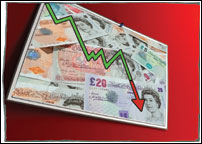 The British economy has come under serious strain in the last couple of months. The rate of inflation has crossed the three per cent barrier threatening a significant increase in the interest rates next month and increased the prospects of a drop in exports as the value of the pound has shot up to two dollars.
Meanwhile, the rate of employment has also worsened. And in another development which is not directly related to these deteriorating economic indicators, the UK has started trying to bring under its tax net the off shore incomes of British citizens so far ignored. It is perhaps for the first time that a kind of amnesty has been offered to tax evaders here who over the years have manipulated the holes in the taxation system to keep most of their incomes parked in their off shore accounts.
Reacting to the latest inflation report, showing the headline CPI rate has reached 3.1 per cent, the Confederation of British Industries’ (CBI), Chief Economic Adviser, Ian McCafferty said:
“This figure is higher than anticipated, which will no doubt heighten expectations of an increase in interest rates next month.
“Looking forward, the headline rate of inflation is almost certain to fall later this year as previous energy price rises drop out of the calculation. “The Bank will be concerned, however, that continued strength in the economy will leave core inflation at an uncomfortable level.
“The breaking of the pound through the two dollar mark is symbolic rather than of immediate economic impact. Were the rise in the pound to be sustained, though, there would be a mixed effect on the economy. It would be of concern to exporters, although some dollar-priced inputs like metal and oil would become less costly.”
The Bank of England has told the chancellor it is "determined" to bring inflation back to its two per cent target after the measure jumped to 3.1 per cent in March.
The Bank is said to have written to the government after the Consumer Prices Index (CPI) rose to more than one percentage point above the government's target. Figures also showed that a wider inflation measure, RPI, rose to 4.8 in March, up from 4.6 per cent the month before.
In his letter to the Chancellor the governor of BoE Mervyn King said that inflation had exceeded three per cent in March because since February oil prices had risen by about 25 per cent, reversing part of the fall in prices seen in the second half of last year. The oil price rise pushed up petrol prices.
In addition, some of the falls on food prices seen a year ago were not repeated in March this year, while retailers pushed up the prices of furniture and furnishings.
However, Mr King said that, "at first sight", the price data seemed unlikely to alter the outlook painted in the Bank's last quarterly inflation report.
And he said that the CPI measure was "likely to fall back within a matter of months" as big increases in household gas and electricity prices that occurred a year ago cease to have an impact on inflation.
In his reply to Mr King, the Chancellor said he noted the reasons the Bank had given for the rise in inflation and welcomed the Bank's confirmation it would continue to set interest rates to meet the two per cent inflation target in the medium term.
Opposition parties seized on the news as a chance to attack Chancellor Gordon Brown.
"Gordon Brown's reputation for economic competence is unravelling before our eyes", said Conservative shadow chancellor George Osborne.
Liberal Democrat economics spokesman Vince Cable said the news "gives lie to the claim that the Government has permanently achieved a nirvana of steady growth without inflation".
Markets in the meanwhile appear convinced of the inevitability of a 0.5 point increase in the interest rates by the end of the year, while a Reuters survey on Tuesday showed 49 out of 51 economists polled thought rates would rise by a quarter of a percentage point to 5.5 per cent next month.
The Office of National Statistics said the broader retail prices index, regarded as a better measure of living standards, rose to 4.8 per cent in March, its highest since 1991. British CPI inflation has bucked a falling trend in the eurozone, with the UK rate rising from 1.9 per cent at the start of 2006 to its current 3.1 per cent, while the eurozone average fell gradually from 2.4 per cent to 1.9 per cent over the same period.
Tailpiece: Former Governor of State Bank of Pakistan (SBP) Dr Ishrat Husain was here last week on a short visit to attend a seminar organised by the Pakistan High Commission to celebrate 60 years of our independence.
In his remarks at the seminar, Dr Husain repeated what he had said in an article published in Dawn ( EBR weekly Monday April 16, 2007) that Pakistan’s economy would not suffer any negative side-effects if the US aid flows were stopped for one reason or the other.
He also as usual painted a rosy picture of the current state of Pakistan’s economy and explained with projected statistics why he thought the current high growth rates were sustainable. During the post-seminar reception when I asked him how could the growth rates sustain when we are faced with such huge deficits in water and power availability, he did not disagree but gave some not very unconvincing arguments to explain the government’s failure to expand the generation capacity by even one single MW over the last seven years.
And he appeared rather taken aback when I told him that the site selected for constructing a dam (Bhasha) after the regime had wasted seven long years over a futile debate on the controversial Kalabagh dam is not even mentioned in the territories that our Constitution recognises as part of Pakistan. And which bank would loan us the money to construct a dam on a site which is located in a disputed territory? I asked him.
He side stepped the question but answering my skepticism over his thesis that stoppage of US aid would have no significant side effect on Pakistan’s economy, he said he expected the media to debate the issue thoroughly before dismissing his views out of hand.





























