



 0
0

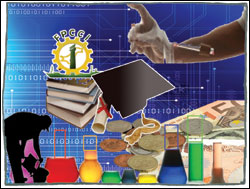 DOES the Federation of Pakistan Chambers of Commerce and Industry (FPCCI) know how many graduates and skilled persons the country’s business would need say, 10 years from now to satisfy the industrial and commercial demand for such persons in 2017? And what kind of subject skills and specialities would these graduates be required to acquire to meet the various needs of a growing economy a decade from now?
Perhaps even the Planning Commission, which is supposed to compile such data, would find it difficult to come out with some quick answers to these questions. As a nation we prefer to live from day to day.
This is the reason why we have a high rate of unemployment among our educated youth while a good number of jobs continue to remain vacant for want of candidates with the right skills.
But to be able to produce the right people for the right jobs that would be available 10 years hence we would be needing a number of other plans as well setting down the bench-marks and short- medium- and long-term goals in industry, education, commerce, agriculture etc. From these plans would flow the number of graduates we would be requiring in 10 years time marking out as well their skills and specialisations.
The FPCCI and the Planning Commission should join hands and cooperate in this job of crystal-gazing to find out the future requirements of skilled manpower. I don’t say that it has never been attempted in Pakistan. We perhaps have made as many as 10 five -year plans.
But then most of these plans have remained unfulfilled for various reasons, the most important of which being lack of authentic data, unreliable statistics, unrealistic bench-marks on which these plans were based and their over-ambitious goals.
In the UK, this job of crystal-gazing is being done by the Confederation of British Industry (CBI) and we could learn a lot from its latest report on what is required to be done by the UK to meet the demand of science graduates in 2014.
The report has warned that the UK would need to double the proportion of science and engineering graduates leaving university by 2014 or see skilled jobs go overseas.
Around 12 per cent of graduates presently leave university with a science, engineering and technology degree and this, the report said, needs to rise to at least 25 per cent if the UK is to match the predicted growth in jobs.
The CBI report admits to its being a tough challenge but says it must be met if the UK is to maintain its world-leading position in industries like pharmaceuticals, aerospace and bio-technology, the CBI said.
A failure to do so, it warned would undermine the ability of the UK to compete with other countries in the global economy and companies might be forced to relocate to areas with a ready supply of employees with these skills.
The business group has identified four weaknesses that are holding back the flow of students into university science courses:
• Poor science laboratories in schools — with one in four unsafe or inadequate according to the Royal Society of Chemistry, and four in 10 basic and uninspiring.
• A lack of teachers with specialist knowledge to teach GCSE and A level science — a quarter of secondary schools do not have a specialist physics teacher, for example.
• A stripped-down curriculum which does not devote sufficient time to science - only one in five state schools offers separate GCSEs in physics, chemistry and biology and too few students step up to study science at A Level.
• Poor careers advice which fails to stimulate young people's interest in the well-paid and cutting edge careers available in science and engineering.
At the moment, around 45,000 graduates emerge from UK universities with a degree in science, engineering or technology (SET) each year.
Based on figures from the Institute of Employment Research on expected growth in SET jobs by 2014, the CBI has calculated that this would need to jump to 97,000 a year just to fill new positions.
And this calculation is based on every graduate pursing his vocational career rather than, for example, a job in financial services which many currently choose to do.
In 2005 the government pledged to spend £200million improving science facilities in schools but although the money has been allocated it remains unspent.
John Cridland, CBI Deputy Director-General, said: "Britain has a world-class science base and many world-beating companies but we must build on these strengths, not allow them to wither on the vine.
"Our future success will depend on our ability to compete not only with our traditional international rivals but new ones too, particularly India and China. These two emerging giants are producing hundreds of thousands of engineers and scientists a year, all ready to fight for a slice of the pie in business sectors which the UK has traditionally done so well in.
"If we are to meet their challenge head-on, and take advantage of the opportunities their growing economies provide, we need to ensure our education system can give young people the skills they need.
"This means modern laboratories where pupils can enjoy the fun, hands-on aspects of science under the tuition of teachers with the specialist knowledge to give them the depth of knowledge and inspiration they need.
In 2005 the government announced a £200 million fund to equip schools with modern science facilities but today that money is still sitting in a bank account. At a time when one in four labs are unsafe or unsatisfactory, and four in ten rated as basic and uninspiring, this is a disgrace.
"If we don't step up to the plate then the companies which have helped build up the UK's science base will be faced with no alternative but to go overseas. They are increasingly recruiting from abroad and the danger is they may relocate altogether.”
The CBI is the UK's leading business organisation, speaking for some 240,000 businesses that together employ around a third of the private sector workforce. Member companies, which decide all policy positions, include:
— 80 of the FTSE 100
— some 200,000 small and medium-size firms
— more than 20,000 manufacturers
— over 150 sectoral associations.






























