0
0

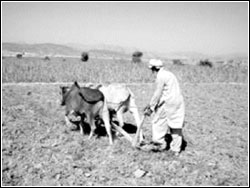 THE federal government plans to establish new infrastructure and revamp the entire agriculture system in Balochistan for ensuring food security and enhancing productivity of crops, livestock and forestry through efficient use of modern technologies and transferring them to the farmers in the province.
The ministry of food, agriculture and livestock (Minfal) has submitted a detailed proposal to the Central Development Working Party (CDWP) and the Executive Committee of the National Economic Council (Ecnec) recently for approval to modernise the agriculture sector of Balochistan.
The agriculture research system in Balochistan, according to Minfal, is very weak and not so much expanded and modernised that it could address the problems of arid/semi-arid agriculture.
The province has great potential to develop its vast coastal areas and range/barren lands to increase the overall agriculture productivity. Under the proposed plan, agricultural research facilities will be upgraded especially in the field of horticulture and livestock. The up-scaled research facilities will be helpful in improving agriculture development and achieving self-reliance in agricultural commodities.
The objective is also to enhance the capacity-building and upgrading the skills of people through short and long-term training, and improving sustainability in different agro-ecological zones of Balochistan by reversing the degradation of fragile ecologies.
Balochistan's agriculture is currently under-staffed in terms of scientific manpower in various disciplines of dry land farming. In addition, operational funding for field and lab research is much below the requirements. The present labs are either unequipped or partially equipped. There is no exemplary green house facility for conducting long-term plant and crop development programme. Most of the vehicles and tractors/field implements are old and unserviceable. Latest computers and software is almost non-existent.
Although the province is highly suitable for fruits and vegetables, the irrigated places in the Pat Feeder Canal command areas are suitable for growing cereals and cash crops. The main crops of these areas are wheat and rice, and recently cotton and other oilseed crops have also been introduced quite successfully. As research facilities in these areas are very meagre, the farmers are dependent on other provinces. It is, therefore, necessary to establish, and even expand, the research facilities for crops of these particular areas which could work and develop crop management to improve the crop productivity for better economic returns.
Livestock, a sub-sector of agriculture, plays an important role in the economy of Balochistan and more than 20 per cent of provincial income is generated by this sector. It has been estimated that about 80 per cent of the provincial population is directly or indirectly involved in livestock business.
According to previous livestock census, the province maintained 10.84 million sheep, 9.37 million goats, 1.34 million cattle, 0.34 million camel and 4.7 million poultry. In addition, equine and buffaloes are also found in the province.
Small ruminants (sheep & goats) are the most important contributors for food production and economics uplift of the people of this province. Cattle are next in the list followed by poultry and buffaloes. Mountain camels are widely used for transportation purpose. Due to prolonged drought, grazing range-lands have deteriorated and hence the number and productivity of livestock has decreased considerably.
The overall objectives of the proposals are to enhance the capabilities of Balochistan in diagnosis/control of animal diseases, efficient utilisation of small ruminants, cattle and camels. At present the province has one main agriculture research institute at Sariab, Quetta, which caters to the needs of the provincial agriculture research and conduct trials at various experimental stations scattered all over the province. There are very meagre facilities available at these stations with limited laboratory facilities. A limited number of scientists are working at Quetta and it becomes very difficult for them to travel to all areas to identify and solve farmers’ problems. Thus the farmers have always complained of this deficiency and are obliged to use their own judgment which results in lower yields and increased problems. Hence it is felt that the research facilities be established in all the ecological zones to conduct meaningful research to solve farmer problems.
Therefore, the proposed programme "Strengthening and Up gradation of Agricultural Research System in Balochistan" is meant to cater to multi-disciplinary research and development needs of vast arid and semi-arid areas of Balochistan. It envisages upgradation and establishment of new research stations/institutions and undertaking research on problems peculiar to areas with special reference to rangeland development and desertification control, dry land crops, efficient soil and water-management and livestock husbandry.
Following activities are proposed to be undertaken: Establishment of PD office at AZRC campus; five new research institutes/stations to be established at Nautal, Khuzdar, Hazarganji, Shoran and Qila Saifulla; and four existing research institutes/stations located at Quetta (AZRI and ARI, Sariab), Sibi and Turbat to be strengthened. For all these, a moderate demand for establishment, operational, capital construction and HRD expenses has also been proposed.
It was earlier planned to set up Agricultural Research Station at Nautal, Khuzdar, which would now be set up at Usta Muhammad. This has been done on the recommendations of Senate's standing committee on food, agriculture and livestock. The members of this body have recommended utilisation of available facilities at ATI, Khanpur in Usta Muhammad.
The area is located in the plains of the province with irrigation water to be available from the Pat Feeder Canal and the Kachhi Canal. Large areas are planned to be developed and brought under cultivation in the area. The main crops of these areas are wheat and rice. Recently cotton and other oilseed crops have also been introduced quite successfully. As the research facilities in this area are non-existent, hence, the farmers are dependent on results from other provinces. Thus, there is a need to establish research facilities to develop technologies which are site specific and suit to local climatic conditions. For this purpose, a new research institute is proposed with facilities for one each of office block and laboratory, farm area, residential accommodation, operational and capital expenses.