



 0
0

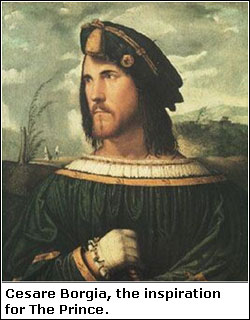
 MADRID: On Sunday, Spain will hold a commemorative service for Cesare Borgia, the cruel and despotic offspring of Pope Alexander VI, 500 years after the former’s death, local authorities said on Wednesday.
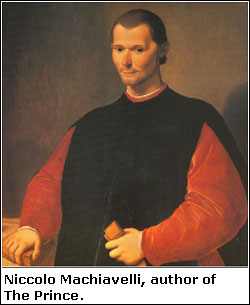
A requiem service will be held in the church at Viana, where Borgia was killed on March 11, 1507, in the northern region of Navarra to remember the man whose political yearning for power made him the inspiration for philosopher Niccolo Machiavelli’s The Prince.
Town hall authorities in Viana said that the ceremony would honour Borgia, but the remains of the unscrupulous Renaissance mercenary would not be given a church burial.After he was killed in a siege at Viana his remains were first placed in the Santa Maria church only to be removed years later on the orders of the ecclesiastical authorities who were shocked at his bloody career.
He was then buried under the town’s main street, in order to be “trampled” by passers-by.
Cesare Borgia (1475-1507) was one of four children of Valencian-born Spanish cardinal Rodrigo Borgia, who became pope in 1492.
 With his equally scheming sister Lucrezia, who allegedly was complicit in Cesare’s web of corruption and violence, the family went down in history as a byword for bloody fanaticism and overweening ambition.
Driven from Rome by Pope Jules II following a number of misadventures and killings linked to him, Cesare was slain at the age of 31 as he tried to take Viana castle in the name of the kingdom of Navarra.
His remains, discovered at the start of the 19th century, were in 1953 placed in a small sarcophagus and buried near to the entry to the church, a municipal spokeswoman told, adding that Sunday’s event is not designed as a “rehabilitation” but as the commemoration of “positive” facets of an historical figure who died half a millennium ago.
Santa Maria’s priest, Father Cesar Gonzales Puroy, said the mass would take place after Sunday’s regular service following a brief oration.
Father Gonzales Puroy added that he saw “no problem in praying” for Cesare, even if “his biography is a little complicated,” because “the Church is for all its sons.”—AFP





























