



 0
0

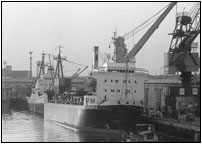 IN just six years, foreign trade has increased from less than $20billion per annum to more than $45 billion in 2005-2006 in an economy with $140 billion plus GDP. If this trend is to be sustained, a functionally efficient and commercially viable logistics system has to be developed. It should cover the entire range of services for the mobility of goods, from the producer to the importer/consignee’s warehouse.
Success in global trade substantially depends on competitive prices that is made up of production and transport logistic costs from origin to destination. The economy must have equally competitive and efficient productive and logistics sectors.
The inland transport network in the form of national trade corridor must match the international transportation system in quality and efficiency. Out-dated, dysfunctional and inadequate inland transport system may hamper the trade. Adequacy, reliability, efficiency, commercial viability and speed of inland transport network act as a catalyst in the promotion and expansion of a country’s foreign trade. No wonder, countries displaying impressive foreign trade performance, possess equally impressive national transport corridors. Transport system provides basic infrastructure for the logistics system of an economy.
Pakistan being at the cross-roads of South Asia, Central Asia and Middle-east offers promising trade and investment opportunities, including transit trade, that need to be exploited fully.
As identified by the Planning Commission, inadequacy and inefficiency of transport system annually costs the economy more than Rs220 billion. It also constrains economic growth, reduces export competitiveness and hinders social development.
Documentation, clearance, movement, and electronic data interchange require modernisation of the transportation. The vision for the sector is establishment of a well-integrated transport system.
The strategic thrust is on optimal utilisation of the existing capacity, improved management for maintenance and operation and coordinated use of various modes of transport.
As an important sector of the economy, the sector contributes 10 per cent of the GDP and 17 per cent of the gross capital formation (GCF) , and covers road transport, railways, ports, shipping and aviation. Facing challenges of today’s global trade presupposes availability of a modern and comprehensive infrastructure.
To meet the futuristic requirement, a plan has been devised under the name of National Trade Corridor (NTC). Estimated to cost $6 billion, NTC is envisaged to ensure transportation time for containers and trucks of not more than 36 hours from Karachi to Peshawar, for meeting the domestic requirements and for providing transit facilities to Central Asia, Western China, Afghanistan and Iran.
The World Bank has offered $1.8 billion and the Asian Development Bank (ADB) has agreed to provide $1 billion for the NTC plan which is . expected to be implemented in about five years. According to official statement it is estimated to save $5--7.5 billion annually.
NTC is essential for supporting 7-8 per cent of the sustained economic growth annually. The plan envisages improving Pakistan’s share of world trade from 0.2 to 1 per cent by 2030 and increasing its exports from $17 billion in current FY to $250 billion by 2030.
It will enhance regional connectivity through trade links and energy and transport corridors with China, the Central Asian Republics (CAR), Afghanistan and Iran. Mention may be made of the Himalaya Pipeline, proposed by Pakistan to China, linking Gwadar Port , carrying Middle-east crude to the western border of China and avoiding the narrow piracy-prone Malaca Straits, with 80 per cent Chinese oil imports passing from there.
Chinese have shown interest in this proposal. Both the governments have agreed to upgrade Karakoram Highway and the pipeline would go in tandem with that. Both sides have also agreed to extend Pakistan’s railways up to the Chinese border. All these developments are up-hill tasks, but with the support of China it appears to be achievable.
Seaports as interface between national and international segments of logistics will play a key role in achieving the goals of NTC. KPT as the prime seaport that handled a total cargo volume of 32 million tons, including 1.144 mio.TEU’s during 2005-06, plans upgrading of the port infrastructure, as well as the development of a new state-of-the-art facilities.
Under the up-gradation, KPT is poised to undertake a massive reconstruction. In all, 13 berths will be reconstructed and deepened up to 16 metres, at an estimated cost of Rs4.5 billion. Further, a 10-berth container terminal has been planned, with 18 metre draft alongside, costing $1.2 billion, envisaging completion by 2010-12, with annual total capacity of 1.5 millionTEUs, capable to berth container vessels with carrying capacity up to 14000 TEUs, to be constructed at east of Keamari Groyne.
The first phase is to be operational by June 2009, with four berths of total 1500 metre quay length, 700 metre wide turning basin, navigational aids and protection works, estimated to cost around $530-550 million. The terminal will be connected with KPT cargo village to be set up on an area of 1303 acres through reclamation of land in the Western Backwaters providing modern facilities to the trade.
The PQA--the country’s first industrial port-- is planning to raise its annual cargo handling capacity from current 30 to 50 million tons. In August 2006, PQA signed contract with Dubai Port World (DPW), whereby DPW will invest $211 million on the development of second container terminal – extension of the present QICT at PQA, marking a 1.15 million TEU’s growth, enhancing total TEU’s capacity of the port to 1.75 million TEU’s annually.
The DPW has bought P&O, the majority share holder as well as operator of QICT at PQA. Gwadar Port, at the mouth of Persian Gulf, expected to start operation in a matter of weeks, has been assigned to Singapore Port Authority (SPA) for operation on long-term basis. SPA holds enviable position of being the top or the runner-up container port of the world in competition with Hong Kong.
Pakistan Railways--as its contribution to the goals of NTC--, in its modernisation programme is augmenting its fleet of freight wagons (FW) for which the government has approved Rs5.33 billion with Rs2.967 billion as foreign exchange component. IDB has approved $39 million loan to modernise its fleet of high capacity FW, plus use of $16 million left-over from an on-going loan.
Under this project, the PR will procure 300 high capacity FW in CBU and 700 FW in semi/complete knock-down(SKD/CKD) to be manufactured in Mugalpura Workshop (Lahore). About 64 per cent of the FW fleet has become obsolete.
Gwadar is planned to be linked with Quetta at a cost of Rs40 billion. As to the road infrastructure, the federal minister of communication, has stated that 46 highways are under construction at a cost of Rs400 billion, with broadening of main highways, including Karakoram Highway and extension of Gwadar Highway to Hub Road. Super Highway connecting Karachi with Hyderabad is being upgraded to 6-lane motorway status at a cost of Rs7 billion. In Karachi, Northern Bypass and Lyari Expressway, along with a number of flyovers, underpasses, and development of elevated highway from Jinnah Bridge to Quidabad for providing signal-free movement between KPT and PQA, would enormously add to the speed and efficiency of NTC.






























