



 0
0

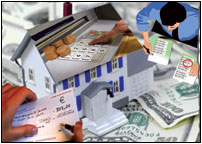 THERE is a dire lesson for Pakistan’s consumer banking sector and those who borrow beyond their ability to repay to consume beyond their station and means in what is seen in the UK as a tragic saga of personal insolvencies and bankruptcies.
Rising personal insolvencies in the UK are, in the most part, said to be fuelled by consumers who borrow to spend, struggle to repay what they've borrowed and then quickly find themselves caught out in a web of debt they can't escape from. And on the other hand lending banks are taking a lot of financial hits as they are being forced to write off millions as non-recoverable.
The Bank of England governor, Mervyn King while releasing the February Inflation Report on Wednesday, however, said that the number of insolvencies and the amount involved was still not large enough to cause any serious concern to either the Bank or the economy.
Still, the problem has reached such a serious level that almost 400 people are becoming insolvent here each day.
Encouraged perhaps by the strength of the economy in the last decade, high employment and easy availability of credit, Britons have been racking up large debts in recent years.
Most of the money is borrowed to meet 'current' expenditure including for as frivolous items as holidays rather than to acquire assets or to fund a business. Given so many people with enormous debts, and the high average level, too many people have debts that they have no realistic hope of repaying.
Official figures from the government showed that a record 107,288 people in England and Wales declared themselves bankrupt or took out an Individual Voluntary Arrangement (IVA) last year, a 59 per cent increase on 2005, when 67,500 people went bust.
With an IVA, debtors typically repay about half to two-thirds of sums owed. The Consumer Credit Counselling Service has warned people to watch out for "misleading" firms claiming they can reduce debts by 75 per cent. IVA companies make their money by taking a set-up fee of £1,000 to £1,500 plus a "supervisory" fee, typically £500 a year. But they insist this comes from creditors, not debtors.
An analysis of IVAs in England and Wales found "disproportionate representation among young families with children, living in mid-market terraced and semi-detached properties in council tax bands A and B". Also, more women are opting for IVAs.
The number of individual insolvencies also rose in Scotland and Northern Ireland, though not as fast as in England and Wales.
The months of January, February and March are expected to push up the number of insolvent people further because of their Christmas spending.
This has made some to forecast that insolvencies could reach 130,000 next year. Bankruptcies, in which debtors typically lose all their assets, rose last year by 34 per cent in England and Wales to 62,900. But although these still outnumbered IVAs, a five year debt solution where the debtor gets to keep their home, the number of people choosing an IVA as a route out of insolvency more than doubled to 44,300 in the year.
However, figures in the last quarter revealed a slowdown in the growth of IVAs, with bankruptcy growth outnumbering it, which represents a reversal of recent trends.
The slowdown in growth of IVAs is seen largely as a result of tougher demands from banks and pressure on debt management firms to “clean up their act” amid allegations of overselling. Banks are said to be beginning to take a tougher line and turn down IVAs.
After years of irresponsible lending it is believed that some banks have grown tired of having to write off hundreds of millions of pounds worth of bad debts. The banks are now said to be determined to squeeze more out of IVAs and that means a rougher ride for those who are living beyond their means.
However, falling utility bills and the prospect of the economy growing close to three per cent and the decision of the Bank of England on Wednesday to keep a hold on the bank rate at 5.25 per cent may restrict further personal bankruptcies this year.
The UK's total stock of personal debt has risen to £1.3 trillion, making Britain one of the most indebted nations in the world.
Mortgage repossessions, in the meanwhile, leapt 65 per cent last year to 17,000. There were 8,860 repossessions in the second half of last year, up from 8,140 in the first half, bringing the total to 17,000, equivalent to one in every 690 mortgages.
In spite of the sharp rise, the new figures are only back to levels seen in 2001. It is also said that the rate of repossessions had slowed towards the end of 2006 so the outcome was less bad than expected. As a result repossessions are predicted to rise to 19,000 this year and 20,000 in 2008. On arrears, the number of mortgages more than six months behind on payments fell by 8.5 per cent, from 49,010 at the end of 2005 to 44,840 at the end of 2006. That represented only 0.38 per cent of all mortgages - approximately 1 in 260.
Economists warned that repossessions and arrears were likely to get worse this year.
Experts say people as young as 21 are running up debts that are typically three times their annual income. The average IVA debtor owes £52,000 but is seeking to repay only 39 per cent of this sum. Last year alone, more than 3,000 people entered into IVAs with debts in excess of £100,000.
IVAs were introduced 21 years ago to provide entrepreneurs with a less drastic alternative to bankruptcy. But the sorts of debts that are seen being dealt with by IVAs in 2006 are personal loans, credit card balances and other forms of 'buy now, pay later' unsecured loans.
The media quoted George Osborne, the shadow chancellor, saying that rising insolvencies were just the latest symptom “of an economy built on debt and Gordon Brown is to blame. Behind every insolvency there will be a personal tragedy but taken together they add up to a growing social problem.”
Vince Cable, Treasury spokesman for the Liberal Democrats, too appeared to be unhappy about the insolvency issue and said: "This staggering increase in personal insolvencies, alongside the equally dramatic rise in home repossessions, demonstrates the severity of Britain's personal debt crisis.”






























