



 0
0

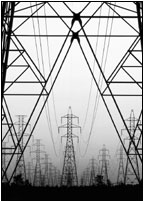 THE western Indian state of Maharshtra always had a reputation for being an industrially advanced region, with successive governments focusing on development and building infrastructure. Unfortunately, intense political bickering, especially between the ruling front partners, has resulted in a severe setback to the state’s reputation in recent years.
Last week saw the government battling a major crisis on the power front. Lack of any new investments in the power sector has resulted in this snowballing crisis. Despite the state attracting huge investments in the industrial and services sectors – and a booming housing and commercial property segment – the government failed to plan for future power requirements.
The result: Maharashtra is facing a massive 5,700 MW of electricity shortage daily, leading to severe power cuts in most parts of the state. While Mumbai – which is served by a few efficient private power producers and distributors – has been saved from power cuts, other cities are facing blackouts ranging from five to eight hours.
About a quarter million industrial units have been asked to shut down operations on two days a week, and they have also been asked to source their requirements from captive power units. Industry bodies have warned the government that the move would result in an annual production loss of $1.6 billion.
Worse, rural areas face power cuts ranging from 14 to 20 hours. The last few days have seen the outbreak of violence in several parts of the state, with unruly mobs attacking government offices and setting vehicles aflame. The violence has finally stirred the government into action, and the authorities are now planning to buy electricity from neighbouring states.
But power imported from other states is expensive, and those state governments are reluctant to subsidise energy for consumers in Maharashtra. The neighbouring state of Andhra Pradesh is willing to sell 500 MW, generated by two naphtha-fuelled privately-owned plants.
But the power costs a hefty Rs8.3 a unit, which is nearly double the rate at which the state government-owned utility pays for electricity. The state energy regulator will not allow the government to bleed the utility, so the government has to provide a monthly subsidy of nearly $115 million to the electricity firm.
With local district-level elections due shortly, the government does not want to pass on the burden to consumers, and will be forced to dip into its own finances. But the Maharashtra government is bankrupt, having run up a debt of nearly $32 billion, and borrowers are reluctant to extend any further loans.
INTERNATIONAL and domestic investors, who have been pumping large sums into the state in recent months, will now have to reconsider their decisions. The current power crisis is not a temporary phenomenon, and there appears to be no signs of a relief in the near future.
While the state government – and its utility – has failed to invest in new projects for over a decade, it has by its actions discouraged independent power producers to plough money into the sector. Sadly for Maharashtra, the crisis has occurred at a time when several other states are aggressively wooing foreign investments.
Traditionally, most foreign investors initially look for opportunities in Maharashtra, and then hunt around other regions for bargains. Over the years, many have ended up in investing in plants in the state.
The past few months have seen both international and Indian businesses unveil huge investment plans for the state, especially in the automobile and information technology sectors. International auto giants have announced a slew of investments: General Motors, the American auto major, is investing $300 million in a new project to produce about 140,000 cars annually. German automaker Volkswagen is planning to invest $550 million, while Daimler-Chrysler is investing almost $60 million in a plant to manufacture Mercedes Benz cars.
All the three leading domestic auto firms have also announced significant investments in Maharashtra. Tata Motors is investing over $900 million in a joint venture plant with Italy’s Fiat. Mahindra & Mahindra is putting up a $570 million greenfield facility to manufacture commercial trucks in a joint venture with America’s International Truck and Engine Corporation.
And two-wheeler giant Bajaj Auto is ploughing in over $450 million in a new greenfield project in the state. Information technology firms, including Microsoft and IBM, together the three large Indian companies – TCS, Infosys and Wipro – are also investing hundreds of millions of dollars in the state in new facilities.
All these projects require reliable and quality power at a low cost, which Maharashtra is unable to provide. Industry bodies have warned the government that failure to do so will endanger a large chunk of these potential investments, especially with states like Gujarat, Delhi and Andhra Pradesh circling overhead for a piece of the action.
BUT power problems are not unique to Maharashtra alone. Virtually every major Indian city faces shortages, especially with the onset of summer over the next few weeks. The Indian government has been desperately trying to force state governments to push ahead with reforms in the energy sector.
These include setting up independent state-level regulators, and the unbundling of loss-making government-owned monopolies into power generating, transmitting and distribution units. It is also pursuing new concepts like Ultra Mega Power Projects (UMPPs) and Merchant Power Plants (MPPs), besides going ahead with plans for power exchanges, on the lines of the commodity and stock exchanges.
According to Sushilkumar Shinde, the federal power minister, “the success achieved so far in the development of UMPPs gives us the confidence to offer another route of power generation capacity addition through MPPs.” He describes MPPs as a product of the restructuring of the electricity industry in the country.
Power secretary R.V. Shahi says MPPs are a market-based answer to the power problems confronting the country. MPPs – with capacities ranging from 500 MW to 1,000 MW – will generate power in the bulk and sell it to customers, unlike conventional power producers, who generate electricity for their own use and consumers.
India plans to add about 100,000 MW of power capacity over the next five years; MPPs are expected to meet about 12 per cent of this requirement. The power ministry put MPPs on the fast track, and has obtained coal linkages and captive coal blocks for these operators. About 15 coal blocks with reserves of 3.6 billion tons have been identified by the ministry for allocation to MPPs.
Unlike conventional power producers, MPPs will not be entering into long-term power purchase agreements with distributors. This could discourage financial institutions from providing them with the necessary funding.
The power ministry has urged an inter-institutional group comprising leading financial institutions to extend funding to MPPs, citing the coal linkages and the reservation of coal blocks as added incentives to justify the financing.
The Central Electricity Regulatory Commission (CERC) is also pushing ahead with plans for power exchanges, which could become operational by the end of the year. A.K. Basu, chairman, CERC, notes that participation in the exchange will be voluntary. Many utilities have in place power purchase agreements with governments and distributors, and these would not be dismantled.
The proposed exchanges – which can be promoted even by private groups and consortia – will provide a platform for electricity buyers, sellers and traders to enter into spot and forward contracts. They are expected to ensure a market-based platform enabling price discovery and price risk management, benefitting electricity generators, distributors, traders and even bulk consumers.
With the entry of several private players into the electricity sector, the regulator expects a thriving business in power trading. India has an inter-regional power transfer capacity of 6,000 MW, which is likely to double in a few years.






























