



 0
0

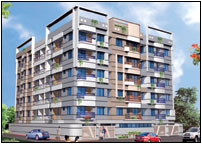 ALL those who have booked an estimated 30,000 to 40,000 houses (flats or town houses) in Karachi, Lahore, Islamabad and other places with construction companies will have to pay at least 15 to 30 per cent more because of the impact of recent increase in the prices of cement and steel products.
The impact will vary depending on in what stage of construction the project is and with whom the houses have been booked. The highest impact will come on those who have just started the work.. But in those projects where the structures have been raised and only finishing touches are needed, the cost may escalate 10 to 20 per cent.
Under the government’s instructions, the cement manufacturers have been asked to cap the prices at Rs260 for a 50kg bag. The cement makers are asking for Rs300 a bag for which a meeting is being convened on February 20 at Islamabad. With this rise in cement prices, comes the hike in steel products cost. Obviously, this has an impact of a double edge sword on the construction cost-- both private and government--. “`On a rough average, over the past few years, the construction cost in Karachi has jumped up from Rs1,200 per square foot to Rs1,800 per square foot,” a leader of ABAD said.
Whatever the impact, the rise in cost of a booked house from 15 per cent to 30 per cent, in many cases, is bound to be proved unbearable for those who draw a monthly income of Rs10,000 to Rs15,000 and have no other asset to fall back on. For many of them, the acquisition of a small house will remain an illusory dream for the whole of their life. Majority of these people are in Karachi.
“Rise in cement price has become an annual feature every February for the last few years,'' Mr Farooq uz-Zaman, a leader of the Builders Association, said and explained that the rise in cement prices comes in anticipation of a pick up in construction activities in the Northern areas after snow starts melting in March. From October till January, there is a lull in construction because of snow fall which, on many occasions blocks the roads. But as February arrives, the contractors and builders start building up their inventory of construction material including cement in anticipation of opening of roads.
Builders say that cement manufacturers have made it a regular annual feature to push the prices up since 2004. In that year, the government reduced excise duty from Rs1,000 a ton to Rs750 a ton -- a reduction of Rs25 per cent- to give boost to construction. But what happened later was that cement prices started crawling up and then shot up to Rs400 per bag.
Market analysts and cement consumers attribute this to a weak legal regulatory framework, a toothless competitive commission and a government that is proving ineffective to protect the interests of the consumers. “`But why should there be an excise on cement,” a business leader from Lahore remarked. He belongs to one of the top business houses that has interest in textiles, banking, insurance, automobile and cement.
His logic is simple. Excise is usually levied to discourage consumption of a certain commodity and in many developed and developing countries, the governments target alcohol and tobacco to recover excise. In Pakistan you have an excise and a sales tax on cement. “What is the justification,” he asks and then shares his perception that the government focuses only on revenue and has put industry and business under tremendous stress.
Mr Aizaz Sheikh, chairman of All Pakistan Cement Manufacturers Association, is convinced that Rs300 a bag is “`fair price of cement''. He justified this price on the basis of production cost and because of the phenomenal rise in demand in Pakistan, India, Afghanistan, UAE and other countries. He promised to fax a production of cost exercise done by APCMA from Lahore but did not do so. Repeated calls made on APCMA office in Lahore proved futile.
In this phenomenon, a new business rivalry has emerged in which cement manufacturers are on one side and the builders and contractors on the other. But the low and the middle-income groups of people, who dream to own a house in their lifetime, are the silent victims in this money making game.
As government and formal sector fails to come up to the expectation of the poor and low-income group housing, the big cities like Karachi are witnessing a fast growth of slums, shanties and what has come to be known as “`Kutcha abadis''. In Karachi more than 2,000 such slums or kutcha abadis have emerged in last 60 years where almost 70 per cent of 16 million population lives. Any vacant piece of land is occupied by group of a certain community ,of course, with connivance of the police and the bureaucracy.
The land-grabbers then offer plots of land-60 square yards to 80 square yards-to the people of their community on instalments and then one or two rooms are constructed which are either sold out or rented without any legal documents. All other facilities-sewerage, sanitation, water supply, electricity, education, health care- come slowly depending on the clout and influence enjoyed by the leaders or land grabbers of that particular settlement.
For the last many years, the government is coming out with announcements of giving a housing policy. The Federal Minister for Housing, Syed Safwanullah, is said to be giving final touches to a draft of national housing policy. Another body - the advisory group of the State Bank of Pakistan Governor - headed by a well-known banker Shaukat Tarin, has almost finalised its recommendations.
“We have addressed 10 issues that include setting up of land banks, affordable housing, cost reduction and all other aspects of housing'' Mr Tarin said. He hopes to finalise these recommendations in next few weeks after which it will be given to the government. With elections round the corner, the builders say that the government cannot remain oblivious of the sufferings of the urban people.
Cost of construction particularly in Northern areas have increased by 30 to 50 per cent after the government came out with a new building code to withstand tremors and jolts of 8-8.5 magnitude. The construction business has seen a tremendous boost in last few years. The Dubai Ports World announced sometimes back in 2006 to invest $10 billion on transport infrastructure and real estate. The Emaar Properties, a UAE company, announced an investment of $2.4 billion on real estate development in Islamabad and Karachi. This is the same conglomerate that is reportedly taking up a Rs43 billion job to develop two islands near Karachi.
A website informs 23-fold increase in property business since 2001. But the Karachi Chamber of Commerce and Industry and recently a committee of the Federation of Pakistan Chambers of Commerce and Industry pointed out towards the shortage of housing units in the country.. The trade bodies took notice of the ageing of the present stock of housing in Pakistan and accumulated shortages which are gradually assuming alarming proportions.
Till late sixties, the public and private sector projects-industry, dams, power generations etc. - included residential localities for the employees. Low cost housing concept was also introduced in decade of sixties when apartments were constructed in Karachi. In eighties came the concept of affordable housing which apparently has been trampled down in game of speculation, manipulation and profiteering. Will this concept be revived again is a test case for the government.






























