



 0
0

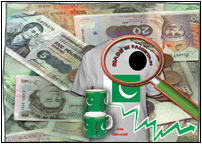 Despite my best efforts over the last three months I have not been able to find in a single shop here garments carrying a Made-in-Pakistan label. I am not talking about the high-end garments. I knew too well to look for Made-in-Pakistan label on designer dresses. But even in the piles of low-end items like undergarments, hosiery etc, it was a frustratingly futile search.
When I asked around, I was given a lot of run -around but no convincing answers. I thought perhaps because of Pakistan’s perceived links to the 7/7 tragedy, shoppers in the UK had stopped buying anything with the Made-in-Pakistan label. But I was told by some shop keepers that this was not the case.
As I kept digging I stumbled across a lot of anecdotal evidence suggesting highly disturbing goings on in the Pakistan export sector.
The story runs something like this. Large quantities of over-invoiced textile manufactures are exported to UAE. These consignments contain more than enough goods to satisfy the UAE market demand for at least five years.
At this stage the exporters make a killing by cashing the million of rupees worth of concessions and incentives the government allows them on exports. To digress a little from the main theme, these concessions and incentives are actually extortions. The exporters using their highly effective political and economic clout, make Pakistan government pay them tax-payers money to enable them to ‘compete’ in the world market against regional competitors who they claim are helped in similar manner by their respective governments in India, China, Bangladesh and even Sri Lanka.
Stage second is when all these goods are re-exported to the UK from UAE,. now they are under-invoiced to save on Value Added Tax (VAT) on such imports in the UK. During these two stages, the goods in the consignments carry loosely stitched Made-in-Pakistan labels.
And stage three is when these goods reach the warehouses in the UK. At this stage the Made-in-Pakistan labels are replaced by labels emblazoned Made-in- Bangladesh and Made-in-Sri Lanka or according to some the labels which are most popular in the UK and sell at a premium.
The government of Pakistan which has spent millions in tracing the so-called corrupt money of politicians in foreign banks and off-shore companies would do well by spending few thousand dollars on local investigators to find out why the Pakistani garments do not carry Made-in-Pakistan labels in the UK.
This investigation could also end once for all the argument (of our exporters) that the governments of regional countries subsidise their exports to make them competitive in the world market. If this was true, how is it that Pakistani garments carrying labels of these countries are selling at prices much higher than their declared prices at the port of entry in the UK?
To make this scheme work, you must have Pakistanis or their local agents at all the three points in the trading link. And most of the importers at the UK end are believed to be in actual fact, branches of major export houses in Pakistan with some exceptions here and there to prove the rule.
And what happens to all the black money that is earned through this scheme? Well most of it goes back to Pakistan in the shape of remittances. This could be the compelling reason for the government facing widening current account balance to cooperate with the exporters.
When the 100 or so Britons of Pakistani origin who are supposed to have made the UK millionaires’ list see these shenanigans they are naturally put off and lose interest in investing in their mother country fearing lack of a level playing field.
But still, according to some of these millionaires and also some officials, a number of these men of money are said to have shown keen interest from time to time in investing in Pakistan, not to make huge profits, but to help out their country of origin in meeting some important domestic demands in an economic way.
But information gathered from a number of sources here suggests that the officials at the receiving end make it almost impossible for these intending investors to get past even the first stage of selecting the right kind of sector or sub-sector for investment.
Here the story runs something like this. If some uninitiated British investor of Pakistan origin approaches our officialdom for information on areas needing investment, they are reportedly told that the official in question is not an investor advisor and if he had that ability he himself would have gone into business and made money. So, if you want to invest go and do market surveys yourself and use your own knowledge of making money and invest in the ‘right’ industry or business.
And this goes round and round until the businessman loses interest and goes to Russia where it is so easy to set up businesses and make huge profits with hardly any hassle.
I know for a fact that the Board of Investment (BoI) which set up in 1989 and since then it has produced thousands of pages of investment literature and feasibility reports on all kinds of businesses and industries having good profitable potential and which could interest foreign investors such as the UK millionaires. The BoI also maintains an up to date website.
Not only this, all the successive governments since 1988 have been holding regular investment conferences in countries having huge investment dollars. And more than often these conferences have been graced by presidents and prime ministers. But sources told me that at least in the case of UK, no proper follow-up is done after these conferences are held and they also said that most of the time presidents and prime ministers are not allowed by their close advisors (either because they do not know that they do not know or because their own vested commercial interests) to meet the real investors and their time is often wasted on arranging worthless meetings.
It is a mystery why officials here and in Pakistan have been unable so far to work together to attract enough investments from Britons of Pakistani origin as the Indians do from their Non-Resident Indians (NRIs). In fact the Indian economy is said to have got the decisive boast in the 1990s when the NRIs began investing in India in a big way. One could blame many in Pakistan for this failure. But then the debate would degenerate into a blame game yielding no purposeful result.





























