0
0

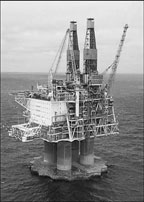 International oil prices have witnessed a declining trend in recent months. On January 12, oil dropped to $51.88 a barrel on the New York Mercantile Exchange after a report showed that US fuel consumption had plunged to the lowest level since April 2004.
It was the first time in one and a half years that crude had fallen below $52 per barrel. The international oil prices have fallen about 32 per cent from their peak of $78.40 per barrel in July 2006. This includes a decline of more than 10 per cent in 2007.
What is behind the aforesaid decline in oil prices? According to recent reports, the downward trend was attributable to ‘warm winter’ or spring-like temperatures’ in the northeastern US and Europe. However, despite the fact that warm weather has a role to play in weakening demand for heating oil, the share of this category of oil in the total oil consumption is reportedly not significant. In the US, this share is only seven per cent. It may not be correct to attribute the falling oil prices on warm weather. According to Jeff Rubin, Chief Economist, CIBC World Markets, ‘people have attributed to the weather a much greater impact than it actually has’.
However, it may be true that in the energy market, adjusting supply in the short- run is difficult. With the approach of winter, the demand for heating oil is likely to go up. If it does not, the inventories go up and prices go down.
What could be the other factors behind this downward trend? According to some analysts, many commodities like copper are softening dramatically, indicating that the boom is over. Thus, a downward trend in oil prices should not be entirely unexpected.
According to a Financial Times report (dated January 10), the sharp fall in oil, metal and some agricultural futures contracts this year has led to the talk that the five-year bull- run in commodities may be coming to an end. According to this report, benchmark crude oil futures are down 10 per cent since the end of last year, copper has dropped 10 per cent, while wheat and corn are down more than nine per cent.
Another factor behind the declining trend in oil prices could be the weak demand for oil. Opec had hinted a couple of months ago that the demand for crude oil was getting weaker inter-alia due to the increasingly efficient use for oil. Major oil importers such as the US and the EU had been trying to contain their demand for imported crude through a policy of conservation coupled with increased use of alternative energy sources. In the US, automobile companies are now producing cars that can give far more mileage per gallon of oil than before, besides manufacturing hybrids which use electricity side by side with oil. Production and sale of sport utility vehicles (SUV’s), consuming a larger quantity of oil has gone down during the last couple of years.
The use of ethanol is also growing in the US. In a bid to reduce dependence on imported oil, governors of 37 states asked the federal government on January 10 for a new rule mandating the use of ethanol. Currently, automotive engine warranties limit ethanol use to 10 per cent. The proposed rule (if passed) would call for 25 per cent ethanol by 2025.
With 220 million vehicles on the road in the US, a strong market exists for ethanol – introduced in the US a few years ago. There is a potential market of 14 billion gallons of ethanol a year in the US, assuming that 10 per cent ethanol is added to gasoline.
The cost of ethanol is no doubt on the higher side in the US as it is being manufactured from sugar and corn. However, in the coming years, ethanol is proposed to be produced from cheaper crops namely prairie grasses and plant wastes such as corn husks and wheat stalks. Its manufacturing cost will then go down considerably.
According to another report, the European Commission, recently unveiled a plan to diversify energy sources and slash carbon emissions in the face of oil market volatility, uncertainty over Russian oil and gas supplies and global warming fears. According to the report, energy issues had got to the top of the European Union’s political agenda during the last one year due to surging oil prices and concerns over supply of oil and gas from Russia.
The aforesaid EU plan envisages that the EU will cut greenhouse gas emissions to 20 per cent below 1990 levels by 2020, when 20 per cent of EU power will come from renewable sources.
In view of recent decline in the international crude prices, some analysts have started speculating that crude prices could go down further. In a news analysis appearing in Business Week , the view has been expressed that a further decline in the oil prices may be possible.
Standard & Poor’s Investment Policy Committee projected recently that a price break below $55 a barrel will open the door for a drop to the mid-$40’s, where the price could stay for three to six months. However, other analysts argue that while an unusually warm weather had blocked upward movement of oil futures, demand from fast-growing countries such as China the watchful eye of Opec will prevent crude prices from dipping too far.
A few market observers have expressed the view that even if the price dips to $45 a barrel, it is not likely to hover there for long. Jeff Rubin is of the opinion that only a ‘huge slowdown in economic growth coupled with high winter temperatures would push prices as low as $40 a barrel’.
Oil prices have been influenced by a multitude of factors namely economy, the weather, OPEC production and geo-political situation. Since, oil prices depend on so many factors; many market observers agree that it may be futile to forecast the future, when it comes to oil prices.
However, the decline in the international oil prices has proved a blessing for Pakistan where the government has reduced petrol price by Rs4 and diesel price by Re1 per liter. But, the drop in crude prices had so far failed to reduce the oil import bill and the trade deficit and it is feared that lower local prices would raise the demand for oil further. Similarly, the lower oil prices may be helpful in bringing down inflation only if the government remains watchful,