0
0

 KARACHI, Jan 9: Speakers at an exhibition on Tuesday pointed out that a large number of Japanese toys on display were almost similar to those that Pakistani children cherished and played with showing the similarities between the two cultures.
They were speaking at the inauguration of a five-day exhibition of Japanese Toys – Traditional and Contemporary organised in connection with Hamara Karachi celebrations. The exhibition has been jointly organised by the Japan Cultural Centre, Pakistan Japan Cultural Association and the Rangoonwala Community Centre.
Over 80 different toys will remain on display during the exhibition till January 13th at the centre daily from 10am to 7pm. The toys on display can be broadly divided into six categories: Traditional toys that trace their origin back to prototypes introduced in ancient times from China and the Korean peninsula. Pre-modern toys that developed during the Edo period (1603 – 1867). Bamboo toys and wooden toys that represent toys made by hand from natural materials. New Years Toys as an example of toys that have close connections with special events celebrated during the New Year’s season. Modern toys that were developed as a result of influence mainly from the West from the mid-nineteenth century onwards.
Some of the toys on display are: O-men (paper masks); Otedama (beanbags); paper dolls; Good Luck Oxen; Origami (toys of folded paper);
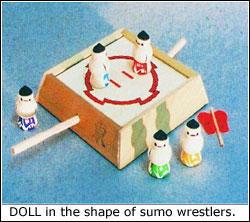
Temari (balls); Biidama Marbles; O-hajiki (flat glass marbles); Menko cards; Sumo toys; Paper Balloons; Pata-pata; Kaleidoscopes; Denden-Daiko (whip drums); Bamboo Dragonfly; Owl flute; Rabit Omochi (rice cake) shop; Kokeshi; Warbler whistle; water pistol; whistling pinwheel; Koma (tops); Daruma Blocks; Kendoma (cup and ball toys); Kites; Daruma figures; Fuku-warai (funny face game); Battledores; Karuta; Dress-up dolls; toy vehicles; character toys; Mamagoto (play house toys); hero dolls; Toy vehicles;
Japanese Consul General Shoichi Nakano said these toys introduced the multiplicity and richness of Japanese culture and everyday life, the customs, and the aspirations of the Japanese people.
He said that toys were important objects reflecting culture and heritage and lifestyle of people since ancient times and whenever excavations were done at archaeological sites the excavators found toys, with the help of which they learned about the people of that era.
Naib Nazim Nasreen Jalil inaugurated the show. She said the Hamara Karachi Festival celebrations were a message to the world that Karachi is a peaceful city where cultural activities are held regularly.
After the exhibition concludes at the Rangoonwala Centre, it would shift to the Japan Cultural Centre on Abdullah Haroon Road and remain open from January 16 to 31 from 10am to 4pm.