0
0

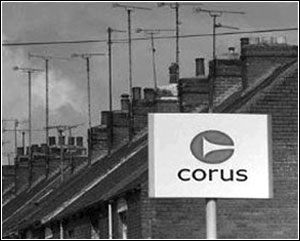 THE last quarter of 2006 has indeed been the most exciting for India Inc, with leading business groups involved in multi-billion-dollar takeover bids. The Tatas, the country’s premier industrial group, made an audacious bid, a few weeks ago, to acquire Corus Steel of the UK.
But its plans got derailed after Brazil’s Companhia Siderurgica Nacional (CSN) joined the battle, upping the ante further to $9.6 billion. Britain’s ‘takeover panel’ has now set a deadline of January 30 for revised offers for the Anglo-Dutch steelmaker, though Ratan Tata, the group chairman, admitted last week that there was a limit to the enterprise value of Corus. The group would bid to the extent that it made “strategic sense and does not endanger or jeopardise the strength and health of our own shareholders."
But even as the steel war was raging, another major multi-billion-dollar battle for the acquisition of an Indian mobile phone operator hit the headlines, sidelining the Tata-CSN bidding game. The world’s leading telecommunications groups, private equity firms and banks are involved in the battle for Hutchison Essar, a mobile phone operator owned by Hutchison Telecommunications International Ltd (HTIL), which has a 67 per cent stake in the company; while the Essar group — controlled by the two Ruia brothers — owns the remaining 33 per cent in the company.
Hong Kong-based billionaire Li Ka-shing’s Hutchison Whampoa group is the largest shareholder of HTIL, which has been present in the Indian telecommunications business since the early 1990s, when the sector was opened up by the government. But its venture started making money only recently, and with the telecoms sector witnessing explosive growth, the Hong Kong-based group wants to cash out on the boom.
International telecoms majors, including Britain’s Vodafone, India’s Reliance Communications (and also the Essar group itself), Malaysian operator Maxis, and
Egypt’s Orascom (which also has a 19 per cent stake in HTIL) together with Qatar Telecom, are keen on acquiring HTIL’s stake in India’s fourth largest mobile phone company.
Private equity firms that have come out with funding offers include Blackstone and Kohlberg Kravis Roberts (KKR), which have offered to fund Reliance; and Texas Pacific group and Carlyle. Hutchison is learnt to have appointed Goldman Sachs, while Orascom has selected Deutsche Bank, and Reliance has gone for UBS as an advisor. Maxis is believed to have opted for Standard Chartered Bank. Other banks that are likely to be involved in the deal include ABN Amro, Barclays and even Citibank.
TELECOM czars, merchant bankers, and high financiers have over the past few days been dashing around the major financial hubs — Mumbai, London, New York, and Hong Kong — trying to stitch up the deal to acquire Hutchison Essar.
The brothers Ruia — Shashi, the chairman, and Ravi, the vice-chairman — of the Essar group, were in London and Hong Kong, while Arun Sarin, the India-origin chief executive of Vodafone, travelled to Hong Kong. Orascom boss N. Sawaris was in India, while excited dealmakers and financiers were all over the globe.
The valuation of Hutchison Essar has varied sharply. Maxis, which is headed by Anand Krishnan — last year the Malaysian firm paid over a billion dollars to acquire a 74 per cent stake in Aircel, which operates in seven circles in India — estimated the whole of the company at $13.5 billion.
The Ruias were initially looking at acquiring the 67 per cent HTIL stake for just around $11 billion, valuing Hutchison Essar at about $16.5 billion. But Hutchison Whampoa dismissed the offers, with a spokesman claiming that the group was not ‘excited’ by the valuations. Hutchison Whampoa is looking at a minimum offer of $14 billion for its stake, which would place the enterprise value of the company at a whopping $21 billion.
Vodafone, one of the world’s largest mobile phone operators, was also keen on acquiring HTIL’s 67 per cent stake in Hutchison Essar. The British giant, which last year paid $1.5 billion for a 10 per cent stake in Bharti Airtel, one of India’s leading cell phone operators, is keen to diversify into Asia.
Vodafone’s offer of $13.5 billion (for the 67 per cent stake) raised the valuation of Hutchison Essar to over $18 billion, much higher than Essar’s valuation. While the latter was initially keen on acquiring complete control of the company, it is now toying with the idea of making a joint bid together with Vodafone, for HTIL’s stake.
International companies cannot own more than 74 per cent stake in an Indian telecommunications company, so Vodafone will have to opt for a local partner. But Vodafone may also have to sell off its stake in Bharti Airtel, if it has to acquire HTIL’s equity in Hutchison Essar.
Last week, Reliance Communications came out in the open, with Anil Ambani, its chairman, admitting that he was in the fray for the HTIL shares. But Ambani dismissed the ‘mind-boggling’ valuations of $21 billion as ‘speculative,’ though he refused to divulge his ‘conservative estimates.’
The Reliance group, founded by Dhirubhai Ambani, split last year, with the two brothers — Mukesh and Anil — going their own ways. But Reliance and Essar have traditionally been rivals, and they operate in almost similar areas — oil and gas, energy, and telecommunications.
Anil Ambani could find it difficult to acquire HTIL’s shares, as the Ruia brothers of Essar have the first right of refusal for a bid from an Indian company. Ambani is also eager to acquire full 100 per cent control of Hutchison Essar. According to the younger Ambani sibling, the world’s top-10 private equity firms, and leading banks, were willing to fund his acquisition of the telecom operator.
For Reliance, acquisition of Hutchison Essar would fit in perfectly with its telecommunications strategy. Reliance Communications dominates the CDMA (Code Division Multiple Access) segment, and has no significant presence in the more popular GSM (Global System for Mobile Communications) sector. Ambani admits that acquisition of Hutchison Essar would “fit nicely with our GSM strategy.”
ARE such massive valuations for a cell phone operator justified? Looking at the pace of growth of the Indian telecommunications industry, one of the fastest growing in the world, it is indeed reasonable to expect huge valuations.
India is expected to emerge as the third largest mobile phone market in the world — after China and the US — overtaking Russia over the next few weeks. There are about 136 million mobile phones in India, as against 152 million in Russia. However, every month nearly eight million new subscribers sign-up for services, while in Russia the figure is barely two million.
During 2007, about 10 million new subscribers are likely to be added every month, and by October, there could be about 250 million cell phone subscribers. By 2010, India would have 500 mobile phone users, and about 90 per cent of the country’s geographical area would be covered by cell phones.
The GSM subscriber base has touched the 100 million-mark, while there are about 36 million subscribers in the CDMA category.
Hutchison Essar — which operates in two of the largest and most lucrative circles, Mumbai and Delhi — is one of the more profitable operators in the country. In the second quarter of the current fiscal (July-September), it recorded an increase in its average revenue per user (ARPU). Hutchison Essar also saw the highest growth in overall revenues among all GSM operators.
According to the Cellular Operators Association of India (COAI), Hutchison Essar’s ARPU rose by a marginal 0.23 per cent to Rs374 during Q2 of the fiscal, while those of other leading firms fell. Bharti Airtel’s fell by 3.5 per cent to Rs349. Hutchison’s revenues shot up by 15.5 per cent to Rs21.26 billion, whereas Bharti Airtel’s expanded by 13.5 per cent to Rs26.21 billion.
Other major operators had lower ARPUs: Idea Cellular (Rs299), Aircel Cellular (Rs269) and Spice (Rs229). In Mumbai Hutchison’s ARPU shot up by 15.5 per cent to Rs609.36, while Bharti Airtel’s average revenue per user was way below at Rs413.5.
Not surprising then that leading international merchant bankers and private equity firms are eager to fund such acquisitions, confident that the sector will continue to record astounding growth over the next few years.