0
0

 WHILE India has made rapid strides in telecommunications and information technology, it has a terrible track record in the crucial power sector. Businesses have to invest huge amounts in inverters and uninterrupted power systems (UPS), besides generators, to ensure that sophisticated computers and telecoms equipment do not ‘crash’ in case of power failure, which are frequent even in the major metros.
Except for Mumbai, the country’s financial and commercial capital – where power breakdowns are almost unheard of – the rest of the country suffers from crippling cuts and appalling quality of electricity, with wild fluctuations.
Even in Bangalore, the IT capital of the country, and emerging info-tech hubs like Hyderabad and Pune, power supply is unreliable, and most of the software parks and complexes have back-up generators. Overall, the country faces a power shortfall of almost 15 per cent, which varies across states, and across seasons.
Most parties and leaders are more interested in political power, and do not consider electricity as an essential commodity; of course, members of the political class – including ministers and elected representatives – live in exclusive enclaves in most capitals, where power never trips. So their air-conditioners continue whirring, even though the rest of the population suffers daily blackouts.
Prime Minister Manmohan Singh is one of the few politicians worried about the disastrous performance on the power sector, which is dominated by state-owned behemoths. Singh has been pushing state governments, urging them to reform the power sector.
While a few states have initiated much-needed reforms – by unbundling the state electricity boards into generation, transmission and distribution units, and even going in for partial privatisation – most states are reluctant to take up the politically sensitive issue. In fact, many politicians promise free electricity to farmers (it is only the rich farmers who have power connections, as the poor and marginal cannot afford electricity) on the eve of elections.
Federal Power Minister Sushil Kumar Shinde, who was the chief minister of Maharashtra about three years ago, almost destroyed the power sector in his state when he promised rural voters that his party would ensure free power supplies. As federal power minister today, Shinde lectures state governments on the need to reform the sector.
Electricity theft is rampant across the country, state-owned utilities are reluctant to provide meters or regular bills to consumers, while corrupt employees work in league with the urban mafia in giving illegal connections. As the electricity boards are controlled by ministers, power tariffs are rarely hiked, so the utilities sustain huge losses, leaving virtually nothing to invest in new projects. The total loss of all the state power boards in India added up to nearly Rs250 billion last year.
INDIA’S total power capacity at present is 130,000 MW. The 10th Five Year Plan (2002-07) had envisaged an addition of 33,000 MW, but the target is unlikely to be met. Undaunted, Prime Minister Singh has pushed the envelope, and has set an ambitious target of 800,000 MW power generating capacity for the year 2032.
For the 11th Five Year Plan, the government has set a target of 66,000 MW, and for the 12th Five Year Plan, 86,500 MW. By the end of the 11th Five Year plan (2012), the government hopes to provide electricity to every household in the country, and all 600,000 villages are likely to get power. India’s per capita power consumption is expected to rise to 1,000 units by 2012, from 600 units at present; China’s per capita consumption is 1,900 units today.
Several hundred billion dollars are needed to meet the target over the next 20 years, and the private sector (including international firms) will have a major role in ensuring that the targets are met. But the past five years have seen the power sector perform disastrously, especially after the failure of the Dabhol mega power project, promoted by Enron, the failed American energy giant.
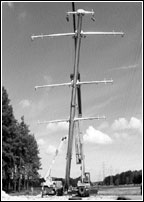 Last week, however, saw the first hopeful signs of a revival in the fortunes of the key industry. Two Indian firms, Lanco Infratech, and Tata Power, won bids to build two ultra-mega power plants, with a generation capacity of 4,000-MW each. The two firms won the contract after submitting the lowest bids for the coal-fired power plants. All the major Indian and international power firms had bid for the two major projects
Lanco, in partnership with a British firm, quoted the lowest tariff of Rs1.19 per unit of electricity, to be generated at Sasan, a pithead coal station, in Madhya Pradesh, while Tata Power quoted Rs2.26 a unit for the plant at Mundra in Gujarat. The latter will be using imported coal.
The government has invited private bidders to promote seven ultra-mega power projects, each with a capacity of 4,000 MW. Power secretary R.V. Shahi is confident that the road ahead is smooth, and all the contentious issues of the past – the Enron project, arrears of state boards, delays in granting approvals, and the ridiculous regime of guarantees and counter-guarantees – have been buried.
Shahi points out that projects worth around Rs3 trillion, with a capacity of nearly 45,000 MW, are in various stages of implementation. According to him, the government is now encouraging ‘merchant power plants,’ where the electricity regulator will not have a say in determining power tariffs.
“We expect about 10,000 to 15,000 MW of merchant capacity to come up over the next three to four years,” explains Shahi. These plants would have capacities of up to 1,000 MW. About two-dozen plants in the 500-1,000 MW capacity will be on offer. They would require investments of between Rs200 billion and Rs400 billion, for additional capacities of 12,000 to 24,000 MW, and would be set up through the public-private partnership route.
WITH the passing of the Indo-US civilian nuclear agreement last week, the prospects for nuclear energy in India have suddenly brightened.
India’s nuclear power track record has been miserable, and the government has had to constantly keep revising targets, unable to meet its initial goal of 10,000 MW of nuclear energy. But now with the virtual clearing of the deal, the industry can expect a major boost.
India plans to open up the nuclear power sector to both international and Indian businesses. Recently, executives of several American nuclear firms visited India, and discussed opportunities in the sector. Nuclear Power Corporation of India Ltd, a state-controlled firm, is the only player in the sector at present.
Nuclear energy accounts for just 3,900 MW of power today. This is expected to grow to 20,000 MW by 2020, and 50,000 MW by 2030. Nuclear energy will need investments of nearly $100 billion till 2030, and international majors are eyeing this lucrative market.
India plans to change its laws – especially the Atomic Energy Act – in early 2007 to allow foreign and Indian companies to enter the nuclear energy sector. Growth of the nuclear power sector has been stymied because of the restricted supplies of uranium, and key components for the ageing reactors.
The government is also opening up the transmission sector for private players. Eighteen transmission projects will come up for competitive bidding over the coming weeks, involving investments of over Rs60 billion.
And the energy regulator, the Central Electricity Regulatory Commission (CERC), also plans to set up the first Power Exchange for electricity trading in 2007. According to CERC chairman A.K. Basu, the move will raise investors’ confidence and establish a vibrant power market in the country.
Long-term contracts for the sale and purchase of power between the various utilities would not be disturbed, nor are power tariffs likely to rise, says Basu.