



 0
0

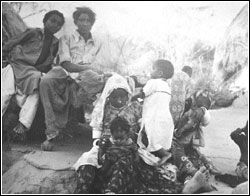 KARACHI: The teeming millions in Pakistan living in abject poverty worked tirelessly for the last 20 years but situation has not changed much for them.
Rampant corruption, unemployment and skyrocketing prices have usurped their right to a decent living. Even extra hours at work have not been able to earn them well.
Middle class income has shrunk over the last two decades as major chunk of their earning is spent on utility bills, children’s education, house rent, health, purchase of items of daily use, or to pay loan instalments.
The electronic media accessibility has raised aspiration of families. This has increased pressure on bread winners whose savings have declined. Skyrocketing property prices have dimmed the prospects of owning a house for starters.
People from a cross-section of society mainly complained of rising inflation, and a majority had the feeling that the governments over the years did not make efforts to make the country a welfare state.
As governments pursued privatisation, liberalisation and deregulation, people lost jobs and started feeling insecure as government started shedding responsibility.
They blamed politicians and successive governments for their plight. They were unhappy as the standard of schools has deteriorated, the availability of medicines in hospitals has become a rarity and negligence at hospitals is a common experience.
Children being most vulnerable lot die of malnutrition as they bear the brunt of poverty and government hospitals fail to ensure proper medical care for them.
They said that greed, corruption and mismanagement by politicians and officials has caused immense sufferings to common man and it caused damage to national unity and destabilized national intuitions, ultimately making the country subservient to donor institutions.
Our major cities even don’t have crisis control institutions, and whenever there are natural disasters, or man-made crises, many lives are lost owing to non-availability of facilities, said M. Ismail Khan, a local social worker. The common man, he said, had suffered badly owing to unabated inflation and rising cost of commodities during the last 20 years despite the fact that many families in urban centres today have more than one earner.
Mohammad Alam, a teacher, said although families have made extraneous efforts to improve their lifestyles during this period, whatever they achieved (a car, a flat, etc.) is only because there are more people working or one person working more jobs. In a majority of the cases, wife and husband both had to work for keeping their kitchen running.
Khuwaja Naved Ahmed, advocate, recalled the political history, right from the MRD movement to Junejo-Zia, Nawaz and Benazir’s eras when political governments were dismissed and martial laws were imposed. He said while this jugglery continued, the common man suffered the most and became victim of inflation and dollar increased from Rs36 to Rs60 during the last 20 years, with meagre increases of 20 to 30 per cent in salaries.
A flat which 20 years back was available for Rs500,000 was now available for Rs6,000,000. Similarly prices of beef and vegetables had increased by 200 to 300 per cent. Earlier, the house rent used to be Rs1,200 to Rs1,500, but now it starts from Rs10,000 to Rs12,000. Then come the mobile culture, and also the crime of mobile phone snatching.
The flow of money increased, but it remained restricted to a particular class, and the purchasing power of the common man declined.
Although businessmen and shopkeepers were compensated, the salaried class pushed below the poverty line. As rate of corruption increased, a vicious circle has started.
Aqilur Rahman, 48, a skilled worker in the Al-Win Engineering, said he earns Rs6,500 a month, but a major portion of his income goes to house rent. He said as he cannot afford to pay school fees of his children, he opted to get his two children admitted to a madressah where education is free.
Mohammad Aqil, 60, a sweetmeat merchant, said successive governments did nothing for the poor. He said a tin of ghee which was for Rs22 in the Ayub era now fetched Rs970 per 16 kg.
Iftikhar Ahmed, 54, a cattle trader, said those who were considered prosperous some 20 years back have now lost everything owing to governments’ policies.
Sadiq, 50, a fisherman, said his main problem was the cost of commodities. He did not blame politicians, but instead held the army responsible for the mess as politicians did not get enough time to pursue their policies and were toppled. He said corruption had made it difficult for common man to continue to live with dignity.
A housewife said that the government was claiming to have restored rights to women, but she said she was more concerned over non-availability of clean drinking water which she had to purchase in her locality in Khokhrapar. There was no sanitation, no health facilities, and skyrocketing prices have made it difficult for her family to continue with a single breadwinner.






























