



 0
0

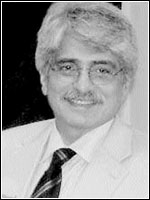 ISLAMABAD: Prime Minister’s Adviser on Finance Dr Salman Shah has said that despite experiencing difficulties on some fronts, the economy is poised for further improvement in coming years.
“I would not say that all is well and OK, but one thing is clear that we have chosen a path that is leading to prosperity of the people and contributing to dynamism in our economy," he stated this in an interview with Dawn here on Saturday .
Following are the questions and answers of the interview.
Q. Are you happy with the performance of the economy of Pakistan over the last 20 years in terms of capital formation?
A. It would be perhaps difficult for me to comment on what happened in the last 20 years. But obviously now things looked good and the general trend is in the right direction which is being witnessed during the last four years. We have achieved investment with the GDP ratio of 20 per cent and ultimately this would be stretched to 25 per cent, therefore, the trend is in the right direction. The opening of financial sector and the economy and the development of the private sector is critical in achieving this 25 per cent investment ratio.
Q. In your view did the policy mix of liberalisation, privatisation and deregulation helped realise the economic potential of the country?
A. This is still an ongoing process and changes in the globalised world mean you have to try every thing for the opening of markets. Domestic markets are large and we have young and large population, contributing in the liberal market, financial market products and services market are growing rapidly through competitive market driven private sector. Therefore, the policies of deregulation, liberalisation and privatisation are designed to achieve a very efficient competitive base driven by the private sector. It will result in major increase in employment and the prosperity of the people.
Q. Do you think that the policy package has appropriately addressed issues of major imbalances?
A. Currently, there is a very good sustainable macroeconomic stability where the debt to GDP ratio is continuously declining, fiscal deficit is in control and inflationary pressures are deceasing and core inflation has come down to 5.4 per cent in November this year and this trend is continuing. A very strong remittances and foreign investment have supported the high growth in the economy and helped achieve balance of payment surplus.
Q. Do you think the country has adjusted structurally to attain high growth and development?
A. Growth benefits everybody and the average seven per cent GDP growth recorded in the last three years has contributed towards substantial decline in poverty and helping us to have an emerging middle class which is driving growth in domestic markets. This can be witnessed in the recent takeover of Pakistani banks by leading global banks which is a clear confidence in the future growth of Pakistan.
Q. Are you satisfied with the quality of growth that proved to be more beneficial to some at the cost of the majority?
A. I think this is not a correct perception as despite various existing inequalities, there is significant change to help our people in terms of providing them more and more jobs and trying to create a skilled manpower markets in the country.
Q. Are you satisfied with the pace of development in agriculture sector?
A. Potential in agriculture sector is phenomenal and the focus of the government is to provide active value chain, starting from research and development (R&D) to the provision of inputs like fertiliser and seeds and also to augment water resources by building additional water storages and improving water management. This will ensure substantial growth rate in agricultural products.
Q. Do you think liberalisation policies were in tandem with the needs of local manufacturing base?
A. Absolutely. In a globalised world no industry can survive behind protectionist wall and this has to be competitive in the international market. This means that competition has to be foster in the domestic market to enable the industry to achieve greater productivity and competitiveness and to be able to compete on the world markets.
Q. In the name of policies of deregulation the state has receded from arena of public utilities and social services. Does the policy bode well with the local conditions?
A. This is very important. Markets are there so as to reduce the cost of regulation and provide competition and productivity improvements on the supply chain. In this globalised world the role of the government is devoted to improving investment climate and environment for business and consumers.
Q. Can you tell what percentage of privatised units showed positive results?
A. The privatisation of the manufacturing sector is primarily composed of some units which have performed very well and in any case they are few large manufacturing units in the public sector other then the steel mills, Pakistan Machine Tool Factory, shipyard and heavy mechanical and heavy electrical complexes. Once these units are privatised, manufacturing sector will be experiencing great demand.
Q. Do you see any relationship between rising disparities to market based policies?
A. The evidence on disparities is mixed where everybody has gained from increased income. Disparities in Pakistan have grown less than the disparities seen in many countries including China and India.
Q. Free market needs to be better regulated market. There were several scams in cooperatives, finance companies, commodity market, capital market etc., in the past. How do you see it?
A. What happened in the past is certainly very unfortunate and this was mainly due to careless handling of things on the part of the successive governments. But today we are making sure that this does not happen again so that public is not cheated. The government is very concerned about such issues and have been taking measures to avoid such situations.
The government is there to ensure improved and better regulated market but that does not mean unnecessary interference as it can harm the overall economic environment. Protection of the public interest is one of the important policy elements of our government.
Q. Why the tax and saving ratios have not improved?
A. Tax to GDP ratio and savings need to be further enhanced. The CBR and other revenue organisations had been given task to further improve these rates and hopefully they will, perhaps gradually.






























