



 0
0

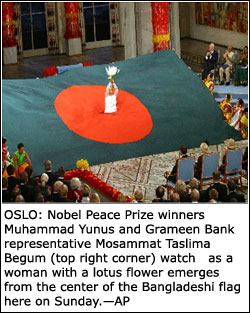 OSLO, Dec 10: Micro-credit pioneer Muhammad Yunus of Bangladesh, founder of Grameen Bank, unveiled a bold vision for ending global poverty as he was awarded the Nobel Peace Prize on Sunday.
“Poverty is a threat to peace,” the economist-turned-humanitarian banker said in accepting the 1.1 million euro ($1.4 million) prize. “The frustrations, hostility and anger generated by abject poverty cannot sustain peace in any society in the world.”
The Grameen Bank, which shared the award, has helped millions in Bangladesh extricate themselves from poverty through tiny, collateral-free loans, and has been successfully emulated throughout the world over the last decade.
In his prepared speech, Yunus outlined the contours of a parallel economy based on self-sustaining “social businesses” -- such as Grameen and several joint ventures he has created with multinational corporations -- that reinvest profits rather than paying dividends.
“By defining ‘entrepreneur’ in a broader way we can change the character of capitalism radically, and solve many of the unresolved social and economic problems within the scope of the free market,” Yunus said.
Once recognized in law, Yunus predicted, these social businesses will eventually develop their own capital markets to attract investment.
Calling the 66-year-old Bangladeshi a “modern Ghandi”, the Norwegian Nobel Committee saluted his efforts “to create economic and social development from below.”
“Lasting peace cannot be achieved unless large population groups find ways in which to break out of poverty. Micro-credit is one such means,” said Committee Chairman Ole Danbolt Mjos, adding that such initiatives “advance democracy and human rights.”
Yunus also used the Nobel platform on Sunday to criticise purely military strategies for combating terrorism. — AFP




























