0
0

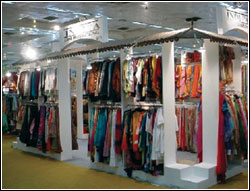 Maintaining and boosting exports in the post-2005 liberalised scenario is posing a major challenge. It is alarming to see readymade garments and knitwear manufacturing units closing down. Urgent measures need to be taken to save Pakistan’s manufacturing capacity on a priority basis. Otherwise, Pakistan will be reduced only to a dumping ground of foreign goods with own industrial investment scrapped and human resource wasted that will result in more misery.
None of these issues can be resolved by undertaking only huge infrastructure projects and building dams and ports. Such big ticket projects do have positive externalities. However, unless there is complementary investment in sectors whose output and contribution to national income will help recover the cost of investment in infrastructure that they will also utilise, there will be extensive co-ordination failures down the road. Economy and sectors will be found stuck in bad equilibria as has also been experienced in recent history. Heavy industry came up in the 1970s and thereafter, without downstream linkages that failed to come on stream either due to poor coordination or poor feasibilities. Furnace-oil-based power plants were envisaged and some were realised with great enthusiasm in the 1990s in the hope that these will induce industrial development but the second prong of the envisaged strategy did not materialise.
A number of medical colleges were set up in the 1970s as a part of health policy aimed at providing health care to all. Medical colleges came up but not universal healthcare. The upshot was surplus doctors as not all graduates could be utilised within the country. The grand motorway project might have been completed but would that by itself have boosted regional trade is a big question mark considering the regional security situation, amongst other factors. So, coordination failures abound. The lesson is that such failures must be avoided by keeping an eye on possible coordination failures in the future.
So, what good will our gigantic infrastructure projects be if much of our export industry is endangered? If we lack capability to save the industry we have, can we throw up new industry on the ashes of the old that will be competitive and sustainable? It is, therefore, very important to know what all is going wrong because of which our exports are sagging and some of our export industry headed towards extinction.
It is rather easy to say that the industry is not competitive quality-wise and price-wise and that it should be competitive on the basis of quality, cost, and responsiveness to the international environment and market place. The question is how might it make the above transition when the industrial units as small as readymade garments’ and knitwears’ are not exposed to the state-of-the-art in management, the units in competing countries are.
Exporters in some countries known for export-led growth did not become competitive by just bringing down trade barriers. Their path to development was supervised and facilitated constantly by the government that did not just sit on judgment over them but nurtured their growth process.
We are, however, being told by our foreign financiers that the government must only intervene in the development of human capital and should keep its hands off all other aspects in the market place. That is, the government should at best provide for primary education and health to whatever limited extent it can and let other spheres take their own natural course. This dictation can be taken literally or interpreted liberally in an environment preferred to be liberal by none other than our foreign donors. Liberal interpretation would imply that if the government is permitted to develop human capital, it should allow itself to orchestrate human capital development also in the industry. That is, the government must organise dissemination of modern management technology to all small industry players who together make up our export potential. Otherwise, this potential will erode simply because these small players cannot interface with the rest of the world. And, this threat looms despite all the business graduates we produce in the country.
It is a pity that we produce medical graduates without having a mass health policy. Similarly, we produce business graduates in large numbers without being able to salvage our export industry that needs precisely the skills that are imparted to our business graduates. But, our business graduates will not help our small industry in their individual capacity. First, few helpers, if available, will not make a difference at all. Second, it is the MNCs or large glamorous organizations that offer them the satisfaction-contribution equilibrium towards which state they flow naturally just like the graduates of the most prestigious medical college in the country who flow naturally across the Atlantic.
Having said the above, a transfer of technology (TOT) is still possible at the institutional level. We are at one for technology transfer from foreign business collaborators. But, we pay little heed to the intra-country TOT in management that can save, revive, and boost our exports. What is required is coordinated effort by the government, concerned ministry, industry associations, and business management institutions as consultants. A cell created specifically for each industrial sector should be orchestrating this process on a regular basis.
In the initial stages, the foreign market potential and requirements will need to be shown to the players so as to coordinate the efforts in marketing research, marketing, and production. It will take a few years before the industrial units will be able to emerge from their limited view to be able to see the bigger international picture and then be on their own eventually.
The above should be in addition to a study of all those increasing input costs beyond the units’ control that make profitable operations unviable. These would need to be looked into by the government so as to make the manufacturing operation financially feasible.
The East Asian tigers experienced guided capitalism to eventually make it big in the export markets. Export promotion was state-led until the economy could be transformed into what we came to know as export-led. If we want to see our exports grow, the country will need to make the above managerial investments. Also, investment in human capital on the spot is imperative where human capital needs development to save and develop the exports’ sector. We cannot just focus on human capital at the primary level only to the neglect of human capital in industry that will perish along with our traditional exports.
Our foreign donors can be told that this is not hands-on again on our economic sectors and that none of their injunctions are being violated as we are attempting to build human capital in our industry that needs development. The donors may be further told that this is entirely within the ambit of the new growth theory that allows for state intervention in human capital development because of its positive spill over on endogenous expansion of the industrial and technological base.
A major part of the campaign should also target the owner managers who will need to appreciate that sustainable performance comes from providing customer satisfaction and delight and not in aiming at a quick fast buck for personal coffers. Unless congruence is struck between the ends of customers, owner managers, and other stakeholders, business survival and growth will remain dicey.
A massive education effort, as above, needs to be undertaken on a war footing. Responsibility is currently on the ones who know but who do not share knowledge for the wider benefit of the export sectors, the economy and the society. And, responsibility is on those who fail to fully specify the model this country needs for development especially after they have been alerted to it.