



 0
0

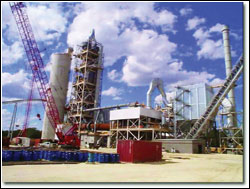 THE cement sector has a tendency the world over to thrive on cartels and Pakistan is no exception. No wonder that more than Rs150 billion cement industry remains involved in an unending tussle with governments over the pricing of its product.
These days, cement barons are stuck up in a situation of falling prices, over-supply and inventory build- up in an environment of rising bank interests. The industry is gradually reducing capacity utilization-- a time-tested tactic to cut down the feared financial losses.
``Cement factories may start defaulting on bank loans in coming days if no remedial measures are taken by the government’’ warns Aizaz Sheikh, Chairman of All Pakistan Cement Manufacturers Association (APCMA).
He blames government for discouraging cement export by allowing a duty free import with Rs60 freight subsidy on a bag of 50 kg. The industry wants curbs on cement import and withdrawal of freight subsidy on import. It also demands a zero excise duty and zero sales tax on cement export with a freight subsidy.
Reports emerging from government circles suggest that cement prices may be brought in the Price Control Act jurisdiction to counter the growing influence of cartels. ``No matter at what capacity the industry operates, it will have to justify the price of the product’’, an official of a government agency said. This report has further dampened the spirits of the producers who reaped fabulous profits by cutting down heavily on supplies over last eight years.
In April this year, when retail cement prices peaked at Rs400 a bag, the government, abruptly opened up duty free import with freight subsidy. But hardly 0.1 million ton of cement was imported as against letters of credit opened for more than 0.2 million tons. The importers got about Rs1 billion as freight subsidy. A substantial quantity of cement imported from China and India was held up at the customs as it was considered to be of sub-standard. The imported cement did not find good response from the local market and eventually a steep fall in retail prices in domestic market made cement import non-feasible.
The industry leaders contend that they had forewarned the government as far back as August 2005 on the oncoming crisis and suggested import from all sources including India-- both by sea and land routes. The APCMA chairman in his letter to the Industries Minister Jehangir Tareen suggested bringing down the customs duty from 25 to 10 per cent besides importing a half a million tons of cement. .
But an official ban on import and provision of incentives on exports is bound to impact on domestic market that would push up retail prices. It could affect the construction projects, now in full swing, as depicted in media advertisements of housing and shopping malls. Equally to be impacted would be more than Rs400 billion annual development programme of the government drawn up on the basis of falling cement prices in May and June after government allowed a duty free cement import with a freight subsidy. Any decision that could lead to a hike in cement prices now is fraught with political consequences that government is reluctant to take at a time when elections are round the corner.
Therefore, the Economic Coordination Committee of the Cabinet in its meeting in first week of October rejected a proposal to put a ban on cement import. It agreed to withdraw freight subsidy on imported cement for which letters of credit have been established. As for rebate on cement export, the government has agreed in principle to give this incentive but apparently is bogged down with technical issues and no notification has been issued as yet after more than a month of the decision..
Banking sources indicate more than Rs60 billion loans to cement industry. In anticipation of rising demand in the domestic and export market, the cement barons took up an aggressive capacity expansion programme in last few years. The capacity grew from about 19 millions tons in June 2004 to the existing about 33 million tons which is likely to go up to 47- 49 million tons in 2009.
The industry maintained about 17.5 per cent dispatch growth in first quarter when the export also went up by more than 53.5 per cent. This growing demand was met with by the existing capacity. From October, however, the industry started receiving alarming signals and it got panicky. Cement dispatches in October this year increased by about four per cent to 1.62 million tons but exports declined by about 1.2 per cent, causing a glut in domestic market and building up of inventory in the factories.
Ramzan and extended Eid holidays, demolition of illegal structures in Murree hills and a slow down in reconstruction work in earth quake affected areas and a slow down in implementation of government development programme are said to be some of the factors to have impacted on cement demand. Now that winter has set in and snowfall has been reported in earthquake affected areas as well as Northern region, the construction will come to a virtual standstill that will further reduce cement demand.
According to Taurus Securities, the industry faces another challenge ``Financial cost and charges are likely to go up dramatically as most of the expansion is likely to become online in next two years which then direct all financial cost towards profit and loss statement.. The report states while pointing out that most of the cement producers have acquired long term loans based on floating rates of KIBOR and T-Bills with spreads ranging between 0.5-3 per cent. Therefore, financial charges of all these companies with floating rate debts are expected to rise with increase in the interest rates.
Adding burden to the rising financial cost will be the increasing fuel cost as imported coal is said to be worth about $70 a ton. According to Taurus, margins of cement companies have become vulnerable as 60 to 70 per cent of production cost comes from energy. As government does not show any inclination in reducing oil prices, transportation cost is also becoming an issue.
Cement prices in Punjab and Northern areas are said to have come down to Rs170 from Rs180 a bag while in Karachi that has now become a hub of private construction activities, it is Rs200 plus a bag. A recent decision to bring down registration rate on lands in rural neighbourhood of Karachi is bound to attract more developers and constructors and industry expects a rise in cement demand in the coming days.
With about 32 million tons installed capacity, the cement industry operated at 74 per cent in July and August and capacity utilisation is said to have come down even lower now. Way back in early nineties, the industry even operated at low as 50 per cent capacity to cut down on supplies and managed to get good prices. A toothless Monopoly Control Authority (MCA) remained a silent spectator of retail cement prices going up from Rs140 a bag to Rs240 a bag in mater of a week only. The MCA imposed a penalty of Rs100,000 each on 18 cement factories plus Rs10,000 a day for non payment. It did not receive any money as High Court issued a stay order and the government intervened finally to fix Rs200 a bag price.
The industry now waits for next meeting of the ECC to address its issues but its leaders say that the government is not showing any inclination of talking to them. So far it is all quiet on cement front but industry warns of hard days ahead if its cries go un-responded. The consumers, as always are helpless and dumb captives of the market.






























