0
0

ISLAMABAD, Nov 5: Pakistan’s proposal of fencing its border with Afghanistan to stop infiltration of militants from both sides would be taken up at the annual Nato Summit meeting later this month, Dutch Foreign Minister Dr Bernhard Bot indicated during his four-hour visit here on Sunday.
The Nato summit will take place in Riga, Latvia on Nov 28-29.
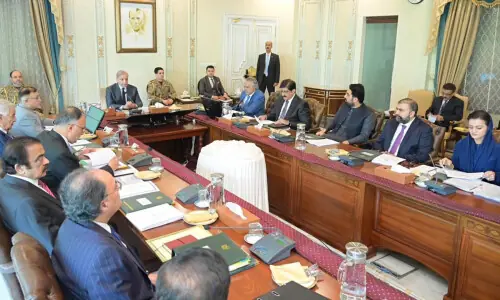
The fencing proposal came up during Dr Bot’s 90-minute talks with foreign minister Khurshid Kasuri that focused on Afghanistan, and more specifically on enhancing border controls to check infiltration.
The proposal of fencing and mining the border was reiterated by Mr Kasuri when the Dutch foreign minister, whose country has 1500 soldiers deployed in Afghanistan’s southern province of Uruzgan, pushed for intensifying efforts to ensure border security.
“It came up very broadly,” confirmed the press secretary at the Royal Netherlands Embassy, Heleen Saaf van der Beek. She said Mr Kasuri brought it up when the Dutch foreign minister underscored the need for sealing the border and enhancing border controls. Asked if the Dutch foreign minister was receptive to it she said her minister told Mr Kasuri that he welcomed the idea of sealing the border and would bring it up at the forthcoming Nato summit. However, since mining is a sensitive issue for Netherlands, the Dutch minister was not amenable to it.
Joint monitoring of borders involving the international community was also discussed.
According to a press release issued by the Royal Netherlands Embassy after the Dutch foreign minister’s meeting with Mr Kasuri at the Foreign Office, Pakistan’s efforts in the fight against the Taliban were appreciated by Dr Bot who also expressed interest of Netherlands in stepping into development efforts in Pakistan’s border regions with Afghanistan.
“Minister Bot expressed appreciation for Pakistan’s efforts in the fight against the Taliban, and encouraged Pakistan and Afghanistan to further strengthen and deepen their good neighbourly relations,” it said
“He reiterated the importance of close cooperation, military as well as civil, to fight violent extremism in the region and promote development.”
Both shared the view that a stable, peaceful and prosperous Afghanistan was of vital interest to the countries in the region and the world at large.