0
0

ISLAMABAD, Oct 8: The government is likely to reduce taxes on petrol and impose tax on liquefied petroleum gas (LPG) soon to enable refineries to run full capacity and discourage diversion of LPG to motor fuels, it is learnt.
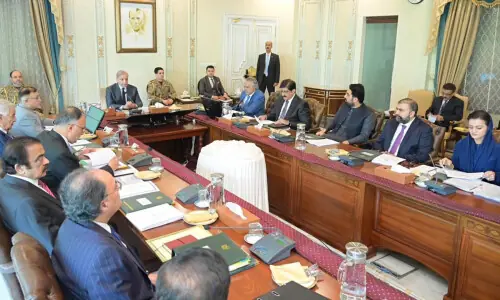
A senior government official told Dawn that these were some of the broad understandings reached among the petroleum sector stakeholders, including government officials, representatives of oil companies and refineries and a World Bank team.
The government and the industry are in a dilemma. The petrol is heavily taxed but it is surplus in production that forces refineries to operate below capacity and causes shortage of other products, particularly high-cost diesel.
On the other hand, there is no tax on LPG. Its supplies even to households are limited while motorists are adopting it with the government’s permission. This has resulted in increase of LPG prices which discourages households to use it.
The World Bank has been asking the government that since it is promoting compressed natural gas (CNG) as cheap fuel, it should either ban use of LPG in vehicles or tax it heavily. CNG is the cheapest in comparison with petrol and LPG. Had there been no taxation on petrol, LPG would lose its competitive advantage.
Since the cost of converting to LPG is also lower than that of converting to CNG, LPG use in motor vehicles has been expanding rapidly. The rapid expansion of LPG will exacerbate the problems of the refining industry in 2007, given that production of petrol constrains the output of valuable diesel oil, forecasts the World Bank.
The stakeholders generally agree that the market for petrol is expected to continue to decline, a situation which will cause further erosion of the fiscal income arising from petroleum taxes. The only ‘realistic’ way to avoid this is to introduce ‘comparable’ taxation for the three products.