



 0
0

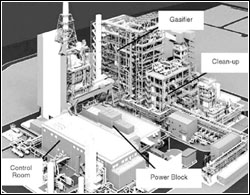 THE Private Power and Infrastructure Board (PPIB) has invited expressions of interest from potential investors for the development of integrated power project based on imported coal, on non-exclusive basis, proposed to be set up near Karachi. The two top ranking parties will be pre-qualified to install 1,000-1,200 MW capacity each power plant, with the provision of expansion in future.
But the project poses numerous issues, problems and challenges and the government of Sindh has already reacted sharply against it.
The development of a coal-fired power plant based on imported coal is a complicated and arduous process. The project may run into snags. Remember the Gordon Wu project of the 1994-power policy era?
The nation may end up losing opportunities presently available to it to develop domestic coal reserves, an activity which obviously cannot be undertaken in parallel to establishing a power plant based on imported coal. It is not consistent with the government’s committed policies.
The first and foremost concern is that the country would remain heavily dependent on imported coal source for power generation. The technology selected will depend on coal analysis and characteristics. For this reason, each plant is highly complex having custom-designed systems and as such the proposed plant can not be switched to using indigenous coal at any stage of operations.
The quality of local raw coal ranges from lignite to sub-bituminous, having calorific value of 5,219 to 15,801 BTU/lb, which is considered to be of good quality and suitable for power generation. Pakistan has proven coal resources to the extent of 185 billion tons, compared to total world reserves of 909 billion tons of lignite to sub-bituminous coal. According to recent estimates, there is a potential to generate annually about 20,000 MW electricity for forty years or so, based on available and mine-able domestic coal reserves.
Recently, the government has approved various power projects based on domestic coal to be set up in the private sector, while others are in process. After a Chinese company backed out almost a year ago, an American corporation plans to set up a 1,000 MW capacity integrated power plant near Thar coalfields that are viable for large-scale mechanised mining. Likewise, the LOIs have been issued to Pakistani investors along with foreign partners to establish a 200-MW plant at Sonda—Jherruk, a 200-MW and another of 150-MW capacity at Lakhra, all to be located at respective mine-mouth.
Already, there are indications by the American company not to develop Thar-coal based project. Instead it is instead seeking permission to construct plant based on imported coal. This will have far-reaching implications and socio-economic fall-outs also, as areas like Thar, Lakhra, Sonda and Jherruk will ever remain under-developed.
Second, it will be an expensive proposition to set up an integrated project on imported coal. It will result in high and non-competitive tariff. Indeed, coal is the most common fuel for utility and industrial energy generation worldwide, accounting for at present almost 40 per cent of world’s electricity. Globally, coal consumption is over five billion tons annually.
Supply of coal, in this case, known as thermal or steam coal (lignite and sub-bituminous), has to be secured from the international market. In order to ensure reliable, regular and uninterrupted supply of coal for the plant, the investors will be required to arranging and managing long-term coal supply contracts. This will not be possible to secure from international market, unless the investor, only a foreign investor in this case, would have his own lease of coalmines in one of the coal exporting countries. Still, the regular and reliable supply of coal could not be guaranteed for longer periods—-almost for 30 years of plant life span.
A power plant of gross design capacity of 1,200 MW will require approximately eight million metric tons of coal per year, depending on coal quality and technology adopted, which is translated into a daily supply of about 22,000 tons coal, or hourly supply of over 900 tons to the plant.
Such plants are designed on a large scale for continuous operation. Imported coal is bulky and expensive to transport. Coal price in international market is currently in the range of $34-$39 per metric ton for thermal coal of about 11,800 BTU with low to medium content of sulphur. Thus, the proposed plant, besides having high operating cost, will have a heavy and constant drain on foreign exchange resources.
Again, the logistics are to be created to receive and handle transportation of imported coal of this magnitude to the power plant efficiently. In fact, sea transportation cost accounts for almost 70 per cent of the delivered coal price internationally. For economic reasons, cargo ships are commonly used for carrying minimum 40,000-50,000 tons of coal, which takes several days to unload.
This essentially requires a deep-water jetty and other infrastructure, the construction of which is yet another expensive proposition in comparison to mine-mouth projects. The proposed plants are to be located near a seaport, so as not only to facilitate coal delivery through conveyors, but also to meet large requirements of cooling water. Water requirements for the plant of this size are estimated to be over two billion gallons per day at full load.
Inter-connection and transmission infrastructure is to be created for dispersal of power generated by the proposed plant. Wapda, the power purchaser, is therefore responsible to construct high voltage transmission system at its cost, for which a detailed study needs to be conducted. One wonders why the government is promoting costly, and, more importantly, risky power project in spite of comparative advantages of using indigenous coal.
Many within the government discourage cheaper power projects, like hydroelectric and indigenous coal, to promote imported fuels. The government has recently decided to unbundling of Thar coal project into mining and power generation that would now be developed as separate projects. This methodology will attract additional investment in setting up projects based on indigenous coal.
Third, project is primarily aimed at international investor specialising in power project based on imported coal, as pre-qualification conditions are too stringent for a domestic investor to comply with. Potential investors need to have total net worth of not less than $125 million in case of corporation/consortia, whereas main sponsor of the consortium should have net worth not less than $50 million.
They are also required to have minimum ten years experience of developing and/or operating similar projects of not less than 300 MW capacity in any country. AES Corporation of the USA and Malakoff Berhad of Malaysia have already shown interest in developing the project.
It amounts to encouraging foreign investors and discouraging the domestic business. First, the IPPs should not be concentrated in the hands of a few foreign investors, for obvious reasons, and therefore present trend of monopolistic approach need to be arrested instead of promoting it further. Currently, International Power of UK, to quote as an illustration, owns and/or operates almost 60 per cent of total installed power generation capacity in private sector in the Wapda system. Likewise, operations of the KESC are in the hands of the consortium dominated by foreign investors.
Foreign investors are allowed to repatriate profits/dividends, which are large and growing in the power sector. Over the years, outflow of foreign exchange in large amounts would further strain the critical balance of payments position. Just in the month of July 2006, the foreign direct investment (FDI) inflow in thermal power was to the level of $22.7 million.
It will take at least six years from today for plant based on imported coal to go on stream and thus it will not serve the purpose of bridging the demand-supply gap in near future. The viability of proposed plant, which could achieve commercial operations in the year 2012, becomes questionable.
A sizeable investment in power generation by the IPPs may create additional 3,826 MW capacity by then to the existing Wapda system, whereas Wapda itself will add to its present power generation capacity in the range of 3,000 MW. Likewise, KESC plans to establish its own power plants and does not show interest to purchase electricity from the IPPs to be located in its licensed area.
As a first step, a detailed bankable feasibility study will require to be conducted for the integrated project based on imported coal. The study will address evaluation of imported coal usage, selection of power plant technology, plant location, load flow study, plant conceptual design, infrastructure and interfaces including transmission interconnection, environmental impacts, project schedule, cost estimates, preliminary financial evaluation and project finance-ability.
This will also require soil, geological, seismic and hydrological investigations and studies related to construction of jetty and other infrastructure required for the plant.
PPIB has recently decided to engage consultants for preparation of detailed terms of references (TOR) for the project feasibility study that is required to be undertaken by the pre-qualified investor at his own cost, expense and risk.
The preparation of the requisite feasibility study will ideally take about 16-18 months and cost millions of dollars. Thus, the studies entail substantial capital and other resources at risk on the part of investor, without guarantee of project being commercially viable.
Only on the completion of the feasibility study, the activities can commence for engineering and preparing design specifications for procuring the long lead plant machinery, primarily consisting of a pulverised coal boiler and one steam turbine generator required for each battery of 500-600 MW capacity.
About six months are required for preparation of the engineering, procurement and construction (EPC) specifications, firming up the source of coal supply, bid preparation by the EPC contractor, EPC bid evaluation, preliminary contract negotiations and contract award by the project sponsor.
From start of project engineering to installation, erection, commissioning and test running of the plant, a period of 50 months is considered achievable. This includes a 40-month construction period beginning with civil works for the foundation, and simultaneously, for jetty and other infrastructure, and ending at the substantial completion of installation work.
Thus, based on a practically reasonable EPC schedule, the power plant can be commissioned not earlier than six years from the date of issue of the Letter of Intent by the government, of course, subject to the investor’s will and commitment.
It is assumed that project funding could be arranged and other project development activities such as power purchase agreement and licensing could proceed concurrently. However, not a single power project, whether in public or private sector, has ever attained commercial operations in stipulated time period.
Finally, the proposed plant is focused for location near Karachi, within 100 km along length and breadth of the metropolis. There are a number of factors however unfavourable to the proposed location. As explained above, deep seawater is required for construction of jetty to facilitate berthing of coal-carrying ships of 60,000 to 80,000 Dwt capacity.
There is no feasible location near Karachi. Bin Qasim will not be an option since required land for the project—- minimum 1,000 acres—- is simply not available even if investor would be willing to pay high market price. Keti Bandar and Sonmiani are shallow seawater locations and thus not suitable for selection as the project site.
Environmental issues, affecting further de-gradation of highly polluted Karachi city, are of paramount importance. The operation of a coal-fired power plant emits massive amounts of greenhouse gases including carbon dioxide, nitrogen oxides and sulphur dioxide.
A standard 1,200 MW plant generates daily about 2,000 tons of carbon dioxide. Plant emissions also include radioactive elements, more radiation than a nuclear power plant. Coal burning also produces very large quantities of ash, some 400 tons of ash per day out of a plant facility of this size, which poses enormous dust control problem, in spite of developing the requisite ash disposal.
Though installation of emissions control devices, such as electrostatic precipitators, scrubbers and filter bags, are essential component of the coal-fired power plant, the flue gases that contain reasonable amount of emissions are dispersed into the atmosphere, in practice.
In conclusion, the government needs to review its strategy, carefully taking into consideration merits and demerits of the proposed project that is not even included in the National Energy Security Plan, and to rely on domestic coal. The government should accelerate activities related to exploitation, mining, processing and utilisation of indigenous coal, primarily for power generation.






























