0
0

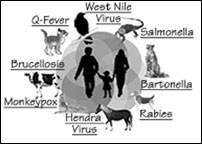 POPULATION growth has necessitated migration of people to new regions. Exploitation of new areas for cultivation, and roads and resources development such as water, dam and irrigation systems have impacted the emergence of parasitic zoonoses.
Migration of humans and their domestic animals is a pathway for disseminating these parasites which influence the emergence, frequency, and spread of infection. Thousands suffer from gastroenteritis due to water contamination in many parts of Pakistan.
Human behaviour plays a central role in macro-and-micro-epidemiology of emerging and re-emerging parasitic zoonoses. It is estimated that approximately half the world’s population is affected by waterborne and food-borne infections to which parasitic food-borne and waterborne zoonoses contribute.
Parasites may be transmitted from animals to humans, from humans to humans, or from humans to animals. Several parasites have emerged as a significant cause of food borne and waterborne diseases.
Parasitic protozoan causes diarrhoea in animal species and humans throughout the world. Giardia is identified more often than any other pathogen in waterborne outbreaks which occur mostly in camps, parks, resorts, and institutions, including schools, and from drinking contaminated water in swimming pools.
Rusting of iron water pipes and mixing of sewage and drinking water is a common contamination factor. Other sources are supply pools outside the town or city. Such outbreaks are common during summers and at unhygienic facilities and among young children. Veterinarians, those in crowded institutions and animal handlers are also at an increased risk of catching giardiosis.
The practice of eating raw or improperly cooked food including crustaceans, meat and fish is a source of infection for many parasitic zoonoses in different cultures where this is practiced but not in Pakistan where food is cooked at high temperature for a long time.
Concomitant contamination of the environment with night soil, increasing human and animal populations, including aquaculture and migration all add to the continued flourishing of many food-borne zoonoses.
In urban areas there is a concentration of dogs in public sites, such as parks and playgrounds where animals and children are taken for exercise or recreation. Such places become heavily contaminated by pet faeces. Stray and feral dogs, who share these facilities, may also make a contribution to the transmission of infection. Feral dogs are considered to be more important contributors to human infection with hookworm infection than the pet dogs.
Human behaviour plays an important role in the perpetuation of parasitic cestode zoonoses, the most important from an economic and public health perspective. The challenge of changing human behaviour to improve health and to prevent mortality is daunting and can take decades to establish a lasting effect. This is perhaps best illustrated by the global campaign against stopping people from smoking to prevent cancer and behavioural changes to prevent the HIV transmission especially in high risk groups.
The early warnings that smoking causes cancer largely went unheeded and even with unequivocal proof of the causal link, smoking is still likely to remain a leading cause of morbidity and mortality, especially in developing countries like Pakistan for decades to come. Legislative changes have impacted in developed countries and such changes need to be highlighted in disease control programmes.
Educational programmes for parasitic zoonoses have to contend with a number of factors for behavioural changes in communities. The pathogenesis of parasitic infections, including the evolution of anaemia, diarrhoea, fever, tissue destruction, pain and disability, which affect the lives of billions of people, too often remain unlinked and therefore the importance of their contribution to ill-health goes unrecognised by affected communities and decision makers. Providing correct message and format to risk groups is a challenge. Providing alternative solutions is also a limiting factor.
In nomadic communities educational messages are difficult to elicit behavioural change. Education also plays a vital role in establishing political participation in control programmes at all levels for building consensus amongst stakeholders and professional participants alike.
Education that fosters responsible pet-ownership is a high priority and awareness of the health risks associated with pets which has been emphasized for more than 20 years, should be highlighted more by veterinarians than is currently practiced.
Education of pet owners in developing countries can focus on prophylactic treatment programmes. Improving hygiene, changing eating habits, animal husbandry practices and providing safe drinking water and effective sanitation are difficult challenges for communities and municipalities alike. Improvements have been made for a number of parasitic zoonoses in many parts of the world.