



 0
0

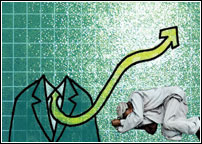 A ROSY economic outlook for 2006 from the ministry of finance ought to be welcome. While it looks up in terms of GDP growth rate, the ministry is honest enough to accept the challenges of job creation, poverty reduction, social indicators improvement, and physical infrastructure.
If the challenges are as humongous as they are, one wonders why the IFIs are so enthusiastic about the “economic progress” that is coupled with a lack of progress on crucial fronts. For, this shortfall might serve as a drag even on growth in the future.
One further wonders about the IFIs excitement as unless there is progress on the other fronts, growth will not be generated endogenously for a long time as per their own endogenous growth theory they exported to us and that serves as the basis of our economic policies. Could the IFIs be defining “economic progress” too narrowly?
IFIs satisfaction emanates from an “improvement” in Pakistan’s business environment. One has reasons to wonder about this too given the law and order situation, the poor infrastructural facilities, the image of breeding terror that is dispelled by the top brass but that gets borne out every now and then when terror strikes, the provincial tensions now, the despondency that prevails together with the attitudes that serve as a drag on productivity and low levels of literacy, education, and health conditions, percentage point improvements notwithstanding.
In the exuberance, the dismal progress, if at all, on these other indicators is lost sight of and all appear to be managing by hope on this front rather than through positive definite action.
So, the improvement in the country rating only on the basis of the “time and cost to meet government requirements in business start-up, operation, trade, taxation, and closure” may look impressive at 74 out of 175 economies with India trailing at 134.
However, it does not capture the full picture that would together make up the business environment leave alone the economic landscape that should be seen on a canvas much broader than the above narrow depiction.
Even for business to perform, the businesses require a proactive strategic outlook which is lacking. Business start-up requires a competitive go-get mindset for successful operations that too is rare. The giant of textiles is having difficulty competing internationally with the protective umbrella receding.
Then businesses require social and political stability to pursue their goals with some degree of confidence. They need roads, electricity, and other utilities for sure. Roads get washed away after one downpour. Electricity situation is chaotic. Gas and gasoline price issues feed into the cost of production.
With food prices spiralling upwards, labour costs go up. The environment is anything but comfortable for businesses. To give a high ranking on the basis of even business environment that is defined even more narrowly than what business environment actually comprises is to forcibly give a ranking that is not valid enough even for the measure that they are attempting to measure. Ends do not always justify the means.
To use the business environment score as a proxy for economic progress would be least convincing too. It is important to know the contributors to high GDP growth. Good weather conditions that should hopefully be similar in the future to yield a decent agricultural growth rate, credit financed demand for industrial products, banking sector’s contribution based on high spreads and the continued injustice to depositors, and viewing capacity utilisation as growth when growth is increase in potential output to name a few sources of GDP growth.
As for inflation, the rate of inflation may remain in single digit but consumers experience a higher burden on their household budgets due to a price line rising incessantly and faster. How CPI is measured remains a big question mark as there should be harmony between the officially stated inflation rate and the price pressures experienced by people.
Exports may be touching new highs but so is the trade deficit. Trade deficit shot up to $4.5 billion during 2004-05 (SBP Annual Report, 2004-05). It further increased to $6.5 billion during July–April2005-06 (SBP Third Quarterly Report, 2005-06.
That current account deficit is financed by foreign inflows in 2005-06 is no consolation if Pakistan is liable to pay in the future. Question remains about the extent of imports of finished luxury goods that the upscale segment can now access due to liberalisation—-a factor that must be of great comfort for the foreign suppliers whose interests are promoted by the IFIs through rapid liberalisation.
The external deficit is explained in part by rising oil prices on the international market. But, does Pakistan not import subsidised oil from Saudi Arabia, UAE, and Qatar and is the oil price not fixed for some time? In-depth item-wise independent trend analysis is required.
So, what is passed on as an economic feat too needs a deeper look to see who benefits? The multitude is being asked to wait for the trickle at an unknown point in time in the future. So, never mind what rank we may get on a narrowly defined business environment indicator, the ranks we have on human development and human deprivation speak volumes about the dichotomy in the policy preferences.
Pakistan’s HDI (human development index) rank is 135 behind India’s at 127 and only better than Nepal, Papua New Guinea, Ghana, Bangla Desh, Congo, Uganda and a few other medium and all low HDI countries (UNDP: Human Development Report 2005). HDI is based on longevity, knowledge, and per capita income.
Out of HPI-1 (human poverty index) ranks for 103 developing countries, Pakistan’s is at 68 behind India’s at 58 with Ghana, Sudan, and Congo and many other smaller countries’ better than Pakistan’s (UNDP: Human Development Report 2005).
HPI-1 measures long and healthy life, knowledge, and access to economic provisioning gauged by percentage of population without sustainable access to improved water source and percentage of children underweight for age. HPI-2 also includes percentage of people below income poverty line and social exclusion as measured by the rate of long-term unemployment (12 months or more). HPI-2 is calculated for 18 selected OECD countries. One is curious to know what it would be for developing countries in general and Pakistan in particular.
Unless improvement is shown significantly on the human development and human poverty indices and their results square with the one on what the IFIs call business environment, the result cannot be called development.
For a country to develop, all must benefit as the development of a few is the development of a few and not that of the nation as the nation is a lot bigger than the few who have been benefiting from the imported endogenous growth theory pushed by the IFIs.






























