



 0
0

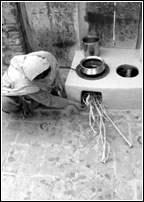 THE people with low incomes living in rural areas depend heavily on traditional biomass- fuel wood, charcoal, animal dung etc, to meet their energy needs.
According to one estimate, 30 per cent of total energy so consumed comes from biomass. Biomass meets about 86 per cent of total domestic energy requirements.
Ninety percent of the rural and 60 percent of the urban households depend on biomass fuels. Among the household biomass energy sources, wood accounts for 54 per cent, animal dung 18 per cent and crop residues account for 14 per cent. Approximately 83 per cent of biomass is used for cooking and the rest for water and space heating.
Because of the household use of natural biomass fuels, concentrations of health-damaging air pollutants tend to be highest indoors where these fuels are burned for cooking and heating. To quote World Health Organization (WHO), some 3.5 billion people are exposed to high level air pollutants at their homes, mostly in the rural areas.
Traditional cook stoves cause indoor concentrations of important pollutants, such as small particles less than 10 microns in diameter, known as PM10, carbon monoxide, benzene and formaldehyde, to be excessive compared to health-based standards or even to other common thermal applications. Such exposures are linked to acute respiratory infections, chronic obstructive lung diseases, low birth weights, lung cancer and eye problems, mostly among women and children.
A village woman normally spends up to two hours a day making dung-cakes or collecting fire wood depending on size of her family and amount of cooking fuel required. Amount of energy required for cooking varies with the type of food, the fuel and stove used and the specific cooking practices of a household.
Young children are often carried by mothers or kept in the kitchen area during cooking exposing them to high levels of smoke. Because women do most of the cooking and spend more time indoors, they are exposed more to pollutants and are believed to have greater adverse health impacts.
Young children who usually stay with their mothers indoors also have elevated exposures. In general, rural women are malnourished and effects of indoor air pollution are likely to be stronger
Indoor air pollution from cooking and heating with traditional fuels has been designated by the World Bank as one of the four most critical environmental problems in the developing countries.
Traditionally, a woman makes her own Chulha (stoves), from three stones and some mud and dung, which involve no investment. The average life of mud Chulhas is 2-3 years. It is nothing more than a pit (a U-shaped construction made from mud), or three pieces of brick.
Traditional stoves are either two pots or three pots at a time, and use firewood, crop residues or dung as fuel. The flame surrounds the main pot with some of the hot gases finding their way to the neighboring pots. The efficiencies are quite low and kitchens blackened with smoke. A masonry hood-chimney is sometimes provided, which helps in sucking the smoke upwards.
Cooking under these conditions entails high levels of exposure to cooking smoke. The use of traditional fuels has a negative impact on family members, especially women and children, when burned indoors without either a proper stove to help control the generation of smoke or a chimney to vent the smoke outside.
Technical advances in energy efficiency are crucial, for our rural as well as urban population heavily depend primarily on biomass. Improving the combustion efficiency is necessary to reduce smoke and harmful emissions that damage health. Improving heat transfer efficiency also significantly reduces fuel consumption.
The present inefficient energy use has resulted in overuse of these fuels which has depleted natural resources and degraded local environments. In addition it multiplies the time needed to collect fuel, and creates indoor pollution that threatens the health of vulnerable members of households.
At a strictly technical level, energy efficiency is a measure of useful energy output compared to energy input. For fuel usage, energy efficiency would be the energy transferred to pot as heat compared to the energy input defined by the fuel mass and its net heating value. The fuel and device available to people living in poverty are typically less efficient, more hazardous to users and more damaging to the environment.
An efficient stove burns the wood slowly rather than in a flash. Burning is controlled by regulating the flow of air into the fireplace. Well designed stove helps control fire and transfer as much energy into the pot or griddle as possible. Both of these functions are accomplished in a well designed cooking stove. To obtain high efficiency the wood has to be dry. Wet wood will in addition to generating less energy and more pollutant and create creosote in the chimney due to incomplete combustion.
It is better to add a chimney to any wood burning cooking or heating stove. A chimney at one end draws air through the combustion chamber, and ensures that smoke is carried away from the cook. Un-vented stoves may be used outdoors or in open areas. When chimneys are not affordable, using a hood over the fire or opening windows, or making vents in the roof under the eaves are the ways to decrease the levels of harmful pollution.
Chimneys take smoke and other emissions out of the living space and protect the health of family by reducing exposure to pollutants. The use of a cleaner burning stove can also be helpful but even such stoves without a chimney can create unhealthy levels of indoor air pollution.
In one of the improved stove programmes. a Lahore-based NGO with the funding of UNDP, has introduced a fuel-efficient cooking stove, to relieve pressure for fuel wood in the Changa Manga forest and to improve the health of village women. The stoves are made out of mud and straw by the women who use them. They consume much less than half the fuel wood.
About 11,500 stoves have been installed during the past 10 years, serving over 90,000 people. The fuel efficient stoves have a chimney made of recycled old steel bins or from mud to save cost. Steel chimney is fabricated from sheet steel or old tin cans by a local blacksmith. A short steel rod is used to reinforce the entrance to the combustion chamber, and steel is used for chimney dampers and firebox gates.
Stoves are designed so that two pots can be used at the same time, with a cover to go on a pot hole when it is not in use. Steel chimney is bit expensive while making mud chimneys is time-consuming.
The main objective of the improved stove programmes is primarily to conserve fuel wood and forests, to remove smoke from kitchen and reduce drudgery for women and improve their health. They also upgrade the domestic environment and help conserve rural trees and forests.
Studies show that the urban poor are in general more likely to benefit from improved stoves than the rural poor for a number of reasons.
Urban poor are more likely to be using stoves of some sort in the first place, rather than an open fire and are more likely to be spend money rather than time on acquiring fuel; they are also more likely to be spending money on buying stoves, rather than constructing their own because they are more likely to have better access to credit than their rural counterparts.
Due to these reasons production, dissemination and marketing of improved stoves are likely to be easier in urban areas because of more specialised skills, greater population density, and better communications and marketing infrastructure.
The more improved alternative available to rural villages is biogas plant extensively applied in Europe and India. In India more than two million biogas plants are in use and each year 200,000 families replace their traditional fireplace with a biogas plant for cooking and heat. Similar equipment has been used for gas production with domestic wastes.
Although fuels from biomass are generally much less efficient for cooking than modern fuels, biogas derived from digesters of dung and farm residues is an exception. Both China and India have done much to develop biogas and encourage its use.
However, only farmers who raise livestock can easily acquire biogas. If fuel efficient stove and biogas plants are promoted, it will help reduce the indoor air pollution level in 80 per cent households use biomass. It will also help conserve fuel wood and manage the livestock waste more efficiently.






























