



 0
0

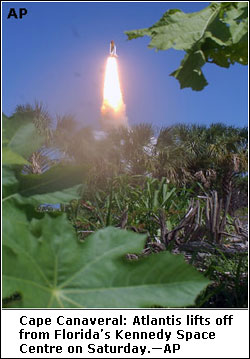 CAPE CANAVERAL, Sept 9: Shuttle Atlantis roared into space on Saturday soaring toward the International Space Station for the first construction mission since the 2003 Columbia tragedy.
The shuttle blasted off in a cloud of white smoke and reached orbit about nine minutes later with six astronauts aboard and a cargo containing two huge solar panels to generate more power for the ISS.
Film of the launch showed fragments of apparent insulation foam breaking off the shuttle fuel tanks during the launch, but NASA did not immediately comment about whether they expected any problems from foam fragment damage.
The foam-shedding during launch has troubled the past several shuttle missions and contributed to the long delay in undertaking missions for ISS construction.
Atlantis’s two rocket boosters successfully separated from the orbiter two minutes after blasting off from the Kennedy Space Centre in Cape Canaveral, Florida, and the shuttle later jettisoned its massive external fuel tank.
After settling into orbit 225kms above the Earth, the shuttle lit two small motors designed to help manoeuvre it into a path that will take it to a 350-km-high orbit and the ISS, where it is expected to dock on Monday at 1046 GMT.
Kyle Herring, the National Aeronautic and Space Administration’s spokesman for the flight, announced all systems are functioning normally after the launch.
The flight was delayed five times during the last two weeks due first to a lightning strike and a looming tropical storm, and then by technical glitches.
It was first supposed to launch on Aug 27, and if Saturday’s launch hadn’t taken place, NASA would have had to wait until late next month to get the mission off the ground.
Friday’s launch was put off just one hour before lift-off due to a faulty fuel sensor. The sensor appeared to work again after the fuel tank was emptied and refilled.—AFP



























