0
0

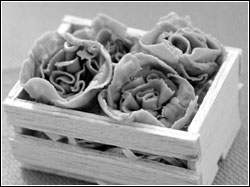 LETTUCE is the king of salad which is used in the meals. Its popularity and importance is well-established. In Pakistan, lettuce is cultivated around the big cities.
Lettuce has been grown not only as a food but as a medicinal herb. Its milky juice is recommended in The Herbal as a sedative. The new Dietary Guidelines for Americans, in its January 2005 issue, says that the average adult needs to boost his consumption of dark green vegetables by 200 to 300 per cent.
The latest dietary recommendations are that most adults should eat three cups of dark green vegetables in a week. Lettuce and even darker green leafy vegetables like spinach, contains beta-carotene as well as the carotenoid cousins called lutein and zeaxanthin. These are all powerful antioxidants that help in blocking early stages in the development of cancer. Some studies even link them with a lower risk of breast, lung and skin cancers.
In addition, lutein seems to help slow the development of age-related macular degeneration (AMD), a cause of age-related blindness. These same dark greens can also supply a significant amount of folate (vitamin B) that promotes heart health and helps prevent certain birth defects.
The importance of folate should not be underestimated. Even after considering the presence of other cancer-fighting nutrients, several studies show that the risk of colon polyps, which are the source of most colon cancers, is 30 to 40 per cent lower in people with a high folate intake compared to those with diets low in folate.
Certain dark green vegetables offer another advantage. These vegetables supply phytochemicals such as indoles that help stop cancer before it starts. These phytochemicals block enzymes that activate carcinogens and boost enzymes that detoxify them. Other antioxidant phytochemicals in these green cruciferous veggies help prevent and repair DNA damage that can lead to cancer. They also seem to interrupt the growth of cancer cells.
The increased consumer demand is focused on improved freshness, variety, and convenience of lettuce. Per capita consumption of all lettuce varieties has been increasing since 1960 in the world. In 2004, the total lettuce consumption reached a record high of 34.5 pounds per capita. Leaf lettuce consumption has risen largely due to the popularity of salad bars, while both have benefited from the introduction of packed salads.
Lettuce is a cool-season vegetable and develops best quality when grown under cool, moist conditions. Lettuce seedlings will tolerate a light frost. Temperatures between 45 F and 65 F are ideal.
Seeds of leaf lettuce are usually planted in the spring as soon as the ground can be worked. Successful production of lettuce depends on vigorous growth. A wide range of well-drained soils can be used; however, the crop does best on fertile, high organic matter soils that have good water-holding capacity. Adequate nutrients and continuous moisture supplies are essential to vigorous growth.
Lettuce is grown from seed; the seedlings are transplanted for head lettuce; rows 30 to 42 inches apart are common. Regardless of the row width, the in-row spacing between each head lettuce plant should be 12 inches. If 42-inch rows are used, yield can be increased by planting two seed rows per bed. Leaf and butter head types should be grown in double rows 12 inches apart and 8 to 10 inches in row spacing.
Lettuce is attacked by aphids, armyworms, imported cabbage worm, and loopers. The pest pressure on summer and fall crops is much greater than on spring crops. Damping-off is a serious disease of young seedlings, whereas mildews and sclerotinia are serious on the more mature plants. Both insects and diseases can be controlled if the correct chemicals are properly applied.
The head lettuce will be ready for harvesting in 70 to 80 days after seeding or 60 to 70 days after transplanting. Cut only those heads that are firm. Leave 3 to 4 “wrapper” leaves to protect the head. Most leaf types are ready in 50 to 60 days after seeding and 30 to 45 days after transplanting. Grower will have to harvest every two to three days, depending on moisture and temperature.
Packing should be done in the field. A wire-bound or waxed fibre carton designed to hold 20 to 24 heads is used. Lettuce should be packaged “flat pack” (non-bulge) to avoid crushing the heads. Lettuce grown in the principal producing areas are transplanted in trucks to market, with increasing quantities being moved by refrigerator trucks.