



 0
0

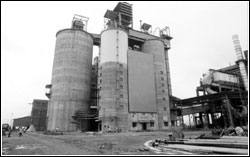 INDIA’S buoyant cement sector continues to attract the attention of global majors. The latest entrant is Germany’s Heidelberg Cement, which paid almost $100 million recently to acquire a 51 per cent controlling stake in Mysore Cement, a sick unit, which was part of the S.K Birla group.
Surprisingly, the German firm paid a hefty premium for acquiring a controlling stake in Mysore Cement. According to cement industry sources, the acquisition works out to a valuation of $117 per tonne for Mysore Cement, way above the valuations in previous acquisitions.
The world’s largest cement maker, Swiss giant Holcim, paid about $100 a tonne when it acquired Associated Cement Companies (ACC) about two years ago. Of course, the highest valuation was for Gujarat Ambuja Cement, which Holcim acquired earlier this year, for an enterprise value of $200 a tonne.
In contrast, French cement major Lafarge paid just around $100 a tonne in 1998 when it acquired a cement unit from Tata Steel and about $120 a tonne two years later when it bought the Raymond cement unit. Another European giant, Italcementi, paid around $80 a tonne when it acquired another cement plant in India in 2002.
Mysore Cement has accumulated losses of over Rs2.6 billion, and last year alone it reported a loss of Rs250 million. Heidelberg Cement plans to acquire another 20 per cent stake in the company by making an open offer to the public. The company has a 2.1 million tonne capacity, with plants spread across Karnataka, Madhya Pradesh and Uttar Pradesh.
Earlier this year, Heidelberg had entered into a joint venture with an Indian partner for a grinding plant. The Indian cement industry, despite the recent acquisitions by global majors, is still fragmented.
There are 45 different players in the cement industry, with an average capacity of 3.5 million tonnes. India is the world’s second largest cement producer, with a capacity of nearly 160 million tonnes. China, the world’s largest cement consuming country, has a capacity of 800 million tonnes.
But per capita cement consumption in India is among the lowest in the world, at 125 kg. What has attracted international cement majors is the tremendous potential for growth. The cement industry has been growing at over eight per cent annually over the past few years, and is expected to accelerate even further.
India’s infrastructural needs are huge – it ranges from $150 billion to $500 billion over the next decade – and demand for cement will continue to soar. The construction of new highways and expressways, ports and airports, residential and commercial buildings, shopping malls and other urban infrastructure will fuel demand for the commodity.
THE entry of international players has perked up the cement business. Today, the industry is dominated by two major groups – Swiss giant Holcim and the Aditya Birla group. The two groups, which account for 67 million tonnes of cement capacity in India, have aggressive investment plans.
Holcim, which acquired a nearly 15 per cent stake in Gujarat Ambuja Cement earlier in the year for $476 million, has been tightening its control; it now owns nearly 25 per cent, and wants to raise it even further, by spending an additional $500 million. The international firm has already invested $2 billion in the Indian cement sector. Holcim also has a stake in ACC and Ambuja Cement, and accounts for 36 million tonnes production capacity.
The Aditya Birla group has two major cement firms, Grasim and UltraTech (formerly the cement division of Larsen & Toubro); together they account for 31 million tonnes of production every year.
But the Aditya Birla group, which is investing nearly Rs65 billion in greenfield projects, hopes to overtake the Swiss multinational in a few years, when its capacity is expected to touch 45 million tonnes (as against 42 million tonnes for Holcim). The latter does not have any major plans for greenfield projects, though companies like ACC will be investing over $100 million in brownfield expansion.
India’s cement production capacity is expected to cross the 200 million-mark in just about two years, as several new projects will come on stream, adding up 40 million tonnes of new capacity. Yet, demand is expected to outstrip supplies. Analysts expect further consolidation, as leading producers acquire some of the smaller players.
With cement prices soaring (they have climbed by about 25 per cent), most of the large producers are flush with funds. ACC, for instance, recently reported a hefty rise in net profits for the quarter ended June 30; it soared from Rs1.39 billion in last year’s April-June quarter, to Rs4.06 billion this year.
UltraTech Cement Ltd saw net profit zoom from Rs600 million in the first quarter of last year to Rs2.11 billion in this year’s Q1. Sales jumped by about 50 per cent.
The industry as a whole did exceedingly well during the April-June quarter. Net profit for all companies jumped by a whopping 200 per cent, while sales grew by nearly 42 per cent. Cement consumption has also shot up by nearly 13 per cent during the April-June quarter, despite the spurt in prices.
CEMENT prices have been heading northwards because of increased fuel costs, higher freight costs, and also because of court orders restricting the capacity of trucks carrying cement. Builders and contractors complain that cement prices have shot up by about 60 per cent in the last one-year.
According to Prem Chand Gupta, the federal minister of company affairs, the Monopolies and Restricted Trade Practices (MRTP) Commission has registered cases against all cement companies, following complaints of a sharp price hike.
The MRTP Commission, a quasi-judicial body, has asked the government to probe the sudden increase in cement prices; they jumped by a hundred rupees within two months, to Rs240 a bag. The government has also been directed to investigate whether the cement firms have formed a cartel.
Cement manufacturers, however, blame the rising price of oil, and soaring transportation costs for the escalation in the price of the commodity. Transport prices have gone up because of the hike in diesel prices, and also following an Indian Supreme Court order warning truckers not to over-load trucks as they cause accidents; the apex court has stipulated a ceiling of 15-tonnes per truck, resulting in escalation in transportation costs for cement producers.
Cement is produced in a few states and has to be transported over long distances to the major consuming markets, including Mumbai and Delhi. Freight costs have escalated sharply after the Supreme Court order.
The Associated Chambers of Commerce and Industry of India (ASSOCHAM), last week warned that higher power tariffs and transportation costs, coupled with hefty taxes could slowdown growth of the cement industry.
According to an ASSOCHAM study, electricity and coal account for nearly 70 per cent of the manufacturing cost for the cement industry. The Indian coal industry is dominated by public sector companies, many of which are inefficient and produce inferior quality coal.
Anil Agarwal, the ASSOCHAM president, points out that there are several bottlenecks at the production stage, which restrict supply. Cement companies are facing a shortage of coal, while imports are ruled out because of the excessive costs.
Agarwal also notes that taxes account for 80 per cent of the ex-factory price of cement. Indian cement companies pay excise duty of over 35 per cent, while luxury goods attract duties of only 24 per cent. Consequently, Indian cement is among the highest-taxed. In the Asia-Pacific region, the average tax on cement is under 12 per cent, he adds.






























